



- At the clinic’s price without markups
- with full doctor support
When a person is diagnosed with a brain tumor, life changes instantly. Countless questions appear at once: can it be treated, where to find experienced doctors, and how not to lose precious time.
Brain tumors are among the most complex conditions in neuro-oncology. Every year, more than 321,000 new cases are diagnosed worldwide (Source). Fortunately, medicine has advanced significantly in recent years, and today many patients can achieve longer survival and maintain quality of life when treatment is chosen correctly.
Turkey has long become one of the leading destinations for patients with brain tumors. The country combines experienced neurosurgeons, advanced technologies, and relatively affordable prices. Many patients treated at centers such as Acıbadem, Anadolu, or Medical Park mention not only the professionalism of the doctors, but also the attentive care they received throughout the entire process.
In this article, we discuss both malignant (cancerous) brain tumors — including glioblastomas, astrocytomas, and others — as well as benign tumors, since the approaches to diagnosis, surgery, and radiosurgery are often similar.
You do not need to spend weeks researching hospitals, comparing doctors, and checking reviews. At Experts Medical, we have already done this work for you. Over the years, we have studied dozens of medical teams and hundreds of brain tumor treatment cases in Turkey. This allows us to quickly identify the options that best fit your specific situation.
What You Should Know About Brain Tumors Before Treatment in Turkey
In everyday language, any growth inside the head is often called “brain cancer.” In reality, brain tumors represent a broad group of very different diseases. They vary significantly in origin, behavior, aggressiveness, and prognosis.
Main Types of Brain Tumors:
- Benign tumors — account for approximately 70–73% of all primary brain tumors. These include meningiomas, pituitary adenomas, and others. They usually grow slowly and often have a more favorable prognosis.
- Malignant (cancerous) tumors — more aggressive forms such as glioblastomas and medulloblastomas. They are classified into four grades. Grade I–II tumors usually grow more slowly and respond better to treatment than Grade III–IV tumors.
It is also important to understand the difference between primary and secondary tumors:
- Primary tumors develop directly from brain tissue, membranes, or blood vessels.
- Secondary (metastatic) tumors occur when cancer from another organ — such as the breast, lung, kidney, colon, or melanoma — spreads to the brain.
Brain tumors can occur at any age, although they are most commonly diagnosed in middle-aged adults. In children, they are the second most common type of cancer after leukemia.
The good news is that many brain tumors today respond well to treatment. Modern neurosurgery, stereotactic radiosurgery (Gamma Knife, CyberKnife), targeted therapy, and rehabilitation allow doctors to achieve significant results even in difficult cases.
Leading Turkish centers such as Acıbadem and Medical Park have all the necessary technology and expertise to treat both benign and malignant brain tumors in adults and children.
Why Patients with Brain Tumors Choose Treatment in Turkey
Brain tumors are among the most difficult diseases to treat. When patients or their families receive such a diagnosis, they are not simply looking for a good hospital — they are searching for a place with real experience, advanced technologies, and the highest possible chance of success.
Turkey has become a popular destination for several important reasons:
- The country is home to internationally recognized neurosurgeons and neuro-oncologists with extensive surgical experience.
- Hospitals are equipped with the latest technologies for highly accurate diagnosis and treatment.
- Both advanced surgical procedures and effective non-surgical options are available.
- Early rehabilitation programs are highly developed, which is especially important for brain tumor patients.
- Treatment is provided in comfortable conditions with full international patient support.
- Costs are significantly lower than in Germany, Israel, or the United States while maintaining comparable quality standards.
That is why patients with newly diagnosed tumors, recurrences, inoperable lesions, or unsuccessful prior treatment in other countries often turn to Turkish hospitals such as Acıbadem and Medical Park.
Modern Brain Tumor Treatment Methods in Turkey
Leading Turkish hospitals follow international protocols (EANO, NCCN), and treatment is always individualized. The main approaches include:
|
Treatment Method |
When It Is Used |
Advantages in Turkey |
Approximate Duration |
Approximate Cost (2026) |
|
Surgical Removal |
Most primary tumors (gliomas, meningiomas, pituitary adenomas, etc.) |
Neuronavigation, intraoperative MRI, 5-ALA, awake surgery, neuromonitoring |
4–8 days in hospital |
$10,000 – $28,000 |
|
Stereotactic Radiosurgery (Gamma Knife / CyberKnife) |
Small tumors (<3–4 cm), metastases, recurrences, hard-to-reach areas |
1–5 outpatient sessions, precision up to 0.5 mm |
1–5 days |
$4,800 – $9,500 |
|
Radiation Therapy (IMRT, SBRT, MR-guided) |
After surgery or for inoperable tumors |
TrueBeam, MR-LINAC, high precision with healthy tissue protection |
2–6 weeks |
$5,000 – $12,000 (full course) |
|
Chemotherapy + Targeted Therapy |
Malignant gliomas (especially glioblastoma) |
Temozolomide (Stupp protocol), bevacizumab, targeted drugs based on molecular profiling |
Outpatient or 3–6 months |
$6,000 – $18,000 (per course) |
|
Immunotherapy |
Selected glioblastoma and recurrent tumor cases |
Personalized selection based on molecular markers |
Outpatient, 1–3 days per cycle |
$8,000 – $20,000 (per course) |
Main principle: maximum safe tumor resection combined with adjuvant therapy. In complex cases, all decisions are made during a multidisciplinary tumor board.
Important note: A full treatment package (diagnostics + surgery + adjuvant therapy + rehabilitation) usually costs between $18,000 and $45,000. The final price is always calculated individually after reviewing medical records and imaging.
How Brain Tumor Treatment Is Organized in Turkey
Treatment in Turkey is organized as efficiently and conveniently as possible for international patients. The process usually consists of three main stages:
- Preliminary Online Stage
- Sending medical records and MRI scans
- Receiving a second opinion and a preliminary treatment plan from 2–3 specialists
- Cost estimation and scheduling treatment dates
- Main Treatment Stage in Turkey
- Diagnostics (1–2 days): high-field 3T MRI, PET-CT, stereotactic biopsy if needed, molecular profiling (NGS).
- Treatment:
- Surgery — hospitalization for 4–8 days (operation + ICU + early rehabilitation).
- CyberKnife / Gamma Knife — 1–5 outpatient days.
- Radiation therapy course — 2–6 weeks (mostly outpatient).
- Rehabilitation usually starts on day 2–3 after surgery and continues throughout the stay.
- Follow-Up and Return Home
- Follow-up MRI before discharge
- Full package of medical records and recommendations in Russian
- Option for remote follow-up with Turkish doctors
Average trip duration:
- Surgical treatment: 7–14 days
- Radiosurgery (CyberKnife/Gamma Knife): 3–6 days
- Full treatment course (surgery + radiation therapy): 4–8 weeks
For children under 18 years old, partner foundations may provide partial or full financial assistance (up to 22,000 USD).
All treatment is supervised by one integrated team (neurosurgeon + radiation oncologist + medical oncologist), which significantly reduces the risk of errors and simplifies the process for patients.
Typical Brain Tumor Treatment Algorithm in Turkey
The treatment strategy strongly depends on the nature of the tumor. Turkish neurosurgeons and neuro-oncologists generally follow this logic:
- Benign Tumors (meningioma, pituitary adenoma, schwannoma, etc.)
- If the tumor is small and asymptomatic, doctors often choose active surveillance with regular MRI monitoring.
- If the tumor grows or symptoms appear, surgical removal is recommended.
- In some cases (small tumors in difficult locations), radiosurgery (CyberKnife or Gamma Knife) is used.
- Malignant Tumors (glioblastoma, anaplastic astrocytoma, etc.)
- The standard approach is maximum safe surgical removal + radiation therapy + chemotherapy.
- After surgery, most patients receive radiation therapy, often combined with chemotherapy.
- This is followed by maintenance chemotherapy and regular monitoring.
- Metastatic Brain Tumors (secondary brain lesions)
- If there are only a few metastases, doctors often choose radiosurgery (CyberKnife or Gamma Knife) — a fast and effective option.
- For multiple metastases, whole-brain radiation therapy combined with systemic treatment (chemotherapy, immunotherapy, or targeted drugs depending on the primary cancer) is usually recommended.
This algorithm helps doctors quickly determine the optimal strategy and clearly explain to patients what to expect.
Modern Diagnosis of Brain Tumors in Turkey
Accurate diagnosis is the foundation of successful brain tumor treatment. Turkish clinics are equipped with state-of-the-art technology, allowing doctors to quickly and precisely determine the type, size, location, and molecular characteristics of the tumor.
What comprehensive diagnostics include:
- High-precision imaging — 3 Tesla MRI, CT, PET-CT, and hybrid imaging studies. These methods provide a clear picture of the tumor, its boundaries, and its relationship to critical brain structures.
- Biopsy — collection of tumor tissue for analysis. It may be performed during surgery or as a separate procedure.
- Molecular genetic testing — analysis of tumor cells for mutations, genetic markers, and tumor grade. This helps doctors select the most effective personalized treatment.
Thanks to this approach, the risk of diagnostic errors in Turkey is significantly reduced compared to countries with less advanced medical infrastructure.
Is It Possible to Perform a Biopsy Without Open Surgery?
Yes, in most cases it is possible. When the tumor is located deep inside the brain or in a hard-to-reach area, doctors use a stereotactic biopsy — a highly precise procedure performed through a small opening in the skull.
Using MRI and CT guidance, a special navigation system creates a three-dimensional model of the brain. The neurosurgeon inserts a thin needle into the exact target area of the tumor with submillimeter precision. The procedure is usually performed under local anesthesia or light sedation and typically takes about one hour.
This method allows doctors to obtain enough tissue for accurate histological and molecular analysis without the need for major surgery. Most patients feel well the next day and can quickly return to their normal activities.
Such precise and minimally invasive diagnostics help doctors quickly develop the correct treatment plan even in very complex cases.
Possible Complications of Brain Tumor Treatment and How They Are Minimized
Brain surgery is always considered highly complex, so it is important to discuss possible risks honestly. However, leading Turkish clinics work to minimize these risks through advanced technologies and extensive surgical experience.
Most common complications:
- Temporary or permanent neurological deficits (weakness, speech problems, vision impairment, coordination issues)
- Brain swelling (edema)
- Infectious complications
- Seizures
- Cognitive dysfunction (memory and concentration problems)
How risks are minimized in Turkey:
- Neuronavigation and intraoperative monitoring — surgeons monitor critical brain areas in real time during surgery to avoid accidental damage.
- Awake surgery — for tumors located in functionally important brain areas, patients remain awake during part of the operation. This allows surgeons to immediately assess speech, movement, and other functions.
- Preoperative functional mapping — MRI and specialized tests are used before surgery to identify critical brain centers.
- Experienced multidisciplinary teams — clinics such as Acıbadem and Anadolu Medical Center perform a large number of complex brain surgeries each year, significantly reducing complication rates.
Most complications that occur after surgery are temporary and improve significantly or completely resolve within weeks or months with proper rehabilitation.
5 Major Mistakes in Brain Tumor Treatment
Unfortunately, many patients and families make common mistakes that can seriously affect treatment outcomes. Here are the most frequent ones:
- Choosing a clinic based only on price
This is the most common mistake. The lowest price does not always mean savings. Some low-cost centers may compromise on advanced equipment, surgeon experience, or rehabilitation quality, which can ultimately lead to complications and the need for additional treatment.
- Refusing to get a second opinion
Brain tumors are an extremely complex field. Different specialists may interpret the same MRI differently. A second opinion from an experienced neurosurgeon or neuro-oncologist can often change the treatment strategy and help avoid unnecessary surgery — or ensure surgery is performed at the right time.
- Ignoring molecular diagnostics
Today, it is no longer enough to simply know that a patient has “glioblastoma.” It is important to identify specific tumor mutations such as IDH, MGMT, EGFR, and others. These directly influence the choice of chemotherapy and targeted therapies. Without molecular profiling, treatment may be less effective.
- Rushing into treatment without a clear plan
The desire to “start treatment as quickly as possible” sometimes results in surgery being performed before complete diagnostics and multidisciplinary review. As a result, surgery may be incomplete or carry unnecessary risks.
- Underestimating rehabilitation
Many people believe the most important part is simply removing the tumor. In reality, restoring brain function after treatment is equally important. Without high-quality early rehabilitation, patients may be left with serious neurological impairments even after technically successful surgery.
Conclusion:
Brain tumor treatment is not just surgery or radiation therapy. It is a complex, carefully planned process in which every step matters.
What Makes Brain Tumor Surgery in Turkey Different
Leading Turkish clinics perform brain surgeries in modern hybrid operating rooms equipped with the latest technologies. This allows neurosurgeons to work with maximum precision and safety.
What makes these operations special:
- Advanced navigation technologies — surgeons use a real-time three-dimensional brain model created from MRI and CT data combined with the microscope view during surgery.
- Intraoperative neuromonitoring — systems continuously monitor important brain functions to protect speech, movement, vision, and hearing centers.
- Awake surgery — in selected cases, patients remain awake during part of the operation, allowing surgeons to preserve critical functions.
- Minimally invasive approaches — many tumors are removed through small openings (2–3 cm) or even through the nose using endoscopic techniques, reducing trauma and accelerating recovery.
Thanks to this technology and surgical expertise, tumors can often be removed as completely as possible while minimizing the risk of neurological complications.
Chemotherapy and Targeted Therapy
After surgery or radiosurgery, depending on the tumor type and aggressiveness, patients may require additional drug therapy. Turkish clinics use modern treatment protocols, including:
- Temozolomide and other chemotherapy drugs
- Targeted therapies that act specifically on tumor mutations with fewer side effects
This combined approach — surgery, radiation therapy, and drug treatment — helps achieve better outcomes and reduce the risk of recurrence.
Prognosis and Chances of Recovery for Brain Tumors
The prognosis for brain tumors strongly depends on the tumor type, location, malignancy grade, patient age, and quality of treatment.
Real survival statistics (2025 data):
- All malignant brain and CNS tumors — the 5-year relative survival rate is 34.8%
- Benign brain and CNS tumors — the 5-year survival rate is 91.7% (CBTRUS Statistical Report 2025)
- Glioblastoma (GBM) — the most aggressive form. Average survival with standard treatment is 12–15 months. The 5-year survival rate is 6.8–7% (National Brain Tumor Society)
Leading Turkish clinics often achieve outcomes comparable to or better than these averages thanks to advanced technologies and experienced multidisciplinary teams.
How Much Does Brain Tumor Surgery Cost in Turkey?
The cost of brain tumor treatment in Turkey varies depending on the clinic, case complexity, and treatment methods selected. However, even in leading centers, prices remain significantly more affordable than in Europe or Israel while offering comparable quality of care.
Major clinics such as Acıbadem and Medical Park provide a full cycle of modern treatment — from advanced diagnostics to complex neurosurgery and follow-up therapy.
Approximate prices:
- Surgical tumor removal — from $10,000 (compared to from $35,000 in Germany and from $30,000 in Israel)
- Radiation therapy course (including radiosurgery) — from $5,000 (compared to from $9,000 in Europe and Israel)
- Complete treatment package (diagnostics + surgery + therapy) usually ranges between $18,000 – $45,000 depending on the tumor type and stage.
It is important to understand that the final cost is always calculated individually after reviewing medical records, examination results, and the planned treatment strategy.
If you would like to know the exact cost for your specific case, contact us. We can quickly arrange consultations and provide detailed treatment estimates from several clinics.
Turkey vs Germany vs Israel: Where Is It Better to Treat Brain Tumors?
Many patients ask themselves where to go for treatment — Turkey, Germany, or Israel. Each option has its own advantages.
| Criteria | Turkey | Germany | Israel |
|---|---|---|---|
| Treatment Availability | High | Medium | Low |
| Cost | Most affordable | High | Very high |
| Speed of Organization | Very fast (3–7 days) | Slow | Medium |
| Technologies | Modern (Gamma Knife, MR-LINAC) | Advanced | Among the best in the world |
| Neurosurgeon Experience | Very extensive | High | High |
| Immunotherapy and Latest Drugs | Available | Excellent access | Best access to the newest medications |
| Comfort and Service | High | High | High |
In short and honestly:
- Turkey is the best overall choice for most patients. It offers an excellent balance between cost and quality, fast treatment organization, advanced technologies, and highly experienced neurosurgeons. It is especially suitable when treatment needs to start urgently.
- Germany is usually chosen for particularly complex cases that require rare subspecialists or long-term observation, when time is not critical. Treatment here is generally the most expensive.
- Israel places a strong emphasis on systemic therapy and access to the newest drugs, including experimental options. It is often considered for aggressive tumors and situations requiring innovative medical therapy.
Conclusion:
For most patients with brain tumors, Turkey currently offers the best balance between treatment quality, speed, and affordability. At the same time, for especially rare or complicated cases, we can arrange consultations or second opinions from Israeli or German specialists.

Experts Medical – Support for Brain Cancer Treatment in Turkey
Treatment of brain tumors requires not only precise medical decisions but also a clear understanding of the entire process. Patients need to understand the tumor type, available treatment options, and differences between hospitals. Turkey offers many possibilities, but without proper guidance, it is easy to feel overwhelmed.
At Experts Medical, we help structure this process step by step and reduce unnecessary stress. We work with leading neuro-oncology hospitals and specialists and help patients understand which treatment options are most appropriate in their specific situation — from surgery to radiosurgery and other advanced methods. It is important to understand the entire treatment pathway in advance, from diagnostics to recovery.
How We Support the Process
We take care of organization and coordination so that you can focus on treatment:
- Medical document review
- Selection of hospitals and neurosurgeons
- Preliminary treatment plans and cost estimates
- Explanation of available treatment options
- Travel and accommodation arrangements
- On-site support
- Post-treatment assistance
What Is Important to Consider
Treatment outcomes depend on the tumor type, its location, and the chosen treatment strategy. Turkey offers access to modern approaches, including stereotactic radiosurgery and other advanced technologies, at a significantly more affordable cost compared to Europe and the United States.
We help patients understand the possible options and limitations in advance so they can make informed decisions.
If you are considering brain cancer treatment in Turkey, contact us — we will help review your case and guide you through the process step by step.
Recommended Hospitals for Brain Tumor Treatment in Turkey
Medical Park Göztepe Hospital
Medical Park Göztepe Hospital is a well-known center in Istanbul with a strong focus on neuro-oncology and radiosurgery. The hospital is especially recognized for its extensive Gamma Knife experience in the treatment of various brain tumors.
Hospital advantages:
- JCI accreditation and high international standards
- One of the largest Gamma Knife experiences in Turkey
- Successful combination of radiosurgery and open neurosurgery within one center
- Multidisciplinary approach to brain tumor treatment
- Advanced radiosurgery and neuronavigation equipment
Leading specialist:
Pioneer of Gamma Knife radiosurgery in Turkey and one of the country’s most experienced specialists in radiosurgical treatment of brain tumors. Has performed more than 12,000 Gamma Knife procedures. Specializes in both radiosurgery (meningiomas, schwannomas, metastases, gliomas) and traditional neurosurgery. Dean and founder of the Bahçeşehir University Medical Faculty with a major scientific contribution to the development of radiosurgery.
Medical Park Ankara Hospital
Medical Park Ankara Hospital is a large multidisciplinary center in Ankara with a well-developed neurosurgical department. The hospital successfully performs surgical treatment of brain tumors, including gliomas and meningiomas, using modern neuronavigation technologies.
Hospital advantages:
- JCI accreditation and high international standards
- Large modern infrastructure (22,000 m², 152 beds, 6 operating rooms)
- More than 350 physicians across multiple specialties
- Advanced neuronavigation and intraoperative monitoring technologies
- Regular multidisciplinary neuro-oncology tumor boards
Leading specialist:
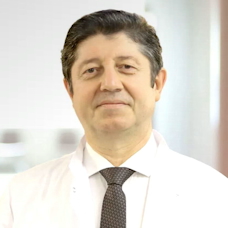
Prof. Dr. Mustafa Hakan Kayalı
Neurosurgeon with 36 years of experience. Specializes in surgical treatment of gliomas, meningiomas, and other brain tumors. Recipient of the Young Neuroscientist Award in neuro-oncology (AANS, 2001). One of Ankara’s most experienced neurosurgeons in brain tumor treatment.
Acibadem Maslak / Altunizade Hospital
Acibadem Maslak Hospital is considered one of the strongest neuro-oncology centers in Turkey. The hospital successfully performs complex surgeries for brain tumors, including glioblastomas and other high-grade gliomas, using advanced technologies and a team-based approach.
Hospital advantages:
- JCI accreditation and ESMO Designated Centre status
- Specialized Brain Tumor Research Group
- Regular multidisciplinary tumor boards involving neurosurgeons, radiation oncologists, and medical oncologists
- Advanced equipment: Gamma Knife Icon, CyberKnife, intraoperative MRI, 5-ALA fluorescence-guided surgery
- High-precision radiosurgery and MR-guided adaptive radiotherapy
Leading specialists:
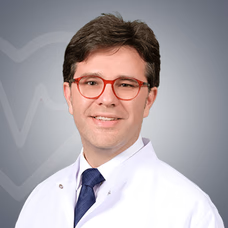
One of Turkey’s leading neuro-oncology neurosurgeons. Specializes in the treatment of gliomas and glioblastomas. Co-director of the Gamma Knife Unit at Acibadem. Has significant research experience at Yale University (USA). Author of publications in prestigious journals such as Neuro-Oncology and Acta Neuropathologica. Expert in maximal safe tumor resection using 5-ALA and intraoperative MRI.
Assoc. Prof. Nesrin Tunalı
Medical oncologist specializing in neuro-oncology. Member of the Acibadem Brain Tumor Research Group. Actively participates in multidisciplinary tumor boards. Specializes in systemic therapy for brain tumors, including temozolomide according to the Stupp protocol, bevacizumab for recurrent disease, and targeted therapy for BRAF-mutated tumors. Also involved in clinical research.

Liv Hospital Ulus
Liv Hospital Ulus is a modern university hospital located in the European part of Istanbul, known for its high level of neurosurgery and neuro-oncology. The hospital performs complex brain tumor surgeries, including glioblastomas, astrocytomas, and other tumors, using minimally invasive techniques and advanced neuronavigation.
Hospital advantages:
- JCI accreditation and partnership with Penn Medicine (USA)
- Modern hybrid operating room and advanced neurosurgical infrastructure
- Regular multidisciplinary neuro-oncology tumor boards
- High-precision neuronavigation, intraoperative monitoring, and minimally invasive techniques
- Comfortable conditions and professional support for international patients
Leading specialists:
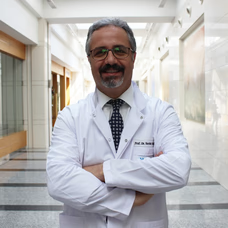
Neurosurgeon with 34 years of experience. Specializes in the removal of brain tumors, including gliomas and meningiomas. Has extensive clinical experience in complex neuro-oncological and spinal surgeries.
Prof. Dr. Mustafa Aziz Hatiboglu
Neurosurgeon with clinical and research experience at MD Anderson Cancer Center (USA). One of Turkey’s leading specialists in neuro-oncology and surgical treatment of gliomas. Founded a neuro-oncology laboratory and actively conducts molecular research on brain tumors.

Anadolu Medical Center
Anadolu Medical Center is one of Turkey’s most respected oncology centers and a strategic partner of Johns Hopkins Medicine (USA). The hospital offers a full spectrum of brain tumor treatment — from maximal safe surgical resection to high-precision radiotherapy and personalized systemic therapy.
Hospital advantages:
- Strategic partnership with Johns Hopkins Medicine
- OECI and ESMO Designated Centre accreditations
- 11 specialized tumor boards, including a neuro-oncology board
- Advanced equipment: CyberKnife M6, Varian Edge, Radixact, MR-LINAC
- Full treatment cycle — from surgery to chemoradiotherapy and targeted therapy within one center
- High-level molecular diagnostics and personalized treatment approach
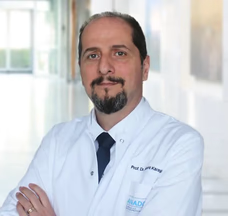
Medical oncologist with more than 25 years of experience. Specializes in systemic therapy for brain tumors, including temozolomide according to the Stupp protocol and bevacizumab for recurrent glioblastoma. Former Dean of the Medical Faculty at Okan University.

Medipol Mega University Hospital
Medipol Mega University Hospital is a large university medical center in Istanbul with a strong neuro-oncology department. The hospital actively treats brain tumors using advanced diagnostic technologies, neurosurgery, and radiosurgery.
Hospital advantages:
- University hospital status and JCI accreditation
- High-precision diagnostics: 256-slice CT, 3 Tesla MRI, PET-CT
- Intraoperative MRI during brain tumor removal
- Radiosurgery: CyberKnife and Gamma Knife for tumors and brain metastases
- Modern radiation therapy systems: Varian Trilogy and TrueBeam with RapidArc technology
- Comprehensive multidisciplinary tumor board
Leading specialist:
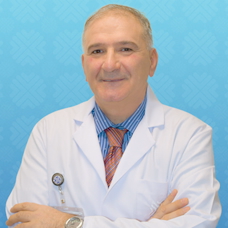
Radiation oncologist with 34 years of experience. One of Turkey’s most experienced specialists in Gamma Knife and stereotactic radiosurgery. Specializes in the treatment of gliomas, meningiomas, metastases, and other brain tumors.

Memorial Şişli Hospital
Memorial Şişli Hospital is one of Istanbul’s best-known and most experienced hospitals for brain tumor treatment. The center successfully combines neurosurgery, radiosurgery, and systemic therapy within a unified multidisciplinary approach.
Hospital advantages:
- High international standards of quality and safety (JCI accreditation)
- Large surgical volume and extensive clinical experience
- Strong tumor board involving neurosurgeons, radiation oncologists, and medical oncologists
- Advanced radiosurgery capabilities (CyberKnife)
- Individualized approach and excellent international patient support
Leading specialist:
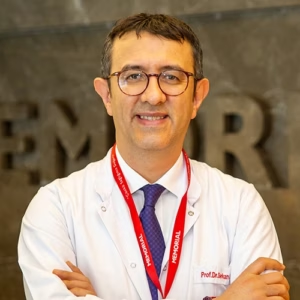
Medical oncologist and head of the oncology department. Specializes in systemic treatment of glioblastomas and brain metastases. Has extensive experience with temozolomide, bevacizumab, targeted therapy, and immunotherapy. Expert in molecular profiling (NGS) for personalized treatment selection.
How to Choose a Hospital for Brain Tumor Treatment
Choosing the right hospital for brain tumor treatment is one of the most important decisions a patient can make. This choice often affects not only treatment effectiveness but also quality of life afterward. Here are the main factors to consider:
- Specialized Neuro-Oncology Center
It is better to choose hospitals where neuro-oncology is one of the main specialties rather than an additional department. Such centers usually have extensive experience specifically with brain tumors.
- Multidisciplinary Team and Tumor Board
The hospital should have regular multidisciplinary meetings where each patient case is discussed by a neurosurgeon, neuro-oncologist, radiation oncologist, neurologist, and molecular diagnostics specialist. This is the standard recommended by the European Association of Neuro-Oncology (EANO).
- High Surgical Volume
Experience is critically important. Ideally, neurosurgeons should perform at least 50–100 brain surgeries per year. The greater the experience, the lower the risk of complications.
- Modern Technologies
A high-level hospital should offer:
- Intraoperative MRI
- High-resolution neuronavigation
- CyberKnife or Gamma Knife radiosurgery
- Modern linear accelerators (MR-LINAC, TrueBeam)
- Access to Targeted and Personalized Therapy
Access to molecular-genetic testing and experience with targeted therapies is especially important. Hospitals collaborating with American institutions (such as Johns Hopkins) often have better access to advanced biological therapies and clinical innovations.
Recommendation
Priority should be given to large university hospitals or specialized cancer centers with proven experience treating your specific tumor type and following up-to-date international EANO guidelines.
Conclusion
Brain tumor treatment in Turkey today combines highly experienced neurosurgeons, advanced technologies, and an individualized approach. Turkish hospitals provide the full spectrum of care: from precise molecular diagnostics and complex neuronavigation-guided surgery to radiosurgery (Gamma Knife, CyberKnife) and personalized systemic therapy.
Thanks to experienced specialists, multidisciplinary teams, and access to state-of-the-art equipment, many patients — even with difficult diagnoses — gain a real chance for long-term disease control and a return to полноценной life.
If you or your loved one has been diagnosed with a brain tumor, it is important not to lose time. Choosing the right hospital and doctor at an early stage can significantly influence the final outcome.
Frequently Asked Questions
Can a brain tumor be completely cured in Turkey?
For benign tumors, the chances of complete recovery are often very high. For malignant tumors such as glioblastoma, the goal is usually maximum disease control and long-term remission. Outcomes depend heavily on tumor type, location, and how quickly treatment begins.
How much does brain tumor treatment cost in Turkey?
Surgical tumor removal typically costs between $10,000 and $25,000. A full treatment course (surgery + radiation therapy + rehabilitation) usually ranges from $18,000 to $45,000. This is significantly less expensive than treatment in Germany or Israel.
How long does treatment in Turkey usually take?
For surgical treatment, patients usually stay in Turkey for 7–14 days. Radiosurgery (Gamma Knife / CyberKnife) generally requires 3–6 days. A full treatment course including radiation therapy and chemotherapy may take from 3 to 8 weeks depending on the protocol.
Is financial assistance for treatment available?
Yes. For patients under 18 years old, partner charitable foundations may provide financial assistance of up to 22,000 USD. We help prepare all necessary documents and submit applications.