



- At the clinic’s price without markups
- with full doctor support
A diagnosis of “prostate cancer” almost always sounds like a bolt from the blue. Even if the disease is detected early, many questions immediately arise: what to do next, where to seek treatment so as not to lose valuable time, and how to maximize the chances of a good outcome.
Turkey has remained one of the most popular destinations for prostate cancer treatment for many years. The same advanced technologies used in leading centers in Europe and the United States are available here, while prices are significantly lower and the organization of treatment for international patients is highly streamlined.
For localized disease, the 5-year survival rate approaches 100% (Clinical study, PMC / NIH, 2023). In metastatic prostate cancer, the statistics are significantly worse, which is why choosing the right doctor and hospital from the very beginning is especially important. Inappropriate treatment can cost precious time.
In this article, we explain how prostate cancer is currently treated in Turkey, which methods are considered the most effective, the approximate costs involved, and which hospitals are worth considering first.
Prostate Cancer Diagnosis in Turkey
Upon arrival in Turkey, most patients undergo a full cycle of уточняющей diagnostics, even if examinations have already been performed in their home country. Turkish centers pay special attention to this stage because the exact stage and molecular profile directly determine the choice of treatment.
What diagnostics usually include:
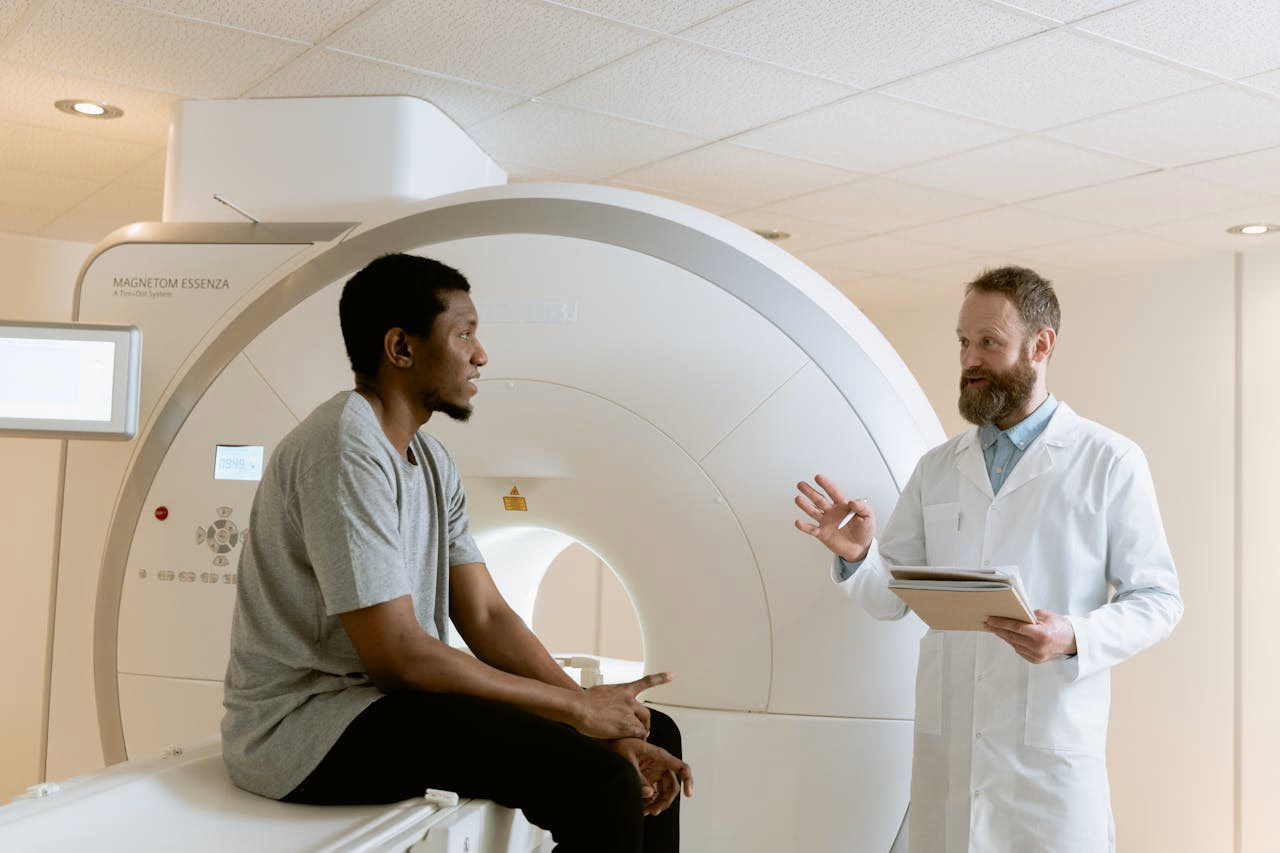
- 3 Tesla multiparametric prostate MRI — the gold standard for assessing tumor localization and volume.
- PSMA PET-CT (with Ga-68 or 18F-PSMA) — the most sensitive method for detecting metastases and lymph nodes. Especially important in cases of elevated PSA after previous treatment.
- Repeat biopsy (if necessary) — often MRI-guided (fusion biopsy) for more accurate determination of the Gleason score.
- Genetic testing — analysis for BRCA1/2 mutations, HRR genes, and other markers. This is important for selecting targeted therapy (PARP inhibitors) and assessing hereditary risk.
- Laboratory tests: total and free PSA, testosterone, PSA density, as well as extended tumor marker panels.
Comprehensive diagnostics at leading hospitals usually takes 3–5 business days. By day 4–5, a multidisciplinary tumor board is convened, where the urologist, radiation oncologist, medical oncologist, and radiologist jointly develop a treatment plan. The patient receives a detailed report and several evidence-based treatment strategy options.
How Surgical Treatment for Prostate Cancer Is Performed in Turkey
Surgical removal of the prostate gland (radical prostatectomy) remains one of the main and most reliable treatment methods for localized prostate cancer. In Turkey, this surgery is performed at a very high level, especially in leading hospitals.
Robot-Assisted Prostatectomy (Da Vinci)
Today, this is the primary method used in top Turkish centers. The Da Vinci robot provides the surgeon with a 10x magnified three-dimensional image and maximum precision of movement.
The advantages of robotic surgery are clearly noticeable in practice:
- Significantly less blood loss (usually 150–200 ml)
- Short hospital stay — in most cases discharge occurs within 1–2 days
- Faster recovery of urinary continence (in 96% of patients within one year)
- Higher chances of preserving erectile function
According to long-term observations, cancer-specific survival after robot-assisted prostatectomy is 99% for low-risk disease, 98% for intermediate-risk disease, and 90% for high-risk disease over a 15-year period.
Nerve-Sparing Technique
Modern surgeons in Turkey pay close attention to preserving the nerve bundles responsible for erections. In tumors that have not spread beyond the prostate capsule, nerve-sparing surgery is performed in 70–90% of cases (depending on the side involved). This allows many men to maintain a good quality of life after treatment.
Other Types of Surgery
- Laparoscopic prostatectomy — also minimally invasive and performed through small incisions. It requires a highly skilled surgeon and provides excellent results.
- Open surgery is used less frequently — mainly in cases of very large prostate glands or complex anatomy. Recovery is slower, but oncological outcomes remain very good.
In Turkish hospitals, the choice of method is always individualized. Doctors consider the patient’s age, stage of disease, PSA level, MRI and biopsy findings, as well as how important it is for the patient to preserve sexual function.
What Types of Radiation Therapy for Prostate Cancer Are Used in Turkey
Radiation therapy is a strong alternative to surgery, especially for older men or those with serious comorbidities. This treatment method is highly developed in Turkey and is actively used in leading hospitals.
External Beam Radiation Therapy
Modern technologies allow radiation doses to be delivered precisely to the tumor while maximally protecting surrounding tissues. The main types include:
- IMRT (Intensity-Modulated Radiation Therapy) — one of the most commonly used methods. The dose is distributed very precisely, reducing the risk of complications.
- VMAT — an advanced version of IMRT in which the machine rotates around the patient. The method is faster and provides even better protection of healthy organs.
- IGRT (Image-Guided Radiation Therapy) — imaging is performed before each session to correct prostate positioning. This is especially important because the prostate can shift slightly.
Hypofractionated Radiation Therapy
Instead of the traditional 39–40 sessions, patients receive 20–28 sessions with a higher dose per treatment. This is much more convenient for international patients because it shortens the duration of stay in Turkey.
SBRT (Stereotactic Body Radiation Therapy)
The “fastest” method — only 5 sessions with very high-dose radiation. It is well suited for patients with low- and intermediate-risk disease. Research shows that SBRT has effectiveness comparable to standard radiation therapy while requiring much less time.
Brachytherapy (Internal Radiation)
In this approach, the radiation source is placed directly into the prostate tissue:
- LDR brachytherapy (“seeds”) — tiny radioactive seeds (usually iodine-125) are implanted into the gland. The method works extremely well for low-risk disease. Ten-year recurrence-free survival reaches 95–98%.
- HDR brachytherapy — temporary insertion of a powerful radiation source through catheters. It is more commonly used in combination with external radiation therapy for more aggressive forms of cancer.
Organ-Preserving Treatment Methods for Small Prostate Tumors in Turkey
For small localized tumors of low and intermediate risk, Turkish hospitals increasingly offer modern organ-preserving methods — so-called focal therapy. These approaches target only the affected part of the gland while leaving healthy tissue intact. For many men, this is an excellent opportunity to avoid serious side effects.
HIFU — High-Intensity Focused Ultrasound
This is one of the most popular minimally invasive methods in Turkey. Under ultrasound guidance, powerful ultrasound waves are directed at the tumor, heating and destroying cancer cells. The procedure lasts from 1 to 3 hours and is usually performed under anesthesia.
Main advantages of HIFU:
- Minimal blood loss and short hospital stay (often discharge on the same day)
- Urinary continence is preserved in 95–97% of patients
- Erectile function is preserved in most men (approximately 70–80%)
The method is especially suitable for patients with small tumors, those who cannot undergo surgery, and those who wish to preserve quality of life as much as possible.
Cryoablation — Tumor Destruction by Freezing
During cryoablation, cancer cells are frozen to extremely low temperatures (approximately –40°C). Through thin needle probes, cold gas is delivered into the prostate, creating ice balls that destroy the tumor.
This method is used:
- For small low-risk tumors
- As salvage therapy after previous radiation therapy
- In patients who cannot undergo major surgery
Both HIFU and cryoablation are considered minimally invasive treatment options. They help avoid complete removal of the prostate and allow patients to return to normal life much faster. The choice of method is always discussed individually after a thorough evaluation.
Medical Treatment of Prostate Cancer in Turkey
When cancer spreads beyond the prostate gland or continues to progress despite previous treatment, surgery can no longer be the only option. In such cases, systemic therapy is introduced — medications that work throughout the entire body.
Hormonal Therapy
This is the main approach for advanced prostate cancer. The tumor “feeds” on male hormones, so doctors temporarily block their production or action. As a result, tumor growth slows down or stops.
Hormonal therapy is often prescribed:
- Together with radiation therapy in locally advanced disease
- As the main treatment in metastatic disease
- Before surgery to reduce tumor size
- When the disease returns after previous treatment
Chemotherapy
It is used when hormonal therapy stops working. Modern drugs allow disease control even in advanced stages, helping reduce symptoms and prolong quality life.
Immunotherapy
Currently, this treatment is used in a limited way for prostate cancer in Turkey — mainly within clinical trials. However, leading hospitals closely follow new developments and offer patients participation in current protocols whenever possible.
Turkish oncologists always aim to personalize drug therapy, taking into account the patient’s age, general health, extent of cancer, and previous response to treatment.
Radionuclide Therapy and PSMA Approaches for Prostate Cancer in Turkey
When prostate cancer becomes metastatic or resistant to hormonal therapy, modern high-precision methods such as radionuclide therapy and PSMA-targeted technologies become highly important. Leading Turkish hospitals already actively and successfully use these methods.
PSMA PET-CT Diagnostics
This is one of the most accurate ways to “see” prostate cancer at the molecular level. Using a special marker (Ga-68 or 18F-PSMA), the scan detects even the smallest lesions invisible on conventional CT or MRI.
This study is especially useful in biochemical recurrence — when PSA rises but other methods show nothing. PSMA PET-CT results also help doctors determine whether the patient is suitable for lutetium-177 therapy.
Lutetium-177-PSMA (Lu-177-PSMA)
This is an innovative and highly promising treatment method for castration-resistant metastatic prostate cancer. The drug precisely targets cells with PSMA receptors on the tumor surface and delivers radioactive lutetium-177 directly to them, destroying them from within.
Treatment is performed in cycles with intervals of 6–8 weeks. Many patients experience a significant decrease in PSA levels, reduction of metastases, and improvement in overall well-being.
Radium-223 (Xofigo)
This drug is used for prostate cancer with painful bone metastases. Radium-223 accumulates specifically in affected bone areas, irradiates them from within, significantly reduces pain, improves quality of life, and slows disease progression.
These modern radionuclide methods make it possible to treat even complex cases that were once considered nearly hopeless while still preserving an acceptable quality of life.
Stages of Prostate Cancer Treatment in Turkey
Treatment in Turkish hospitals follows a clear and structured process:
Day 1–5 — Full diagnostics + tumor board → approval of an individualized treatment plan.
Day 6–14 — Main treatment:
- Robot-assisted surgery (usually 1 day in the hospital + 7–10 days in a hotel).
- Radiation therapy course (SBRT — 5 sessions, IMRT — 20–40 sessions).
- Start of systemic therapy for metastatic disease.
2–8 weeks after the main stage — Rehabilitation: monitoring healing, physiotherapy, and selection of supportive therapy.
Further — Regular PSA monitoring (the first test 4–6 weeks after surgery or completion of radiation therapy, then every 3 months). If necessary, treatment adjustments are made (for example, adding hormonal therapy).
Most patients with localized prostate cancer stay in Turkey for 10 to 21 days. In metastatic cases, the first visit usually lasts 2–4 weeks, after which treatment continues on an outpatient basis or in the patient’s home country.
Fertility Preservation in Prostate Cancer
For younger patients (under 45–50 years old) planning to have children, modern fertility preservation approaches are available in Turkey. Before treatment begins (especially before radiation or hormonal therapy), doctors offer sperm cryopreservation. The procedure is fast, safe, and performed in most major centers.
In the case of focal therapies (HIFU, IRE), the risk of affecting fertility is significantly lower. Such patients are always discussed separately at tumor boards in order to preserve reproductive function as much as possible.
Recovery and Quality of Life After Treatment
Recovery after prostate cancer treatment in Turkey is supervised by specialists and usually progresses faster than patients expect.
- Return to work: after robot-assisted surgery — within 3–4 weeks (for office work). After radiation therapy — within 1–2 weeks.
- Urinary control: pads are often used during the first weeks after surgery. With pelvic floor physiotherapy (Kegel exercises + specialized biofeedback exercises), 90–95% of patients fully regain control within 6–12 months.
- Erectile function: rehabilitation begins as early as 4–6 weeks after surgery. Doctors prescribe PDE-5 inhibitors (Viagra, Cialis, Levitra), and if necessary — vacuum erection devices, intracavernosal injections, or shockwave therapy. With nerve-sparing surgery, the chances of recovery are very high.
Patients often note that the attentive approach of rehabilitation specialists and clear recommendations significantly speed up the return to normal life.
Statistics of Successful Prostate Cancer Treatment in Turkey
Prostate cancer is one of the most thoroughly studied types of cancer, which is why a large amount of reliable statistical data has been accumulated. Turkish hospitals follow the same international protocols as leading centers in Europe and the United States, so treatment outcomes here are highly comparable to global standards.
Surgical Treatment Outcomes
After radical prostatectomy, 10-year recurrence-free survival reaches 80–90% in localized forms of the disease. The introduction of robot-assisted surgery (Da Vinci) has significantly improved functional outcomes: fewer complications, better preservation of urinary continence, and improved erectile function (European Urology, 2020).
What This Means for the Patient
Simply put, when prostate cancer is detected early, the prognosis is very good in most cases. Modern treatment methods make it possible not only to successfully control the disease, but also to preserve a good quality of life. Even in more advanced stages, effective methods now exist to keep the disease under control for many years.
The most important thing to understand is that treatment success depends not so much on the country, but on timely diagnosis, the experience of the medical team, and the correct choice of technology. That is why it is important to choose trusted centers with extensive practical experience.
Even in more advanced stages, there are now effective ways to keep the disease under control for many years.
The most important thing to understand is that treatment success depends not so much on the country, but on timely diagnosis, the experience of the medical team, and the correct choice of technologies. That is why it is important to seek treatment at trusted centers with extensive practical experience.
Cost of Prostate Cancer Treatment in Turkey in 2026
One of the main advantages of treatment in Turkey is reasonable pricing combined with high-quality medical care. Below are the current approximate prices compared with Europe and the United States.
| Procedure | Turkey | Europe | USA |
|---|---|---|---|
| Consultation with an oncologist / urologist | from €140 | from €400 | from €600 |
| Ga-68 PSMA PET-CT | from €2,200 | from €2,500 | from €4,000 |
| Prostate MRI | from €300 | from €800 | from €1,500 |
| Prostate biopsy | from €800 | from €1,500 | from €3,000 |
| Robot-assisted prostatectomy (Da Vinci) | from €12,000 | from €19,000 | from €35,000 |
| Laparoscopic prostatectomy | from €10,000 | from €17,000 | from €30,000 |
| IMRT / VMAT (full course) | from €3,500 | from €12,000 | from €25,000 |
| Stereotactic therapy (SBRT) | from €8,000 | from €18,000 | from €40,000 |
| Hormonal therapy (1 year) | from €2,000 | from €8,000 | from €15,000 |
| Chemotherapy (1 course) | from €3,000 | from €10,000 | from €20,000 |
| Full treatment course* | from €15,000 | from €25,000 | from €50,000 |
Important note:
The cost of a full treatment course depends greatly on the stage of the disease, the selected treatment methods, and the individual characteristics of the patient. The figures above are approximate average values.
In Turkey, you can truly receive high-quality modern treatment at a cost 3–5 times lower than in Europe or the United States, without compromising effectiveness or safety.
Why 2026 Is a Good Time for Treatment in Turkey
In 2026, treatment options for prostate cancer in Turkey have expanded significantly:
- Lutetium-177 PSMA has become more accessible and is now used in several major centers (Anadolu, Memorial, Acibadem, Medipol).
- New drug combinations (ARPI + PARP inhibitors) have become available for patients with BRCA/HRR mutations.
- Protocols for MR-guided adaptive radiation therapy (MRgRT) have improved — radiation therapy with real-time adjustment.
- Access to genetic testing and personalized therapy has expanded.
If you have high-risk, locally advanced, or metastatic cancer, now is the time when Turkey can offer the most advanced protocols at a significantly more affordable cost than Western Europe or the United States.

Experts Medical – Support for Prostate Cancer Treatment in Turkey
At Experts Medical, we help patients organize the entire treatment process — from reviewing medical documents and selecting a doctor to fully arranging the trip and providing support after returning home.
We do not simply recommend a clinic — we take into account your exact stage, age, comorbidities, and priorities (preserving potency, minimizing time spent in Turkey, etc.).
What we do:
- Review medical documents
- Select 2–3 best doctor and hospital options
- Prepare a detailed treatment plan and cost estimate
- Provide full travel organization and support
- Offer post-treatment support (including remote PSA monitoring)
Our services are free of charge for the patient. Payment for treatment goes directly to the hospital.
Best Hospitals in Turkey for Prostate Cancer Treatment

Medipol Mega University Hospital
Medipol Mega University Hospital is a modern university medical center in Istanbul with JCI accreditation. The hospital stands out for its strong uro-oncology department and offers a full range of prostate cancer treatment — from highly accurate diagnostics to the most advanced therapeutic methods.
Hospital advantages:
- University status and regular multidisciplinary tumor boards
- One of the best focal therapy centers for prostate cancer in Turkey (HIFU and IRE)
- Robot-assisted surgery using the Da Vinci system
- Advanced diagnostics: PSMA PET/CT and 3 Tesla MRI
- Full treatment cycle in one center — from diagnostics to rehabilitation
- JCI accreditation and a high level of safety
Leading specialists:

World-renowned urologist and one of the leading global experts in focal therapy for prostate cancer. President of the Société Internationale d'Urologie (SIU) since 2024. Author of more than 750 scientific publications. Specializes in HIFU and IRE (nanoelectroporation). Patients from many countries come specifically to him for minimally invasive treatment of small tumors.

Experienced uro-oncologist specializing in robot-assisted and laparoscopic radical prostatectomy. Has extensive practical experience and is actively involved in scientific research in the field of uro-oncology.

Florence Nightingale Hospital (Şişli)
Florence Nightingale Hospital (Şişli) is one of the most respected multidisciplinary hospitals in Istanbul with a high international standard. The hospital offers a full cycle of prostate cancer treatment: from precise diagnostics to robot-assisted surgery and follow-up care.
Hospital advantages:
- JCI accreditation and compliance with strict international standards
- Extensive experience in robot-assisted surgery using the Da Vinci system
- Regular multidisciplinary tumor boards involving urologists, oncologists, and radiologists
- Advanced diagnostics, including PSMA PET/CT and 3 Tesla MRI
- Full treatment cycle in one center
- Comfortable conditions and excellent organization for international patients
Leading specialist:

Uro-oncologist and one of Turkey’s experienced specialists in robot-assisted prostate cancer surgery. Performs radical prostatectomies with a focus on preserving nerve bundles and maximizing functional outcomes (urinary continence and erectile function). Has extensive clinical experience in minimally invasive treatment of uro-oncological diseases.

Memorial Şişli Hospital
Memorial Şişli Hospital was the first hospital in Turkey to receive JCI accreditation. Today, it is considered one of the country’s leading oncology centers and offers a full cycle of prostate cancer treatment, including the most advanced methods.
Hospital advantages:
- JCI accreditation and a high international standard
- Strong multidisciplinary tumor board
- Extensive experience with Da Vinci robot-assisted surgery
- Access to innovative methods: Lutetium-177 PSMA therapy, modern hormonal drugs, and PARP inhibitors
- Full treatment cycle — from diagnostics to systemic and radionuclide therapy in one center
- Highly accurate diagnostics (PSMA PET/CT, 3 Tesla MRI)
Leading specialists:
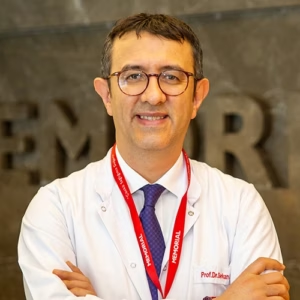
Experienced medical oncologist and head of the oncology center. Specializes in systemic treatment of prostate cancer: hormonal therapy, modern ARPI drugs (enzalutamide, abiraterone, darolutamide), PARP inhibitors, and chemotherapy. Has more than 18 years of clinical experience and is a member of ASCO and ESMO. Actively uses molecular profiling for personalized treatment.
Nuclear medicine specialist and one of Turkey’s leading experts in radionuclide therapy. Has extensive experience performing Lutetium-177 PSMA therapy for metastatic castration-resistant prostate cancer.

Acibadem Altunizade Hospital
Acibadem Altunizade Hospital is one of the strongest hospitals in the Acıbadem network for uro-oncology. Here, patients with prostate cancer are offered a full treatment cycle: from highly accurate diagnostics to robot-assisted surgery and modern systemic therapy methods.
Hospital advantages:
- JCI accreditation and ESMO Designated Centre status
- Extensive experience in robot-assisted surgery using the Da Vinci Xi system
- Powerful multidisciplinary tumor board
- Access to innovative methods: Lutetium-177 PSMA therapy and modern targeted drugs
- Treatment strictly according to international EAU, NCCN, and APCCC protocols
- Full cycle of care in one modern center
Leading specialist:

World-class uro-oncologist and specialist in robot-assisted prostate cancer surgery. Co-author of the Advanced Prostate Cancer Consensus Conference (APCCC) recommendations. Has more than 200 scientific publications in leading international journals. One of Turkey’s most experienced surgeons in the field of uro-oncology.

Anadolu Medical Center
Anadolu Medical Center is one of Turkey’s leading oncology centers and a strategic partner of Johns Hopkins Medicine (USA). The hospital offers a full cycle of prostate cancer treatment according to the most advanced international protocols — from highly accurate diagnostics to robotic surgery, radiation therapy, and innovative systemic treatment methods.
Hospital advantages:
- OECI accreditation and ESMO Designated Centre status
- Direct collaboration with Johns Hopkins Medicine
- Advanced equipment: CyberKnife M6, MR-LINAC, Varian Edge
- 11 specialized tumor boards, including uro-oncology
- High level of molecular profiling and personalized therapy
- Full treatment cycle in one center with excellent service for international patients
Leading specialists:

Head of the uro-oncology department. Expert in robot-assisted radical prostatectomy. Completed fellowships at Harvard and leading European centers. Board member of the Turkish Urooncology Association.
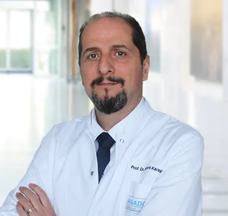
Medical oncologist with more than 25 years of experience. Specializes in systemic treatment of prostate cancer: hormonal therapy, ARPI drugs, PARP inhibitors, and chemotherapy. Known for his personalized approach and attentive attitude toward patients.

Medical oncologist with more than 20 years of experience. Specializes in personalized drug therapy selection for prostate cancer (chemotherapy, immunotherapy, targeted therapies) based on the molecular profile of the tumor. Patients highly appreciate his attentive and supportive approach.

Radiation oncologist and president of the Turkish Society for Radiation Oncology. One of the leading experts in MR-guided adaptive radiation therapy and stereotactic therapy for prostate cancer. Completed a fellowship at Stanford University.
Who Is Best Suited for Prostate Cancer Treatment in Turkey
With prostate cancer, there is almost never one universal “best doctor.” Everything depends on the stage of the disease, the patient’s age, the risk level, and what matters most to the man — maximum disease control or preserving quality of life.
If Surgery Is Needed
For localized cancer, one of the strongest options is considered to be Prof. Dr. Levent Türkeri (Acıbadem). He not only performs surgeries actively but also participates in developing international prostate cancer treatment guidelines. His experience is especially valuable when it is important to perform surgery with maximum precision while preserving functional outcomes.
If Minimally Invasive Focal Therapy Is Preferred
For small low- and intermediate-risk tumors, many patients choose Prof. Jean de la Rosette (Medipol Mega University Hospital). He is one of the world leaders in HIFU and IRE. Men who want to avoid major surgery and preserve erectile function and urinary control as much as possible often seek treatment with him.
If a Comprehensive Team-Based Approach Is Needed
In complex cases or when combined treatment is required, Anadolu Medical Center is often considered the best choice. A strong team works here under the leadership of Prof. İlker Tinay, an experienced uro-oncologist. Surgeons, medical oncologists, radiologists, and radionuclide therapy specialists work together in one center, making it possible to create a truly individualized treatment strategy.
What to Look for When Choosing a Hospital
- Number of surgeries performed. It is better to choose centers where uro-oncologists perform at least 100–150 robotic prostatectomies per year. Results in such centers are significantly better.
- Teamwork (tumor board). A good hospital means that your case is regularly discussed not by one doctor, but by an entire team of specialists from different fields.
- Modern diagnostics and equipment. It is important to have access to PSMA PET/CT, Lutetium-177 PSMA therapy, and advanced linear accelerators (MR-LINAC, CyberKnife).
A good hospital is not just a modern building. First and foremost, it is experienced doctors who deal specifically with prostate cancer every day, and a coordinated team that works as one.
Conclusion
Prostate cancer treatment in Turkey today combines world-class modern medicine, advanced technologies, and affordable prices. Turkish hospitals successfully use robot-assisted surgery, focal therapy (HIFU, IRE), highly accurate radiation therapy, and modern drug treatments, including Lutetium-177 PSMA.
Thanks to the extensive experience of doctors and the multidisciplinary approach, many patients, even with fairly complex cases, achieve good disease control while maintaining quality of life.
If you or your loved one has been diagnosed with prostate cancer, it is important not to delay making a decision. Early treatment and the right choice of specialist significantly increase the chances of a successful outcome.
You do not need to search for information, compare hospitals, and verify doctors on your own.
At Experts Medical, we have already done this work for you. Over the years, we have studied dozens of medical teams and hundreds of treatment stories, and we know exactly where and which approaches provide the best results specifically for prostate cancer.
Contact us — and we will quickly select the optimal treatment option for your situation, create a clear plan, and organize everything from start to finish.
Frequently Asked Questions
Which prostate cancer treatment method is considered the best in Turkey?
There is no universal best method — everything depends on the stage, age, and comorbidities. For localized cancer, robot-assisted surgery is most commonly chosen. For small tumors — focal therapy (HIFU or IRE). For advanced disease — a combination of hormonal therapy, radiation therapy, and modern medications.
How much does prostate cancer treatment cost in Turkey?
Robot-assisted prostatectomy usually costs between €12,000 and €22,000 on average. A full treatment course (including diagnostics and therapy) typically ranges from €15,000 to €45,000 depending on the stage and selected methods. This is 2–3 times cheaper than in Germany or Israel.
Is it possible to preserve erectile function and urinary control after treatment?
Yes, in most cases this is possible. In leading hospitals, with nerve-sparing techniques and modern methods (robotic surgery, HIFU), urinary control is restored in 90–97% of patients, while erectile function is preserved in 60–80% (depending on the initial condition and stage).
Do I need to stay in Turkey for the entire treatment, or can part of it be done at home?
Many patients come only for diagnostics, surgery, and the first therapy courses. Further chemotherapy or hormonal therapy cycles can continue at home under the supervision of local doctors. We help organize remote follow-up and the transfer of test results.