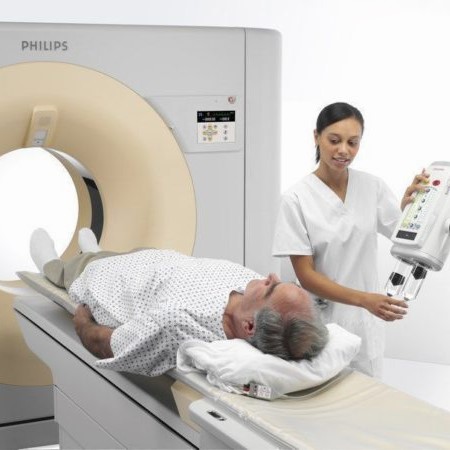
Prostate cancer is one of the most common oncological diseases in men worldwide. According to the American Cancer Society, prostate cancer ranks second only to lung cancer among the most frequently diagnosed cancers in men globally.
The five-year survival rate for malignant prostate disease is 97%. However, these outcomes can only be achieved with timely diagnosis and properly tailored treatment. Prognosis deteriorates rapidly once cancer cells spread.
A key factor in successful treatment is not only early diagnosis but also choosing a medical center equipped with modern technology and experienced specialists. Turkish clinics offer cancer treatment at world-class standards using the latest technologies at more accessible prices.
Top Clinics in Turkey for Prostate Cancer Treatment
For over 10 years, Experts Medical has collaborated exclusively with clinics demonstrating high success rates in cancer treatment. When selecting medical centers, we focus on the experience of oncological urologists, availability of advanced equipment, international accreditations, and actual patient remission and functional outcome statistics.
A university hospital where robotic surgery (da Vinci system) is actively used for radical prostatectomy. The hospital’s specialists have performed over 3,000 robotic procedures for prostate cancer. The clinic also offers multiparametric MRI, PSMA-PET/CT, and the latest radiation therapy techniques, including intensity-modulated radiation therapy (IMRT).
A large hospital network that actively employs advanced diagnostic and therapeutic technologies for cancer treatment. The hospital is proud of its results in treating advanced prostate cancer. At Acibadem, physicians achieve complete remission in 85% of cases, while the average international rate is only 75%.
Furthermore, the ten-year survival rate after radical prostatectomy for low-aggressiveness tumors exceeds 90%.
A large network of clinics accredited by JCI, with oncology treatment as one of its key focus areas. For patients with prostate cancer, laparoscopic and robot-assisted surgeries are available, along with highly precise radiation therapy techniques.
These hospitals offer comprehensive prostate cancer treatments using all modern methods, including robot-assisted and laparoscopic surgeries, HIFU (high-intensity focused ultrasound), brachytherapy, radiation therapy with advanced linear accelerators, as well as medication-based treatments such as hormonal, targeted, and chemotherapy.
It has its own Prostate Cancer Treatment Center. The clinic’s doctors employ modern technologies and a comprehensive multidisciplinary approach. Available treatments include robot-assisted surgeries using the Da Vinci system, high-precision radiotherapy, brachytherapy, hormone therapy, immunotherapy, chemotherapy, as well as innovative methods such as Lutetium-177 PSMA radioligand therapy for metastatic forms of the disease.
Leading Doctors for Prostate Cancer Treatment in Turkey
Experts Medical works with top Turkish oncological urologists and oncologists who possess extensive clinical and scientific experience. Over 10 years, we have helped organize treatment for 12,000 patients. This accumulated experience allows us to select truly competent and verified specialists for each individual case. As Experts Medical is the official representative of Turkish clinics, our patient support and treatment organization services are provided free of charge.
Top Oncologists and Onco-Urologists in Turkey
Ahmet Bilici— a medical oncologist with over 25 years of experience, practicing at Medipol Clinic in Istanbul. He specializes in prostate cancer treatment using chemotherapy, immunotherapy, and targeted therapy. Author of more than 70 international publications, 20 clinical reports, and 26 conference presentations.
Mustafa Ozdogan— Professor and Head of the Medical Oncology Department at Memorial Clinic in Antalya. Actively implements innovative treatment methods such as immunotherapy and personalized targeted therapy based on the tumor’s molecular profile. He is one of Turkey’s leading specialists in comprehensive cancer care.
Ilker Tinay— Professor of Urology and Oncological Urology at Anadolu Medical Center. Expert in minimally invasive and robot-assisted surgery for prostate cancer. Completed internships at Harvard University (Brigham and Women’s Hospital), Heidelberg University, and in the USA. Member of FEBU and FACS, author of over 139 scientific publications.
Serkan Deveci— Professor of Urology, Head of the Department of Surgical Sciences and Urology at Beykent University in Istanbul. He completed training and research at Weill Cornell Medical College and the Sloan Kettering Memorial Cancer Center. He specializes in urologic oncology, minimally invasive and robotic surgery for prostate tumors, endourology, and urinary incontinence treatment. Author of over 80 publications and an active participant in international conferences.
Semih Halezeroğlu— surgical oncologist at Acibadem Maslak Clinic. He has over 30 years of professional experience. After receiving his professorship in 2008, he has been actively treating a wide range of oncological conditions, including prostate cancer. He regularly participates in international conferences and is the author of more than 15 scientific publications. A member of prestigious professional associations, he is internationally recognized for his significant contributions to the advancement of minimally invasive oncological surgery.
Cost of Prostate Cancer Treatment in Turkey
Below is a summary table of prices for diagnostics and various treatment methods for prostate cancer in Turkey and other countries.
Procedure
Turkey
Europe
USA
Diagnostic Examination
Oncologist Consultation
from €140
from €400
from €600
Gallium-68 PET-CT
from €2200
from €2500
from €4000
Prostate MRI
from €300
from €800
from €1500
Prostate Biopsy
from €800
from €1500
from €3000
Surgical Treatment
Robot-Assisted Prostatectomy (da Vinci)
from €12000
from €19000
from €35000
Open Prostatectomy
from €8000
from €15000
from €25000
Laparoscopic Prostatectomy
from €10000
from €17000
from €30000
Radiation Therapy
IMRT/VMAT (course)
from €3500
from €12000
from €25000
Stereotactic Radiosurgery
from €8000
from €18000
from €40000
Brachytherapy
from €6000
from €15000
from €30000
Medical Therapy
Hormone Therapy (year)
from €2000
from €8000
from €15000
Chemotherapy (course)
from €3000
from €10000
from €20000
Full Treatment Course*
from €5000
from €25000
from €50000
*The cost of a full treatment course depends on the disease stage, selected methods, and individual patient characteristics.
How is surgical treatment for prostate cancer performed in Turkey?
Radical prostatectomy involves complete removal of the prostate gland and seminal vesicles. It is considered the gold standard for treating localized prostate cancer, especially in patients with an expected life expectancy of more than
Nerve-Sparing Technique: Preserving Quality of Life
One of the major achievements of modern prostate surgery is the ability to preserve the nerve bundles responsible for erection. For localized tumors that do not involve the prostate capsule, this approach significantly improves functional outcomes.
Turkish oncologists make the decision to apply the nerve-sparing technique individually, based on MRI and biopsy data. Typically, surgeons are able to preserve nerves on both sides in about 70-80% of cases, and on at least one side in 80-90%.
Open and Laparoscopic Prostatectomy
Laparoscopic prostatectomy is performed similarly to robotic surgery. It is done through small incisions using a laparoscope and miniature surgical instruments. For prostate cancer, this technique requires a highly skilled surgeon.
Open surgery is still performed in cases where:
the prostate is significantly enlarged;
there are pronounced malignant changes;
the tumor cannot be removed minimally invasively.
Compared to robotic surgery, open prostatectomy often requires a longer hospital stay, but long-term cancer outcomes are equally effective.
What Types of Radiation Therapy for Prostate Cancer Are Used in Turkey?
Modern radiation therapy is an effective alternative to surgery, especially for older patients or those with comorbidities.
External Beam Radiation Therapy
Turkish radiation oncologists use advanced radiotherapy techniques for treating prostate cancer. Among them:
IMRT (Intensity-Modulated Radiation Therapy) uses computer planning to deliver high doses of radiation directly to the tumor. Long-term studies at Memorial Sloan Kettering show that high-dose IMRT cures 89% of patients with favorable prognosis, 78% with intermediate risk, and 67% with poor prognosis over a median follow-up of 8 years.
VMAT (Volumetric Modulated Arc Therapy) is a more advanced form of IMRT, delivering radiation while the machine continuously rotates. This technique better protects healthy organs, reduces side effects, and improves survival.
IGRT (Image-Guided Radiation Therapy) provides daily adjustments of body position based on CT scans. This ensures precise targeting of moving organs, including the prostate.
Hypofractionated Radiation Therapy
This method divides the total radiation dose into fewer sessions (fractions), with each session delivering a higher dose. Instead of the traditional 39-44 sessions, patients receive 20-28 procedures with equivalent effectiveness. This is especially convenient for international patients.
SBRT: Stereotactic Body Radiation Therapy
Stereotactic radiation therapy (SBRT) delivers very high doses of radiation to the tumor in a short course, usually 5 sessions. It is suitable for intermediate-risk prostate cancer patients.
Clinical trials show that patients receiving SBRT (5 sessions) achieved similar survival and tumor control after several years compared to those undergoing standard radiation therapy (20-40 sessions).
Brachytherapy: Internal Radiation
Brachytherapy delivers a high radiation dose directly to the tumor while sparing surrounding tissues.
LDR Brachytherapy involves implanting radioactive seeds, usually iodine-125 or palladium-103, into the prostate tissue. This approach is widely used for low-risk localized prostate cancer. According to studies, biochemical recurrence-free survival reaches 95–98% over 10 years.
HDR Brachytherapy involves temporarily placing a high-activity iridium-192 source through special catheters. It is often combined with external beam therapy for intermediate- and high-risk patients, allowing higher doses within the prostate and improved disease control.
What Minimally Invasive Treatments Are Available for Small Prostate Tumors in Turkey?
For patients with small, localized prostate tumors, clinics in Turkey offer modern focal therapies – HIFU and cryoablation. These technologies target only the affected areas of the gland, preserving healthy tissue.
HIFU – High-Intensity Focused Ultrasound
HIFU uses focused ultrasound waves to heat tumor tissue to 85–100°C, causing its destruction. The procedure is performed under general anesthesia and typically lasts 1–3 hours depending on the size of the targeted area. Patients are usually discharged the same day. The main advantage of this method is that it allows preservation of urinary control in 97% of cases and erectile function in 78%.
Indications for HIFU:
low- and intermediate-risk localized prostate cancer;
patients who are not candidates for surgery or radiotherapy;
repeat treatment after unsuccessful radiotherapy;
patients wishing to preserve maximum function.
Cryoablation – Cold Therapy
This method involves extreme cooling (down to –40°C) of prostate tissue to destroy cancer cells. Thin cryoprobes are inserted into the gland under ultrasound guidance.
Indications for cryoablation:
small localized tumors;
salvage therapy after ineffective radiotherapy;
contraindications to surgical treatment.
What Medication-Based Treatments for Prostate Cancer Are Used in Turkish Clinics?
When prostate cancer has spread beyond the gland or has a high risk of progression, systemic therapy becomes essential. Turkish oncologists actively use modern treatment protocols, including the latest drugs approved in Europe and the USA.
Androgen Deprivation Therapy (ADT)
Prostate cancer cells generally require male hormones (androgens) for division and growth. Hormone therapy aims to reduce androgen levels in the body, slowing or stopping tumor growth.
When ADT is prescribed:
for locally advanced cancer in combination with radiotherapy;
as primary therapy for metastatic cancer;
preoperatively to reduce tumor size;
for recurrence after tumor removal.
Chemotherapy and Immunotherapy
Chemotherapy is mainly used in patients with metastatic or progressive late-stage prostate cancer when hormone therapy becomes ineffective. It helps slow tumor growth and alleviate symptoms.
Immunotherapy for prostate cancer in Turkey is still in the research stage. Its efficacy and safety are being studied in clinical trials, and it is not yet widely applied.
Radionuclide Therapy and PSMA-Based Approaches for Prostate Cancer Treatment in Turkey
Modern oncology offers precise diagnostic and therapeutic methods for prostate cancer based on molecular targets. In Turkey, these technologies are available at large specialized centers.
PSMA PET/CT (Ga-68 or 18F-PSMA)
This scan can detect even small disease foci, determine disease spread, and help select the optimal treatment strategy. PSMA PET/CT is especially important in biochemical recurrence—when PSA rises but standard imaging does not show metastases. Additionally, PSMA scan results determine patient eligibility for Lutetium-177 therapy. The package cost in Turkey is approximately €1820(includes oncologist consultation, tests, and 2-night hotel stay).
An innovative treatment for patients with castration-resistant metastatic prostate cancer (mCRPC). The drug binds to PSMA receptors on tumor cells and delivers radioactive lutetium-177, destroying cancerous tissue from within. The course consists of multiple administrations, typically spaced 6–8 weeks apart. This therapy has shown good results, with many patients experiencing PSA reduction and tumor shrinkage.
Radium-223 (Xofigo)
Used for bone metastases causing pain and reducing quality of life. Radium-223 accumulates in bone lesions, irradiating them from the inside and alleviating symptoms.
How to undergo prostate cancer treatment in Turkey?
Choosing the right clinic and doctor for an oncology diagnosis is a decision that directly affects the outcome. Experts Medical has been collaborating with leading Turkish centers for over 10 years, giving us insight into actual success rates for prostate cancer treatment, the techniques used, and the strengths of specific specialists.
Our support for patients is completely free. We arrange second opinions, assist in obtaining personalized treatment plans, and select a clinic where, given your specific diagnosis, the likelihood of success will be higher. Our team guides the patient through every stage: from program coordination and travel arrangements to consultations with doctors and quality control of anticancer therapy.
All payments are made directly at the clinic, with no hidden fees or advance payments. We maintain constant contact with the doctors and, if necessary, act on behalf of the patient to protect their interests and prevent unnecessary procedures.
By contacting Experts Medical, you receive verified experience, not advertising: we understand the internal operations of each clinic and recommend only those specialists who achieve the best results specifically in prostate cancer treatment.
You can also reach out to us right now using the most convenient channel for you:
The information on the epxerts-medical.com website is provided for informational purposes only, is not a guide to action and should not be construed as a medical consultation or recommendations for treatment from the experts-medical.com site. All decisions on the choice of treatment methods and medical care should be made only by a specialised doctor after examining the patient's medical situation.









 Top 5 Clinics
 Best doctors for prostate cancer
 Treatment methods
 Cost of treatment


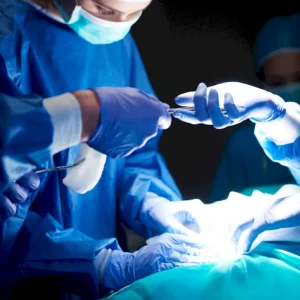 Radical prostatectomy involves complete removal of the prostate gland and seminal vesicles. It is considered the gold standard for treating localized prostate cancer, especially in patients with an expected life expectancy of more than
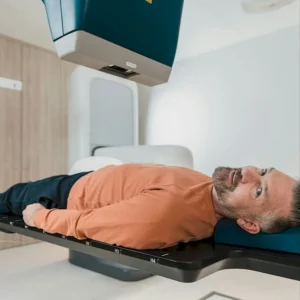 Modern radiation therapy is an effective alternative to surgery, especially for older patients or those with comorbidities.
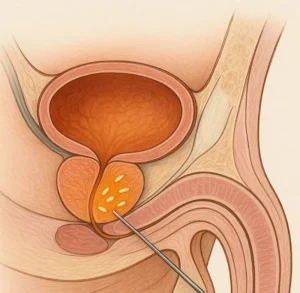 Brachytherapy delivers a high radiation dose directly to the tumor while sparing surrounding tissues.
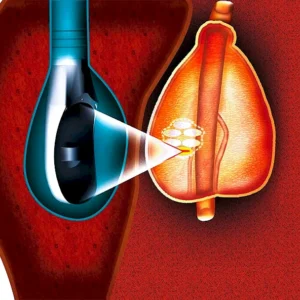 HIFU uses focused ultrasound waves to heat tumor tissue to 85–100°C, causing its destruction. The procedure is performed under general anesthesia and typically lasts 1–3 hours depending on the size of the targeted area. Patients are usually discharged the same day. The main advantage of this method is that it allows preservation of urinary control in 97% of cases and erectile function in 78%.
 When prostate cancer has spread beyond the gland or has a high risk of progression, systemic therapy becomes essential. Turkish oncologists actively use modern treatment protocols, including the latest drugs approved in Europe and the USA.
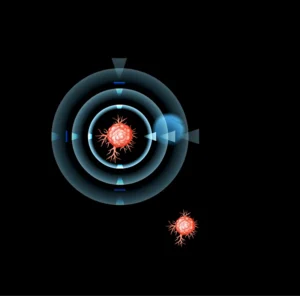 Modern oncology offers precise diagnostic and therapeutic methods for prostate cancer based on molecular targets. In Turkey, these technologies are available at large specialized centers.