




- At the clinic's price without markups
- with full doctor support
Colon cancer is one of those diagnoses that sounds frightening, but with the right approach today it can often be treated quite successfully — especially when detected at an early stage or when metastatic disease is managed properly.
In Turkey, colorectal cancer ranks as the 3rd most common cancer among both men (9.6%) and women (8.0%). Although screening is recommended for everyone aged 50–70, participation in early detection programs remains low — only 20–30%, while the target rate is 70% (PubMed).
Over the past few years, Turkey has become a major destination for colorectal cancer treatment. Clinics actively follow international treatment protocols, use the da Vinci robotic system, perform HIPEC for peritoneal metastases, and provide modern targeted therapies. At the same time, treatment costs remain significantly lower than in Germany or Israel, while the level of technology and surgical expertise is very high.
At Experts Medical, we have been helping patients with colorectal cancer for many years. We reviewed dozens of hospitals and specialists, spoke with patients, and selected the centers that consistently achieve strong results. You no longer need to spend weeks searching and comparing options — we have already done that work for you.
1. Acibadem Healthcare Group (Maslak / Ataşehir / Atakent)
Acibadem Healthcare Group is one of the strongest colorectal cancer treatment centers in Turkey. The hospital operates a dedicated Gastrointestinal Oncology Unit with its own multidisciplinary tumor board, where surgeons, oncologists, radiologists, and pathologists discuss each case together. The clinic is particularly strong in complex situations: locally advanced rectal cancer, liver metastases, and peritoneal carcinomatosis.
Hospital advantages:
- JCI accreditation and ESMO Designated Centre status
- Specialized Gastrointestinal Oncology Unit with weekly MDT tumor board meetings
- High surgical volume (laparoscopy, da Vinci robotic surgery, HIPEC)
- Advanced treatment of liver metastases (resections, two-stage hepatectomies, ablation)
- Full treatment cycle: neoadjuvant therapy → surgery → targeted/immunotherapy
- Molecular profiling and personalized treatment approaches
Leading specialists:
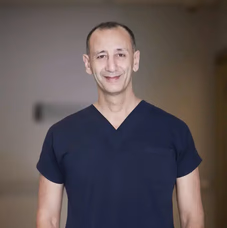
An internationally recognized HPB surgeon and one of Turkey’s leading experts in colorectal liver metastases (CRLM). Performs complex liver resections, two-stage hepatectomies, and combined surgeries. Included in the “World’s Most Influential Scientists” list (Stanford/Elsevier 2024). Has extensive clinical and academic experience from Heidelberg University and the Technical University of Munich. Patients frequently note both his professionalism and attentive care.

Medical oncologist specializing in systemic therapy for colorectal cancer. Experienced in modern chemotherapy regimens (FOLFOX, FOLFIRI, FOLFOXIRI), targeted therapies (bevacizumab, cetuximab, panitumumab), and immunotherapy for MSI-H tumors. Actively involved in the GI Oncology Unit at Acibadem and multicenter clinical studies.
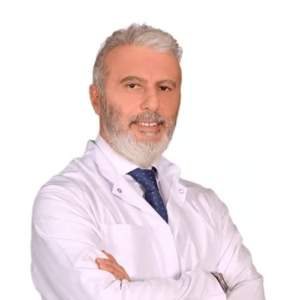
Radiologist with 29 years of experience in diagnostic and interventional radiology. Specializes in advanced imaging (CT, MRI, PET-CT) and image-guided procedures such as biopsies, drainage, and embolization. Has worked at Acıbadem since 2010 and published internationally in oncologic imaging.
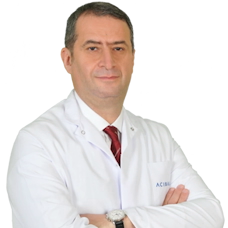
Professor of medical oncology specializing in gastrointestinal cancers, including colorectal cancer. Has extensive experience with targeted therapies and modern chemotherapy regimens. Previously served as professor at Zonguldak Bulent Ecevit University and joined Acıbadem in 2022.
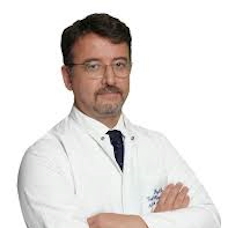
Professor of gastroenterology and endoscopy specializing in early diagnosis and endoscopic treatment of colorectal, gastric, and esophageal tumors. Performs diagnostic and therapeutic endoscopy, colonoscopy, and PEG procedures. Has a strong scientific background in hepatology and inflammatory bowel diseases.

2. Anadolu Medical Center
Anadolu Medical Center is one of Turkey’s leading oncology hospitals and a strategic partner of Johns Hopkins Medicine (USA), one of the world’s most respected medical institutions. The clinic offers a full cycle of colorectal cancer treatment according to American and European protocols.
Hospital advantages:
- OECI and ESMO accreditation
- 11 specialized tumor boards, including GI oncology
- Advanced equipment: CyberKnife M6, TrueBeam, MR-LINAC
- High-precision radiotherapy and SBRT for metastases
- Complete treatment pathway in one center with molecular profiling
Leading specialists:

Radiation oncologist and director of the radiation oncology department. One of Turkey’s leading experts in neoadjuvant chemoradiotherapy for rectal cancer and stereotactic radiotherapy (SBRT). President of the Turkish Society for Radiation Oncology (TROD). Completed an SRS fellowship at Stanford University and participates in international multicenter studies on GI tumor radiotherapy.
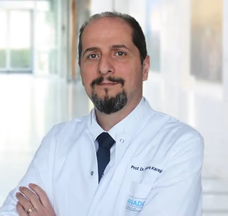
Medical oncologist with more than 25 years of experience. Specializes in systemic treatment of colorectal cancer, including modern chemotherapy regimens (FOLFOX, FOLFIRI), targeted therapies, and immunotherapy. Former dean of the Okan University Medical Faculty. Author of more than 50 scientific publications and member of the Turkish Society of Medical Oncology.
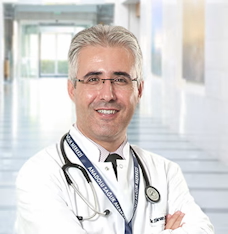
Medical oncologist with more than 20 years of experience. Specializes in individualized systemic therapy for colorectal cancer based on molecular tumor profiling (RAS, BRAF, MSI-H). Has worked at Anadolu Medical Center since 2014 and has significant experience using targeted therapies and immunotherapy in metastatic colorectal cancer.

3. Memorial Şişli Hospital
Memorial Şişli Hospital is one of the most experienced and recognized clinics in Istanbul for colorectal cancer treatment. The hospital is especially strong in managing metastatic disease and complex cases that require highly individualized therapy planning.
Hospital advantages:
- High international standards of quality and treatment organization
- Strong multidisciplinary GI oncology tumor board
- Advanced molecular testing (NGS 600+ genes)
- Modern radiotherapy and robotic-assisted surgery
- Complete care cycle — from diagnosis to metastatic treatment
- Extensive experience with international patients
Leading specialist:
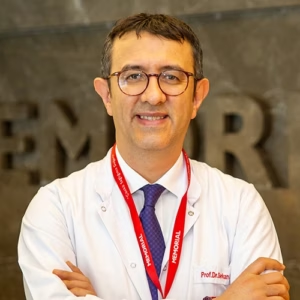
Medical oncologist and head of the oncology department. One of Turkey’s leading experts in systemic therapy for colorectal cancer, especially metastatic disease. Specializes in modern chemotherapy regimens, targeted therapies, and immunotherapy for MSI-H tumors. Actively uses extended molecular profiling (NGS 600+ genes) to personalize treatment for each patient.

4. Memorial Bahçelievler Hospital
Memorial Bahçelievler Hospital is a modern oncology center in Istanbul specializing in colorectal cancer treatment, particularly metastatic disease. The clinic actively participates in national registries and multicenter colorectal cancer studies. Special focus is placed on oncology, with a dedicated cancer center providing access to advanced diagnostics and treatment.
Hospital advantages:
- JCI accreditation
- Strong GI oncology tumor board
- Participation in the ONCO-colon Turkey national registry
- Advanced molecular testing for targeted therapy selection
- Experience in treating peritoneal carcinomatosis (HIPEC)
- Full treatment pathway for metastatic colorectal cancer
Who Is Best Suited and Why
Colorectal cancer is one of those situations where there is no single universally “best” doctor. Everything depends on the stage, tumor location, and presence of metastases.
Top recommendations by situation:
For liver metastases (CRLM)
Prof. Mert Erkan (Acibadem) is the clear leader. One of Turkey’s strongest HPB surgeons with extensive experience in liver resections and two-stage hepatectomies. Included in the list of the world’s most influential scientists in 2024.
For metastatic colorectal cancer (systemic therapy)
Prof. Serkan Keskin (Memorial Şişli) is the best choice. Advanced NGS testing (600+ genes), extensive experience with immunotherapy for MSI-H tumors and targeted therapy for BRAF mutations.
For localized rectal cancer (neoadjuvant therapy + surgery)
Prof. Banu Atalar (Anadolu) is a strong radiation oncologist for neoadjuvant chemoradiotherapy, combined with the Acibadem surgical team.
Best overall balance (team + technology)
Acibadem GI Oncology Unit is the most organized specialized colorectal cancer team in Turkey. Patients can receive the full cycle of treatment from experienced specialists in one place.
In short:
- Liver metastases → Mert Erkan
- Metastatic colorectal cancer and molecular therapy → Serkan Keskin
- Comprehensive treatment in one clinic → Acibadem
How Colon Cancer Treatment Works in Turkey
Treatment usually begins not with surgery, but with confirming the diagnosis. Even if the patient already has test results, they are reviewed again. Doctors often repeat colonoscopy, CT or MRI scans, sometimes PET-CT, and reassess the biopsy. This is necessary to accurately determine the stage and understand how the disease is progressing.
This stage is often faster than patients expect. Time is critical in oncology, so diagnostics and treatment preparation are organized without unnecessary delays.
Treatment planning and multidisciplinary teamwork
After diagnostics, a multidisciplinary team becomes involved. It usually includes an oncologist, surgeon, radiologist, and chemotherapy specialist. Together, they discuss the case and develop the treatment plan.
Sometimes surgery is performed immediately. In other cases, chemotherapy or radiation therapy is given first to shrink the tumor. Decisions are made individually rather than according to a rigid template.
Surgery and systemic therapy
If the tumor can be removed, surgery is performed. Turkish clinics frequently use laparoscopic and robotic techniques, which are less traumatic and allow faster recovery.
After surgery, chemotherapy may be prescribed if needed. In some cases, targeted therapy or immunotherapy is also used. Treatment is organized as one continuous process without long gaps between stages.
Comparison of Colon Cancer Treatment Methods in Turkey
In Turkey, colorectal cancer treatment strictly follows ESMO and NCCN protocols. The choice of treatment depends on the stage, tumor location, and molecular profile.
| Treatment Method | When It Is Used | Main Advantages | Disadvantages | Recovery | Approximate Cost (2026) |
|---|---|---|---|---|---|
| Surgical removal (laparoscopy / da Vinci) | Localized and locally advanced cancer | Radical tumor removal, precision, preservation of function | Invasive procedure | 5–10 days in hospital | $12,000 – $25,000 |
| Neoadjuvant / adjuvant chemotherapy (FOLFOX, FOLFIRI, etc.) | Before/after surgery, metastatic disease | Shrinks tumors and destroys micrometastases | Side effects (fatigue, neuropathy) | Outpatient, 3–6 months | $4,000 – $12,000 per course |
| Targeted therapy (bevacizumab, cetuximab, encorafenib) | Metastatic disease based on molecular profile | High effectiveness for KRAS/BRAF mutations | Expensive, not suitable for all patients | Outpatient | $8,000 – $20,000 per course |
| Immunotherapy (pembrolizumab) | MSI-H / dMMR tumors (5–15% of patients) | Long-term disease control and good tolerability | Effective only for certain subtypes | Outpatient | $12,000 – $25,000 per course |
| HIPEC | Peritoneal carcinomatosis | Local destruction of abdominal metastases | Major surgery | 10–21 days in hospital | $25,000 – $45,000 |
| Radiotherapy / SBRT | Rectal cancer (neoadjuvant), oligometastases | Precise targeting and possibility of organ preservation | Not a primary treatment for colon cancer | Outpatient | $5,000 – $15,000 |
Rehabilitation After Treatment
Recovery after colon cancer treatment does not end after hospital discharge. This is especially important after rectal surgery, when a stoma may be created or bowel function may be affected.
In leading Turkish clinics, rehabilitation begins within the first days after surgery. Patients are gradually transitioned back to normal nutrition, taught proper stoma care (if necessary), and helped restore bowel function.
Specialists focus on several key areas:
- Restoring bowel function and preventing constipation or incontinence
- Physiotherapy and exercises to strengthen pelvic floor muscles
- Psychological support (many patients struggle emotionally with having a stoma)
- Training for life with a stoma and preparation for possible stoma reversal
Most patients with a temporary stoma undergo reversal surgery within 3–6 months. Acibadem and Anadolu pay special attention to this stage, with experienced colorectal surgeons and rehabilitation specialists helping patients return to normal life with minimal limitations.
High-quality rehabilitation directly affects quality of life after treatment. That is why we always recommend clinics where this stage is organized at a high level.
Statistics and Treatment Outcomes for Colon Cancer
Colorectal cancer remains one of the most common cancers worldwide. According to GLOBOCAN 2022, around 1.9 million new cases are diagnosed each year.
However, with timely diagnosis and modern treatment, the prognosis improves significantly:
5-year survival rates (according to the American Cancer Society, 2024 and AJCC stage-specific outcome reviews, 2024–2025):
- Stage I — around 90%
- Stage II — 70–85%
- Stage III — 50–75%
- Stage IV (metastatic disease) — 10–20% (in selected cases with liver metastasis resection and modern therapy, this may reach 40–50%)
In leading Turkish clinics such as Acibadem, Anadolu, and Memorial, outcomes often match those of top international centers thanks to a multidisciplinary approach, robotic surgery, HIPEC, and personalized targeted/immunotherapy.
Advantages of Treatment in Turkey
Fast treatment initiation
One of the biggest advantages is speed. Diagnostics, consultations, and treatment can often begin within just a few days. If biopsy revision is needed, pathology review usually takes 2–3 working days, while extended molecular testing (NGS) takes around 10–14 days. In oncology, time has a direct impact on outcomes.
Treatment organization
Patients do not need to handle everything alone. Consultations, surgery dates, accommodation, and transfers are usually arranged in advance. This reduces stress and allows patients to focus on treatment.
Modern technologies and equipment
Turkish hospitals use the same technologies found in leading European medical centers, both for surgery and systemic therapy, while treatment costs are often lower.
Patient-centered approach
Doctors explain the situation and treatment options in detail. This helps patients better understand their condition and make decisions without unnecessary pressure.
Approximate Cost of Colon Cancer Treatment in Turkey (2026)
- Full diagnostics + staging (CT/MRI/PET-CT + NGS) — $3,000 – $7,000
- Surgical operation (laparoscopic / robotic) — $12,000 – $25,000
- Complete course (surgery + 6 months of chemotherapy) — $25,000 – $45,000
- Treatment of metastatic colorectal cancer (targeted therapy + immunotherapy) — $40,000 – $80,000 per year
- HIPEC (for peritoneal carcinomatosis) — $25,000 – $45,000
Prices in Turkey are typically 2–3 times lower than in Europe while maintaining comparable quality of treatment and equipment.

How We at Experts Medical Help Patients Receive Treatment Abroad
At Experts Medical, we do not start with clinic offers or promotional lists. First, we analyze the actual medical situation. We review medical records, test results, and doctors’ reports. Sometimes, even at this stage, it becomes clear that the diagnosis requires clarification or reassessment. In such cases, we immediately arrange a second opinion.
Then our team becomes involved. We select specialists not based on popularity or advertising, but on their experience with the specific disease. Details matter — stage, tumor biology, disease progression, and treatment goals. All of this is carefully considered before we recommend any option.
After that, a clear and structured plan is created. Straightforward and without unnecessary complexity. Patients understand where treatment will take place, what stages are expected, and approximately how much time it will require.
What We Actually Do
We do much more than simply recommend hospitals. We manage the entire process from beginning to end.
- Collecting and analyzing medical information
- Selecting the doctor and clinic for the specific case
- Organizing travel and all related arrangements
- Remaining in contact throughout treatment
This removes most of the organizational burden from the patient — especially during a time when focusing is already difficult enough.
How the Support Process Works
We do not disappear once the patient arrives at the clinic. In fact, this is when the most active part of our work begins. Our medical coordinators help organize treatment stages, stay in contact with doctors, and step in whenever questions or concerns arise.
After patients return home, we continue providing support. We help with follow-up recommendations, control examinations, and interpretation of results. This is important because cancer treatment does not end on the day of discharge.
Conclusion
If you look at colon cancer treatment in Turkey objectively, without marketing or emotion, one thing becomes clear: the country has strong medical teams, well-organized systems, and access to modern treatment methods. It is not simply about being “cheaper” or “faster.” It is about how accurately the diagnosis is established, how effectively the medical team is organized, and how well the treatment strategy is planned.
A good clinic is not only about advanced equipment or a famous name. It is the combination of experienced doctors, teamwork, and the ability to adapt treatment to each individual patient. That is why some cases are better suited to large specialized hospital networks, while others benefit more from centers with particularly strong diagnostics or systemic therapy programs.
And perhaps the most important point: patients should not choose “a clinic in general,” but rather the specific doctor and team best suited to their case. In oncology, this often matters more than the country or the hospital ranking itself.
FAQ
When is molecular testing performed for colorectal cancer?
Molecular testing is performed in almost all cases of metastatic colorectal cancer and often even at earlier stages. Doctors check for KRAS, NRAS, BRAF mutations, as well as MSI status. These markers directly influence treatment selection, including eligibility for immunotherapy.
Can liver metastases be removed with a good prognosis?
Yes, if the metastases are resectable. In such cases, advanced liver surgery techniques are used, sometimes in multiple stages. In some situations, chemotherapy is given first to make metastases operable.
Why is a multidisciplinary team important?
Because colorectal cancer treatment rarely relies on a single method. Surgeons, oncologists, radiologists, and other specialists evaluate the situation from different perspectives. This reduces the risk of mistakes and helps create a more accurate treatment strategy.
When is HIPEC used and who is it suitable for?
HIPEC is a treatment method in which, after visible tumor deposits are surgically removed from the abdominal cavity, heated chemotherapy is delivered directly into the abdomen to destroy remaining microscopic cancer cells. It is used for peritoneal metastases. HIPEC combines surgery with localized chemotherapy. It is not suitable for everyone, and the decision is always made individually after evaluating the extent of disease spread.
How does Experts Medical help patients?
We do not choose clinics from a generic list. First, we carefully analyze the medical situation and review all documents. Only then do we recommend options. We select doctors specifically for the patient’s case, organize the trip, and remain in contact during and after treatment. This allows patients to avoid spending energy on organizational issues and focus on what truly matters — treatment and recovery.