





- At the clinic's price without markups
- with full doctor support
Cervical cancer treatment abroad is usually considered when patients want more precise diagnostics, access to modern treatment protocols, and a clear treatment plan without unnecessary stress. In this regard, Turkey has long become one of the most practical destinations. The country combines strong oncology centers, experienced specialists, and a more predictable treatment process organization.
According to GLOBOCAN 2022 (IARC/WHO), approximately 2,593 new cases of cervical cancer are diagnosed annually in Turkey (Türkiye Fact). At the same time, the age-standardized incidence rate (ASR) remains relatively low - 4.8–5.93 per 100,000 women (HPV Centre Turkey Report). Under such circumstances, early detection plays a decisive role: the 5-year survival rate for early-stage (localized) cervical cancer exceeds 80–92% (NCI Cervical Cancer Survival). Therefore, timely selection of a specialized center and an experienced physician directly affects treatment outcomes.
Choosing the right hospital plays a key role because safety, treatment quality, and the overall treatment journey largely depend on it. This review is not based on random selections. We compile it based on real experience - more than 12,000 patients who received treatment with us at Experts Medical and demonstrated in practice which hospitals and specialists provide consistently strong results. In this article, we will review the hospitals most frequently considered for cervical cancer treatment and explain what truly matters when making a choice.
1. VM Medical Park Florya
VM Medical Park Florya is a modern multidisciplinary hospital located on the European side of Istanbul and part of Turkey’s largest Medical Park hospital network. The hospital provides a full spectrum of surgical cervical cancer treatment: from precise diagnostics and staging to radical and fertility-preserving surgeries using minimally invasive techniques.
Hospital Advantages:
- JCI accreditation and compliance with high international standards
- Modern surgical equipment, including the da Vinci system
- Ability to perform radical hysterectomies and laparoscopic surgeries
- Multidisciplinary approach involving gynecologic oncologists and other specialists
- Convenient treatment organization for international patients
Leading Specialist:
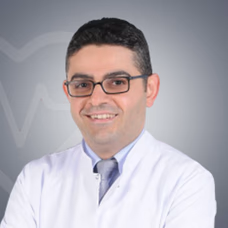
Gynecologic oncologic surgeon and ESGO-certified specialist (2017). Ranked 1st in the national gynecologic oncology subspecialty examination (2013). Author of a publication on preventing tumor spillage during laparoscopic radical hysterectomy (J Minim Invasive Gynecol, 2018). Specializes in minimally invasive cervical cancer surgery and has extensive experience in radical hysterectomies. More than 40 publications and over 480 citations.
2. Istanbul Atlas University Hospital
Istanbul Atlas University Hospital is a university hospital in Istanbul actively developing its gynecologic oncology department. The hospital performs modern cervical cancer surgery using laparoscopic and robot-assisted techniques. It provides a full cycle of care: from precise diagnostics and surgery to subsequent therapy and follow-up care. Complex cases are regularly discussed at multidisciplinary tumor boards.
Hospital Advantages:
- University status with an academic base and regular multidisciplinary tumor boards
- Modern laparoscopic and robot-assisted surgical technologies
- Complete cervical cancer treatment within one institution
- Extensive experience in fertility-preserving surgeries for young patients
- Active scientific and educational activity of physicians
- Application of the latest European ESGO and FIGO recommendations
Leading Specialist:
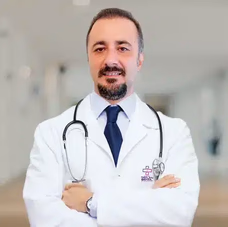
Gynecologic oncologic surgeon and ESGO member. Author of textbook chapters and publications on fertility-preserving surgery for cervical cancer, as well as the management of invasive and preinvasive cervical lesions during pregnancy. Completed subspecialty training at Zeynep Kamil Hospital and worked at Anadolu Medical Center. Has extensive experience in fertility-preserving procedures and modern cervical cancer surgery. More than 50 publications and 10 textbook chapters.

3. Anadolu Medical Center
Anadolu Medical Center is one of Turkey’s leading oncology hospitals with OECI accreditation, ESMO Designated Centre status, and a long-standing strategic partnership with Johns Hopkins Medicine. The hospital offers a full spectrum of cervical cancer treatment according to international protocols: precise staging, surgical treatment, advanced radiation therapy, and systemic therapy. The hospital operates 11 specialized tumor boards, including a gynecologic oncology board.
Hospital Advantages:
- OECI accreditation and ESMO Designated Centre status
- Strategic partnership with Johns Hopkins Medicine
- Advanced equipment: da Vinci Xi, Varian Edge, MR-LINAC, CyberKnife
- Complete cervical cancer treatment within one center
- Highest level of multidisciplinary care and scientific activity
Leading Specialists:
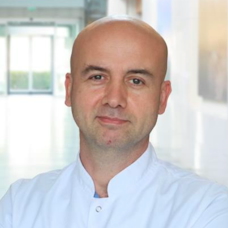
Gynecologic oncologic surgeon. Completed a focused gynecologic oncology subspecialty fellowship at Marmara University (2015–2018). Trained at Sheba Medical Center (Israel), Asklepios Klinik Hamburg (Germany), and Charité Berlin (Germany). Specializes in minimally invasive, laparoscopic, and robot-assisted cervical cancer surgery, radical hysterectomy, and sentinel lymph node techniques. Has publications on cervical cancer and management of invasive cervical lesions.

Radiation oncologist and President of the Turkish Society for Radiation Oncology. One of Turkey’s leading experts in MR-guided adaptive radiation therapy (MRgRT) for cervical cancer. Author of key publications, including 2020 and 2024 studies on brachytherapy alternatives and MRgRT boost for cervical cancer. Actively implements modern ESGO/ESTRO protocols.

4. Florence Nightingale Hospital (Şişli)
Florence Nightingale Hospital (Şişli) is one of Istanbul’s leading multidisciplinary hospitals with a high international standard. The hospital offers modern cervical cancer surgery, including minimally invasive and robot-assisted procedures, within a multidisciplinary treatment approach.
Hospital Advantages:
- JCI accreditation and high international standards
- Extensive experience in minimally invasive and robot-assisted gynecologic surgery
- Multidisciplinary tumor boards for cervical cancer treatment planning
- Comprehensive care: from precise diagnostics to surgery and follow-up care
- International experience of physicians and modern surgical equipment
Leading Specialist:
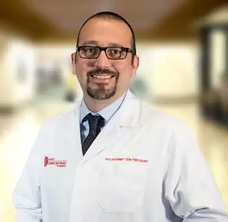
Gynecologic oncologic surgeon with more than 30 years of experience and over 1,100 minimally invasive surgeries. Specializes in the surgical treatment of cervical cancer. Completed international training in Oxford, Leeds, and Florida Hospital and holds a robotic surgery certification. Performs radical hysterectomies and fertility-preserving surgeries using laparoscopic and robot-assisted technologies.

5. Memorial Şişli Hospital
Memorial Şişli Hospital is the first hospital in Turkey accredited by JCI. It is one of the country’s leading oncology hospitals with a strong gynecologic oncology department. The hospital provides a full spectrum of cervical cancer treatment: advanced surgery, radiation therapy, and personalized systemic therapy according to international protocols.
Hospital Advantages:
- High level of robot-assisted and laparoscopic surgery
- Strong multidisciplinary tumor board
- Complete cervical cancer treatment within one center
- Advanced equipment (da Vinci, CyberKnife, TrueBeam, NGS)
- Treatment according to ESMO/NCCN protocols
Leading Specialists:
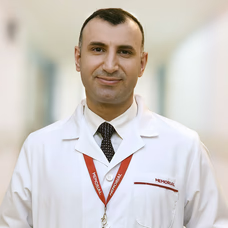
Gynecologic oncologic surgeon with 19 years of experience at Memorial Şişli. Specializes in robot-assisted (da Vinci) and laparoscopic cervical cancer surgery. Performs both radical hysterectomies and fertility-preserving procedures.
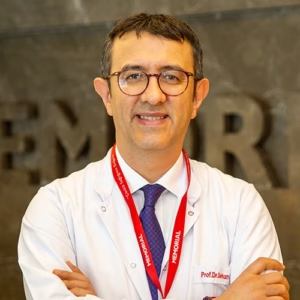
Leading medical oncologist at Memorial Şişli. More than 18 years of clinical experience. Member of ASCO and ESMO. Specializes in systemic treatment of gynecologic cancers. Actively uses molecular profiling (NGS) and immunotherapy (including pembrolizumab) for personalized cervical cancer treatment.

6. Liv Hospital Ulus
Liv Hospital Ulus is a modern hospital in Istanbul with a high level of robotic and minimally invasive surgery. The hospital provides comprehensive cervical cancer treatment, including precise diagnostics, surgical interventions, and subsequent therapy within a multidisciplinary approach.
Hospital Advantages:
- JCI accreditation and advanced equipment (including MR-LINAC)
- High level of robot-assisted and laparoscopic surgery
- Regular multidisciplinary tumor boards
- Complete cervical cancer treatment within one center
- Active implementation of modern protocols and technologies
Leading Specialist:
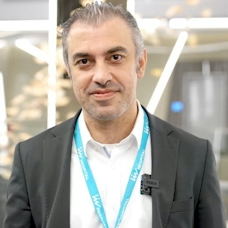
Gynecologic oncologic surgeon. Specializes in the surgical treatment of cervical cancer. Has experience in colposcopy and evaluation of cervical lesions. Completed a gynecologic oncology subspecialty fellowship at Istanbul University (2015–2019). Actively publishes in gynecologic oncology and is a member of ESGO and MEMAGO. Performs laparoscopic and robot-assisted surgeries.

7. Acibadem Maslak Hospital
Acibadem Maslak Hospital is a modern high-tech hospital in Istanbul and part of the Acıbadem network. The hospital provides a full spectrum of cervical cancer treatment: advanced surgery, radiation therapy, and personalized systemic therapy according to international protocols.
Hospital Advantages:
- Part of the leading Acıbadem network with a high technological level
- Advanced equipment: MRIdian (MR-LINAC), da Vinci, TrueBeam
- Multidisciplinary tumor boards for individualized treatment planning
- Complete cervical cancer treatment within one center
- Experience in implementing modern ESMO, KEYNOTE, and MR-guided RT protocols
Leading Specialists:

Leading medical oncologist. One of Turkey’s most experienced specialists in systemic therapy. Completed a fellowship at MD Anderson Cancer Center. Provides modern cervical cancer treatment, including pembrolizumab according to KEYNOTE protocols. Participates in international clinical trials and actively uses molecular profiling for personalized therapy.
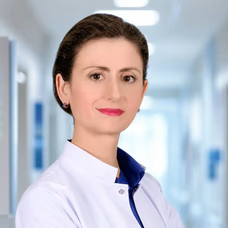
Radiation oncologist. Specializes in MR-guided adaptive radiation therapy (MRgRT) and stereotactic radiotherapy for cervical cancer. Co-author of key publications on brachytherapy alternatives (including studies from 2020 and 2024). Works with the MRIdian Linac system — one of the most advanced systems in the world.
Who Is Best Suited Depending on the Stage and Treatment Goal
When it comes to cervical cancer treatment, the right question is almost never “who is the best doctor,” but rather “which team is best suited for your specific situation.” This is not just a formality. The outcome directly depends on the disease stage and treatment structure.
Early Stage and Surgical Treatment
For stages IB1–IIA1, when the tumor is localized and operable, the surgeon plays the key role. In such cases, patients most often consider Prof. Dr. Gökhan Boyraz from VM Medical Park Florya.
His profile is important not only because of his experience, but also because of his surgical approach. After the LACC Trial, it became clear that surgical technique affects the risk of recurrence. Therefore, the question today is not simply about choosing a method, but about how exactly the surgery is performed and what measures are taken to prevent tumor spread.
Locally Advanced Disease and Radiation Therapy
For stages IB2–IVA, the treatment strategy changes. The primary treatment becomes a combination of radiation therapy and systemic treatment. In these situations, the radiation oncologist and the entire multidisciplinary team become the central focus.
In such cases, hospitals with advanced radiation therapy capabilities are more often considered, such as Anadolu Medical Center or Acibadem Maslak Hospital. These centers provide access to modern technologies, including MR-guided radiotherapy and brachytherapy, which are critical for disease control.
Balanced Combination of Technology and Experience
If the case is more complex and requires a combined approach, the focus is usually not on a single doctor but on a team within one center. In this regard, Acibadem Maslak is often considered a balanced option.
It combines advanced radiation therapy, systemic treatment, and surgery within one structure. This is important because cervical cancer treatment almost always consists of several stages, and the quality of coordination between these stages affects the final result.
Why the Team Is More Important Than One Doctor
Cervical cancer is almost never treated with just one method. It is always a combination of decisions made at different stages. That is why having a tumor board and coordinated teamwork becomes a key factor.
This is also supported by clinical data. The SUCCOR Study demonstrated that patients treated in centers with high adherence to ESGO standards had a significantly lower risk of recurrence and complications.
That is why, in real clinical practice, choosing a hospital with a well-established treatment system is often more important than choosing a single, even highly skilled, physician.
Survival Statistics and Treatment Outcomes
When it comes to cervical cancer treatment, the key question is not simply “where they treat it,” but what real results the hospitals achieve. In medicine, this is measured quite clearly — through 5-year survival rates and remission rates.
Overall Survival Rates
According to clinical observations and publications from Turkish oncology centers, the overall 5-year survival rate for cervical cancer is approximately 60–65% when all disease stages are included (Diagnostics, 2025).
This is an average показатель. It includes both early-stage cases and advanced forms, which is why it always appears lower than the actual results achieved in top hospitals.
What Is Behind These Numbers
Behind the statistics are usually very specific factors. First, early diagnosis. Second, regular multidisciplinary tumor boards where the treatment plan is discussed by several specialists at once. And finally, post-treatment follow-up — monitoring, reassessments, and therapy adjustments.
That is why the numbers themselves matter, but even more important is how exactly the hospital achieves them. This is precisely what distinguishes strong oncology centers from simply “good hospitals.”
How Treatment Works, the Advantages of Turkey, and Recovery
When a person faces cancer, the most frightening thing is uncertainty. Not so much the therapy itself, but the question of what exactly will happen step by step. In Turkey, the process is usually organized in a way that helps remove this uncertainty as quickly as possible.
How Treatment Works
Everything usually begins with a review of the diagnosis. Even if examinations have already been completed, they are rechecked — additional tests are performed, the stage is уточняется, and sometimes the histology is reviewed again. This is standard practice because the entire treatment plan depends on the accuracy of the diagnosis.
After that, the case is discussed at a tumor board. It includes an oncologist, surgeon, radiologist, and sometimes a reproductive specialist if fertility preservation is an issue. The goal is not simply to confirm the diagnosis, but to build a strategy — what to do first, which methods to combine, and how to reduce risks.
The treatment itself can follow different scenarios. In early stages, surgery is more often considered. In more complex cases, radiation therapy and chemotherapy are added, sometimes simultaneously. None of this is done “according to a template” — the plan usually changes along the way depending on the body’s response.
Importantly, the patient is not left alone during this process. There is almost always a coordinator or physician who manages communication and explains what happens next. It may seem like a small detail, but it significantly reduces anxiety.
Advantages of Treatment in Turkey
Without unnecessary exaggeration, Turkey became popular for several practical reasons that truly matter in real life.
- First, access to modern treatment methods. Major oncology centers use the same protocols as Europe, based on international guidelines. At the same time, procedures are often available faster and without long waiting times.
- Second, the organization of the process itself. Examinations, consultations, and the start of treatment are usually completed within a short timeframe. There is no need to wait for months, which is critical in oncology.
- The third point is cost. It is significantly lower than in Germany or Israel, while maintaining a comparable level of technology and physician expertise. At the same time, the structure of expenses is usually clear in advance, without unexpected additional charges.
Recovery and Follow-Up
After the main treatment phase, a stage begins that is often underestimated — recovery. Depending on the treatment method, it may look different.
After surgery, the patient usually stays in the hospital for several days and then gradually returns to a calmer routine. After radiation therapy or chemotherapy, recovery happens more gradually, with ongoing monitoring of tests and overall well-being.
An important part is follow-up care. The patient is not simply “released” immediately after treatment. Control examinations, reassessments, and sometimes remote consultations are scheduled. This is necessary to detect any changes in time and avoid missing a recurrence.
And here again, the hospital’s approach matters. In some places, this is just a formality, while in others it is a truly structured follow-up system with a clear plan for months ahead.

Experts Medical — How We Support Treatment Abroad
When a person faces a diagnosis, the most difficult part is not only the treatment itself, but the entire process. Where to go, whom to trust, how not to make the wrong choice. This is where we step in and take over the organization so the patient clearly understands what is happening and what to do next.
At Experts Medical, we begin by analyzing the medical situation. We study the documents, clarify the details, and if necessary help collect missing examinations. This is the foundation without which it is impossible to move forward.
After that, we select the doctor and hospital. Not based on the principle of “the most famous,” but according to the specific case. The same diagnosis can be treated differently, and it is important to reach the right specialist. Then we create a clear plan. Without complicated wording. The patient sees the treatment stages, timelines, and estimated costs. All payments go directly to the hospital, without hidden commissions.
We fully take over the organization of the trip and stay by the patient’s side at every stage. This includes:
- analyzing medical documents and clarifying the diagnosis
- selecting the doctor and hospital for the specific case
- creating a detailed treatment program
- coordinating dates and hospital appointments
- assisting with visas, tickets, and accommodation
- arranging transfers and interpreters
- providing 24/7 support during treatment
- helping resolve issues with the hospital and monitoring invoices
And most importantly, we do not disappear after treatment begins. We stay in touch, help with communication, monitor the process, and step in whenever any questions arise. For many patients, this becomes a key factor because they understand they are not going through this journey alone.
Conclusion
If you look at cervical cancer treatment in Turkey without unnecessary noise, one main thing becomes clear: the difference between hospitals is not in the “strength of the name,” but in the system itself. Some centers are stronger in surgery, others in radiation therapy, while some excel in teamwork and standards. And ultimately, this is what affects the result.
For straightforward cases, several options may be suitable, and the choice becomes more a matter of convenience and speed. But the more complex the situation, the narrower the circle becomes. At that point, what matters is not just the equipment, but the presence of real tumor boards, the experience of the specific team, and an understanding of how to structure treatment according to international protocols.
That is why the right approach is not to search for the “best hospital overall,” but to find the one that best fits the specific task. Sometimes this choice is obvious, and sometimes it is not. And it is precisely in these “non-obvious” situations that mistakes are most often made.
FAQ
When should radiation therapy be chosen instead of surgery for cervical cancer?
This depends on the stage and extent of the disease. In early stages, surgery is more often considered. In more advanced stages, chemoradiotherapy becomes the standard. In some cases, modern technologies such as MR-guided radiotherapy can achieve results comparable to surgery.
How important is da Vinci robotic surgery specifically for cervical cancer?
After the LACC Trial, attitudes toward laparoscopy changed, and today the key issue is not the robot itself, but the surgical technique. The surgeon’s experience and adherence to protocols aimed at preventing tumor spread during surgery are far more important.
Is there any benefit in choosing a hospital with OECI or ESMO accreditation?
Yes, especially in complex cases. Such accreditations mean that the hospital has passed an independent evaluation across many parameters — from treatment structure to teamwork. For standard cases this is not always critical, but for complex oncology cases it is a serious advantage.
What is more important when choosing a hospital: technology or the team?
The team. Advanced technologies are available almost everywhere at a good level, but it is the team that determines how these technologies will be used. Mistakes happen more often not because of a lack of equipment, but because of incorrect treatment strategy.
How do we at Experts Medical select a hospital and doctor for complex cases?
We do not rely on a single criterion. First, we analyze the medical situation, then we look at where there is real experience specifically with this type and stage of cancer. Sometimes there is one obvious hospital, and sometimes there are several options with different treatment strategies. In such cases, we present all possible scenarios and explain the differences so the decision is informed rather than random.