



- At the clinic's price without markups
- with full doctor support
When facing laryngeal cancer, the main thing is not just to find a good clinic, but to reach doctors who truly work frequently with this specific tumor location and know how to preserve the voice. Over the past few years, Turkey has become one of the strongest destinations for the treatment of head and neck tumors. The country offers modern equipment, experienced teams, and significantly more affordable conditions than Europe.
In Turkey, treatment of early-stage laryngeal cancer shows very good results. According to the large Turkish multicenter TROD-01-007 study, when modern radiation therapy (IMRT) is used, the 3-year locoregional control rate reaches 93% in patients with early vocal cord cancer. In most cases, this allows successful voice preservation and avoidance of total laryngectomy (PubMed).
We carefully studied the private sector and selected the centers and doctors who are truly worth contacting first. You do not need to search and compare everything yourself. At Experts Medical, we have already done this work for you.
1. Acibadem University / Acibadem Maslak Hospital (Istanbul)
Acibadem Maslak is one of Turkey’s strongest centers for laryngeal cancer treatment, especially in the field of organ-preserving therapy and radiation oncology. A closely coordinated team of radiation oncologists with extensive experience in preserving voice and laryngeal function in early and locally advanced stages works here.
Advantages for laryngeal cancer treatment:
- One of Turkey’s best head and neck radiation oncology teams
- Carotid-sparing IMRT/VMAT according to the TROD-01-007 protocol (a study involving 201 patients with early-stage laryngeal cancer)
- Modern equipment: TrueBeam, CyberKnife M6, MR-linac
- The possibility of organ-preserving chemoradiotherapy for T3-stage disease
- Multidisciplinary Tumor Board involving ENT oncologists, radiation oncologists, and medical oncologists
- JCI accreditation and a high level of voice rehabilitation
Leading specialists:
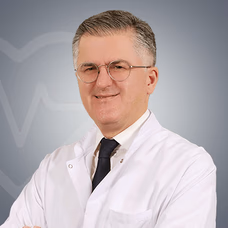
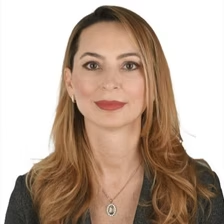
Head of the Department of Radiation Oncology at Acibadem University. Professor with more than 35 years of experience in treating laryngeal cancer. Co-author of publications on postoperative radiation therapy and induction chemoradiotherapy for locally advanced laryngeal and hypopharyngeal cancer.
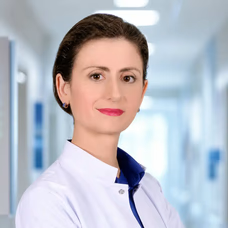
Radiation oncologist, Chair of the ESTRO National Societies Committee (2024–2027), President of the Turkish Society for Radiation Oncology (TROD) 2025–2027. Co-author of the key TROD-01-007 study on carotid-sparing IMRT/VMAT for early vocal cord cancer. One of Turkey’s most respected specialists in radiation therapy for laryngeal cancer.
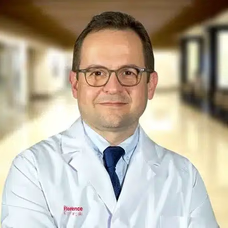
Radiation oncologist. Key author of the TROD-01-007 study (Head Neck, 2022), which analyzed treatment outcomes in 201 patients with early glottic cancer using carotid-sparing IMRT/VMAT. Specializes in modern organ-preservation technologies.

2. Florence Nightingale Hospital (Istanbul)
Florence Nightingale Hospital is Turkey’s leading surgical center for laryngeal cancer treatment, where special attention is paid to organ-preserving surgery and maximum voice preservation. Modern minimally invasive techniques are successfully applied here, allowing patients to return to normal life with good voice quality.
Advantages for laryngeal cancer treatment:
- One of Turkey’s strongest centers for transoral laser microsurgery (TLM)
- A full range of surgical treatments: from TLM for early stages to partial and total laryngectomy
- Reconstructive surgery and voice rehabilitation after treatment
- Powerful multidisciplinary Tumor Board (ENT oncologists + radiologists + medical oncologists)
- JCI accreditation and a high-tech surgical infrastructure
Leading specialist:
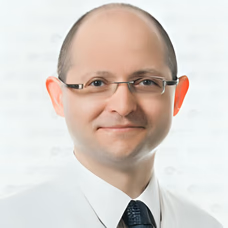
ENT oncologist, head and neck surgeon, FEBU (Fellow European Board of Otorhinolaryngology – Head & Neck Surgery). One of Turkey’s most experienced specialists in transoral laser microsurgery of the larynx (TLM). Has scientific publications on laryngeal cancer, including a study of extracapsular spread (ENE) in 76 patients with laryngeal squamous cell carcinoma, as well as work on voice preservation and restoration after treatment.

3. VKF American Hospital (Istanbul)
VKF American Hospital is a prestigious center with a high level of radiation oncology, where patients with laryngeal cancer receive modern organ-preserving radiation treatment according to international standards. The clinic attracts patients through the expertise of specialists trained in leading global centers.
Advantages for laryngeal cancer treatment:
- High-precision radiation therapy IMRT/VMAT and SBRT
- Modern equipment for safe and effective irradiation of the larynx with maximum voice preservation
- Application of protocols corresponding to MD Anderson standards
- Multidisciplinary approach with close collaboration between radiation oncologists and ENT surgeons
- JCI accreditation and a high level of patient comfort
Leading specialist:
Radiation oncologist, FASTRO (Fellow American Society for Radiation Oncology). Specialist with extensive experience in radiation therapy for head and neck tumors, including laryngeal cancer. Completed training at MD Anderson Cancer Center and actively applies modern IMRT/VMAT and SBRT technologies for organ preservation.

4. Bayındır Hospital (Ankara)
Bayındır Hospital is a reliable multidisciplinary center in Ankara where patients with laryngeal cancer receive high-quality surgical treatment in comfortable conditions. The clinic is especially convenient for residents of central Turkey and nearby regions who want to undergo treatment close to home without traveling to Istanbul.
Advantages for laryngeal cancer treatment:
- JCI accreditation (one of the first clinics in Turkey, repeatedly confirmed)
- High-quality indicators according to Turkish Ministry of Health standards (more than 96 points)
- Extensive experience in head and neck surgery within a modern multidisciplinary hospital
- A full range of surgical interventions for laryngeal cancer
- Participation in international external laboratory quality control programs (RIQAS, CAP)
- Comfortable inpatient conditions and professional postoperative support
Leading specialist:
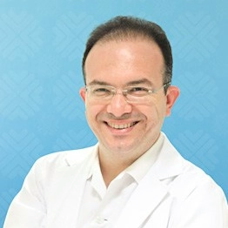
ENT oncologist, head and neck surgeon. Professor with more than 30 years of experience in treating laryngeal cancer. Specializes in the surgical treatment of laryngeal tumors, including various types of laryngectomies and reconstructive procedures. One of the most experienced specialists in Ankara in this field.

5. Liv Hospital / Istinye University (Istanbul)
Liv Hospital Istinye is a modern university medical center where patients with laryngeal cancer receive comprehensive treatment, including effective systemic therapy for recurrent and metastatic disease. The clinic combines a scientific approach with a high level of comfort and personalized support.
Advantages for laryngeal cancer treatment:
- JCI accreditation and university hospital status
- Modern radiotherapy center with the Versa-HD Hexapod system for precise targeted irradiation
- Expertise in immunotherapy and targeted therapy for recurrence and metastases
- Powerful multidisciplinary Tumor Board involving medical oncologists, radiologists, and ENT surgeons
- Personalized approach based on the molecular profile of the tumor
- High level of comfort and support for international patients
Leading specialist:
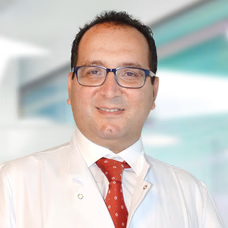
Medical oncologist, professor. One of Turkey’s leading specialists in systemic therapy for head and neck cancer. Has extensive experience in clinical research (more than 40 phase II–III studies) and over 240 scientific publications. Specializes in the treatment of recurrent and metastatic laryngeal cancer using pembrolizumab, nivolumab, and cetuximab in full accordance with current ESMO and NCCN guidelines.

6. Memorial Şişli Hospital (Istanbul)
Memorial Şişli Hospital is one of Turkey’s leading clinics for comprehensive laryngeal cancer treatment, especially in recurrent and metastatic stages. It is a clinic with an impeccable reputation, where a powerful multidisciplinary team works and the most modern approaches to systemic therapy are applied.
Advantages for laryngeal cancer treatment:
- JCI accreditation and status as one of Turkey’s best clinics
- Excellent organization of the multidisciplinary Tumor Board
- High-precision molecular profiling and NGS testing
- Modern immunotherapy and targeted therapy for recurrence and metastases
- Comprehensive support at all stages of treatment — from diagnosis to rehabilitation
- The highest level of service and comfort for international patients
Leading specialist:
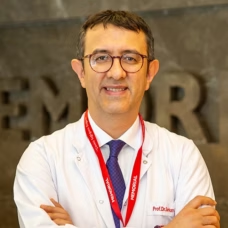
Medical oncologist. Specialist with deep experience in molecular profiling of head and neck tumors. Actively uses advanced NGS testing to identify key mutations (TP53, EGFR) and PD-L1 levels, which makes it possible to individually select immunotherapy (pembrolizumab, nivolumab) and other modern drugs for recurrent and metastatic laryngeal cancer.
7. Anadolu Medical Center (Istanbul)
Anadolu Medical Center is a respected international-level oncology center where patients with laryngeal cancer receive high-quality systemic therapy according to the highest global standards. The clinic is known for its multidisciplinary approach and close partnerships with leading cancer centers worldwide.
Advantages for laryngeal cancer treatment:
- International ESMO and OECI accreditations, partnership with Johns Hopkins Medicine
- High-level multidisciplinary Tumor Board
- Modern systemic therapy for recurrent and metastatic laryngeal cancer
- Personalized approach taking into account the molecular characteristics of the tumor
- Comfortable conditions and professional support for international patients
- Integration of the best global treatment protocols (ESMO, NCCN)
Leading specialist:
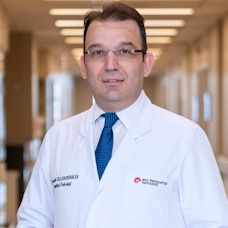
Medical oncologist with extensive clinical experience. Specializes in systemic treatment of oncological diseases, including head and neck cancer. Actively uses modern immunotherapy and targeted therapy protocols (pembrolizumab, nivolumab, cetuximab) for recurrent and metastatic laryngeal cancer. Works in close collaboration with a team of radiation oncologists and ENT surgeons within a multidisciplinary approach.

8. Medical Point Hospital (Izmir)
Medical Point Hospital is a modern oncology center in Izmir where patients with laryngeal cancer receive qualified systemic therapy for recurrent and metastatic disease. The clinic is convenient for residents of western Turkey and patients who prefer treatment in the comfortable atmosphere of a large regional center.
Advantages for laryngeal cancer treatment:
- Specialized treatment for recurrent and metastatic laryngeal cancer
- Use of modern immunotherapy and targeted therapy regimens
- Multidisciplinary approach involving medical oncologists, radiologists, and ENT specialists
- Modern equipment and comfortable inpatient conditions
- Convenient location in Izmir for patients from western Turkey
- Individualized therapy selection according to international protocols
Leading specialist:
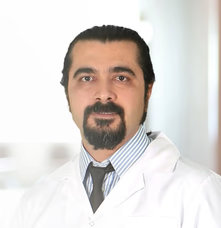
Prof. Çağatay Arslan
Medical oncologist, professor. Specializes in systemic treatment of oncological diseases, including head and neck cancer. Has extensive experience using immunotherapy (pembrolizumab, nivolumab) and other modern drugs for recurrent and metastatic laryngeal cancer.
Final analysis: Whom and when to contact
In the treatment of laryngeal cancer, it is especially important to choose a specialist and clinic where the team truly has targeted experience specifically in this disease. Here is our summary after thorough analysis.
1. Most recommended specialists
- Dr. Teuta Zoto Mustafayev (Acibadem Maslak) — the best choice for radiation therapy. Leading specialist in Turkey’s private sector with a large verified study specifically on laryngeal cancer (201 patients with early glottic cancer, publication in Head Neck, 2022). Ideal for organ-preserving treatment in early stages (T1–T2).
- Prof. Banu Atalar (Acibadem Maslak) — one of Turkey’s leading radiation oncologists (ESTRO Chair). An excellent choice for complex cases, the need for chemoradiotherapy, and the use of CyberKnife.
- Prof. Bora Başaran (Florence Nightingale) — the best ENT oncologic surgeon in Turkey’s private sector for laryngeal cancer. Highly skilled in TLM (transoral laser microsurgery), reconstruction, and voice preservation.
2. Best centers by the balance of “experience + technology”
- Acibadem Maslak — the strongest MDT for laryngeal cancer in Turkey. Three specialized radiation oncologists focused on head & neck cancer, modern equipment (TrueBeam, CyberKnife M6, MR-linac), and a comprehensive multidisciplinary team.
- Florence Nightingale Hospital — the optimal choice when surgical treatment or transoral laser microsurgery is required: a method of laryngeal cancer treatment in which the tumor is removed through the mouth under a microscope using a laser, without external incisions on the neck. Partial or total laryngectomy is also performed effectively.
3. Top 3 for initial consideration
- Teuta Zoto Mustafayev (Acibadem) — for planning radiation therapy in early stages with maximum voice preservation.
- Bora Başaran (Florence Nightingale) — when surgical intervention is required (transoral laser microsurgery or laryngectomy).
- Banu Atalar (Acibadem) — for locally advanced disease and complex radiation therapy.
Selection matrix by stage
|
Situation |
Recommended specialist / center |
|
T1–T2 glottic cancer (radiation therapy) |
Teuta Zoto Mustafayev / Banu Atalar (Acibadem) |
|
T1–T2 (transoral laser microsurgery, surgery) |
Bora Başaran (Florence Nightingale) |
|
T3 (chemoradiotherapy) |
Atalar / Zoto Mustafayev + medical oncologist |
|
T4a (surgery + radiation therapy) |
Başaran + Acibadem team |
|
Recurrence / metastases |
Serkan Keskin (Memorial) or Saadettin Kılıçkap (Liv) |
|
Complex cases + MR-linac / CyberKnife |
Acibadem Maslak |
Important note
Laryngeal cancer is a disease where treatment outcomes largely depend not only on surgery or radiation, but also on high-quality voice and swallowing rehabilitation. We strongly recommend clarifying the availability of a speech therapist and a voice rehabilitation program when contacting a clinic.
How treatment and recovery for laryngeal cancer are carried out in Turkey
In Turkish clinics, laryngeal cancer treatment follows international protocols (ESMO-EHNS-ESTRO and NCCN), with a focus on maximum preservation of the patient’s voice and quality of life. Everything takes place in the comfortable environment of JCI-accredited clinics with full support for international patients.
Main treatment methods
This information is for informational purposes only and does not constitute medical advice or treatment guidelines. Laryngeal cancer treatment should only be prescribed individually by a qualified oncologist, taking into account the stage of the disease, comorbidities, and examination results.
- Early stages (T1–T2)
- Transoral laser microsurgery (TLM) — a minimally invasive surgery performed through the mouth. Allows tumor removal with minimal trauma while preserving the voice.
- Radiation therapy — highly precise IMRT/VMAT with protection of healthy tissues (carotid-sparing technique). Often serves as the main treatment for vocal cord cancer.
- Locally advanced stages (T3–T4)
- Organ-preserving chemoradiotherapy (cisplatin + modern RT) — the standard approach for preserving the larynx.
- Surgical treatment — partial or total laryngectomy (if necessary) followed by reconstruction and adjuvant radiation therapy.
- Recurrent and metastatic cancer
- Immunotherapy — pembrolizumab (Keytruda) and nivolumab depending on PD-L1 status.
- Targeted therapy and cetuximab.
- Molecular NGS testing to select the most effective drug.
How treatment is organized in Turkey
- First stage — online consultation + arrival for additional examinations (PET-CT, MRI, biopsy, molecular profiling).
- Oncology board — multidisciplinary discussion involving an ENT oncologist, radiation oncologist, medical oncologist, and pathologist.
- Treatment — usually takes from 4 to 8 weeks depending on the stage.
- Rehabilitation — mandatory work with a speech-language pathologist/phoniatrician (voice and swallowing recovery). After total laryngectomy, patients are taught speech using a voice prosthesis or esophageal speech.
Recovery after treatment
- After TLM or partial laryngectomy — the voice usually returns within several weeks.
- After total laryngectomy — speech training with a prosthesis (usually within 1–2 months).
- Patients note a high level of comfort: modern hospital rooms, nutrition, 24/7 support, and the availability of Russian-speaking coordinators and interpreters.
Our patients often say that treatment in Turkey is much calmer and more comfortable than they expected. The Experts Medical team helps at every stage — from collecting documents to returning home with detailed recommendations.
Survival statistics for laryngeal cancer
Overall survival
According to clinical reviews and registries, the average 5-year survival rate for laryngeal cancer is approximately 60–70% across all stages combined. These figures are confirmed by large analyses based on clinical data and studies published in medical databases. (StatPearls / NCBI, 2024)
Meta-analyses and clinical reviews also note that with modern combined treatment, outcomes are gradually improving, especially due to early diagnosis and more precise therapy selection.
Survival by stage
The stage of the disease remains the key prognostic factor. In early stages (I–II), the 5-year survival rate can reach 75–90%, while in locally advanced forms (III–IV), it decreases to approximately 30–50%. (StatPearls / NCBI, 2024)
Clinical studies show that lymph node involvement and the presence of metastases remain the main factors worsening prognosis, even when modern treatment regimens are used.
Modern treatment outcomes
In recent years, the focus has shifted toward organ-preserving treatment. According to clinical studies, chemoradiotherapy makes it possible to preserve the larynx in 60–80% of patients without reducing overall survival. (PubMed, 2020)
This is important: the goal is not only disease control, but also preservation of quality of life — voice, breathing, and the ability to swallow normally.
Laryngeal cancer treatment outcomes in Turkey
According to clinical studies conducted in Turkish cancer centers, laryngeal cancer treatment outcomes are generally comparable to international practice. In retrospective analyses, the 5-year overall survival rate ranged from approximately 65% to 85% depending on the stage and selected treatment strategy. For example, in a study of patients with early-stage laryngeal cancer, the 5-year survival rate reached 81.9% (Journal of Oncology, 2019).
Short conclusion
If we remove all unnecessary details, the picture looks like this: when detected early, laryngeal cancer is treated well and predictably. In advanced stages, treatment becomes more complex, but even in these cases, modern protocols make it possible to control the disease and preserve organ function.

How Experts Medical helps organize treatment abroad
At Experts Medical, we get involved at the moment when the patient faces the main question — where to go and whom to trust with treatment. In such situations, it is easy to get lost: there are many clinics, recommendations vary, and there is no time for mistakes. That is why we take over the process and guide it step by step, so the person does not remain alone with this challenge.
- we study the medical situation, collect documents, and help with paperwork
- we select a doctor not “by specialty,” but according to the specific diagnosis and stage
- we create a detailed treatment plan so it is clear what will happen and why
- we organize the trip: appointments, tickets, accommodation, interpreter
- we support the patient at every stage and remain available 24/7
- we help resolve financial issues and monitor billing accuracy
- if necessary, we involve charitable foundations to help cover treatment costs for children
We work directly with clinics, so the patient pays for treatment on-site without additional organizational markups. As a result, everything is built into a clear system: there is a plan, there is a team, and there is support at every stage — from the first contact to recovery after treatment.
Conclusion
In most cases, the key decision is not where to receive treatment, but how exactly to treat the disease: radiation therapy, surgery, or their combination. And this is where it becomes critical whether the team has real experience specifically in head and neck tumors, rather than just a general oncology background.
Practice shows that the best outcomes are achieved where there is balance: a strong MDT, access to technology, and doctors who regularly work with such cases. That is why the same diagnosis can mean a completely different treatment plan in different clinics.
Frequently asked questions about laryngeal cancer treatment in Turkey
Is it possible to preserve the voice in laryngeal cancer?
Yes, in early stages (T1–T2), the voice can be preserved in most cases. In Turkey, transoral laser microsurgery (TLM) and highly precise IMRT/VMAT radiation therapy with healthy tissue protection are successfully used for this purpose. The choice of method depends on the exact location of the tumor and is discussed at a multidisciplinary tumor board.
How long does treatment in Turkey take?
The duration of treatment depends on the stage of the disease. In early stages, treatment usually takes 4–6 weeks; in locally advanced stages (T3–T4), 6–8 weeks. As a rule, all treatment is carried out in one clinic. Our coordinators help organize the trip as comfortably and efficiently as possible.
Which method is better — surgery or radiation therapy?
The optimal method is determined individually at an oncology board involving an ENT surgeon, radiation oncologist, and medical oncologist. For vocal cord cancer, radiation therapy or TLM is often preferred. More advanced tumors may require combined treatment. We arrange consultations with several leading specialists so the patient can receive an objective opinion.
How is voice rehabilitation carried out after treatment?
Voice and swallowing rehabilitation are important parts of the treatment program. Leading clinics (Acibadem and Florence Nightingale) employ experienced speech-language pathologists/phoniatricians. After laser surgery, the voice usually recovers within several weeks. After total laryngectomy, patients are taught speech using a voice prosthesis. We always take the availability of high-quality rehabilitation support into account when selecting a clinic.