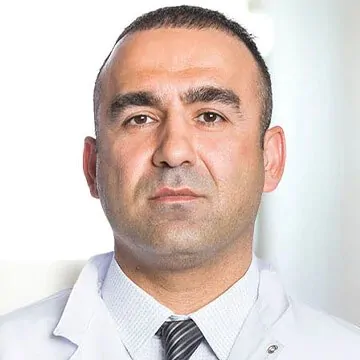





- At the clinic's price without markups
- with full doctor support
When a person is diagnosed with prostate cancer, the first emotions are usually confusion and fear. Above all, patients want to find the doctors and the hospital that will give them the best possible chances.
Fortunately, Turkey has become one of the world’s leading destinations for prostate cancer treatment. The country combines highly experienced surgeons, advanced technologies (Da Vinci, MR-LINAC, PSMA PET), and significantly more affordable prices compared to Europe and the United States.
For localized prostate cancer, the 5-year survival rate approaches 100% (Clinical study, PMC / NIH, 2023). Outcomes are significantly worse in metastatic disease, which is why choosing the right doctor and hospital from the very beginning is critically important. The wrong treatment approach can cost valuable time.
At Experts Medical, we have been helping prostate cancer patients for more than 9 years. During this time, over 12,000 patients have trusted us with their treatment journey. We have carefully studied dozens of hospitals and specialists and selected the centers that consistently achieve the best real-world outcomes. You no longer need to spend weeks comparing options and doubting your decision — we have already done that work for you.

1. Medipol Mega University Hospital
Medipol Mega University Hospital is a university hospital in Istanbul with JCI accreditation. The hospital provides a full range of prostate cancer treatment, including high-precision diagnostics (PSMA PET/CT, 3 Tesla MRI, 256-slice CT), focal therapy (HIFU, IRE), robot-assisted radical prostatectomy using the Da Vinci system, and multidisciplinary treatment planning through tumor boards.
Hospital advantages:
- University hospital status with regular multidisciplinary tumor boards
- Advanced focal therapy technologies for prostate cancer (HIFU and IRE)
- Da Vinci robot-assisted surgery
- High-precision PSMA PET/CT and 3 Tesla MRI diagnostics
- JCI accreditation
- Full-cycle prostate cancer treatment in one center
Leading specialists:

Urologist and world-renowned expert in focal therapy for prostate cancer (HIFU, IRE). President of the Société Internationale d'Urologie (SIU) since 2024. Founder of the EAU Section of Uro-Technology (ESUT). Author of more than 750 scientific publications with over 3,225 citations. Co-author of the book “Imaging and Focal Therapy of Early Prostate Cancer” and international focal therapy guidelines. Principal Investigator in IRE prostate cancer studies.

Uro-oncologist specializing in robot-assisted and laparoscopic prostate cancer surgery. Published in Prostate Cancer and Prostatic Diseases (2024), Journal of Clinical Medicine (2023), and World Journal of Urology (2021). Author of more than 60 publications and actively involved in uro-oncology research.

2. Acibadem Altunizade Hospital
Acibadem Altunizade Hospital is one of the leading hospitals within the Acıbadem network for uro-oncology. The center offers a complete spectrum of prostate cancer treatment, including robot-assisted radical prostatectomy, PSMA PET diagnostics, advanced radiation therapy, and systemic treatment.
Hospital advantages:
- JCI accreditation and ESMO Designated Centre status within the network
- High volume of Da Vinci Xi robotic surgeries
- Strong multidisciplinary tumor board
- Access to Lutetium-177 PSMA therapy and modern ARPI agents
- Treatment according to EAU, NCCN, and APCCC protocols
Leading specialist:

World-class uro-oncologist and specialist in robotic prostate cancer surgery. Co-author of the Advanced Prostate Cancer Consensus Conference (APCCC) recommendations in 2022 and 2023. Author of more than 200 publications in leading uro-oncology journals and member of the Turkish Urooncology Association.

3. Anadolu Medical Center
Anadolu Medical Center is one of Turkey’s leading oncology hospitals and a strategic partner of Johns Hopkins Medicine (USA). The center offers a complete prostate cancer treatment pathway based on American protocols, including PSMA PET diagnostics, robot-assisted radical prostatectomy, SBRT/MRgRT radiation therapy, Lutetium-177 PSMA therapy, and personalized systemic treatment.
Hospital advantages:
- OECI and ESMO accreditation with 11 specialized tumor boards
- Advanced technologies: CyberKnife M6, MR-LINAC, Varian Edge, and Radixact
- Strong multidisciplinary approach and molecular profiling capabilities
- JCI accreditation and extensive experience treating international patients
Leading specialists:

Uro-oncologist and Head of the Uro-Oncology Department. Expert in robot-assisted surgery for prostate cancer and other uro-oncological diseases. Completed fellowships at Harvard and leading European centers. Board member of the Turkish Urooncology Association.
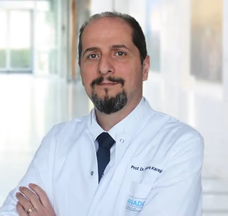
Medical oncologist with more than 25 years of experience. Specialist in systemic prostate cancer treatment, including hormonal therapy (ADT), ARPI agents (enzalutamide, abiraterone, darolutamide), PARP inhibitors, chemotherapy, and combined treatment regimens. Graduated from Gülhane Military Medical Academy (1992), completed internal medicine training (1995–1999) and medical oncology specialization (2003–2006). Became professor in 2017 and served as Dean of Okan University Medical Faculty between 2017 and 2019. Has worked at Anadolu Medical Center since 2019. Author of more than 50 scientific publications and member of the Turkish Society of Medical Oncology. Known for his personalized approach and palliative care expertise in advanced prostate cancer.

Medical oncologist with more than 20 years of experience. Specializes in personalized prostate cancer treatment, including chemotherapy, immunotherapy, and targeted therapy based on the molecular profile of the tumor. Graduated from Istanbul University Medical Faculty (1997), completed internal medicine training (2002) and medical oncology specialization (2009). Has worked at Anadolu Medical Center since 2014. Author of scientific publications and member of ESMO, the Turkish Society of Medical Oncology, and the Turkish Lung Cancer Society. Patients highly value his attentive and supportive approach throughout treatment.

Radiation oncologist and Director of Radiation Oncology at Anadolu Medical Center. President of the Turkish Society for Radiation Oncology (TROD). Expert in SBRT, MR-guided adaptive radiation therapy (MRgSBRT/SMART), and stereotactic radiosurgery for prostate cancer. Completed a stereotactic radiosurgery fellowship at Stanford University. Author of more than 80 scientific publications and Honorary Fellow of the American College of Radiology.

4. Florence Nightingale Hospital (Şişli)
Florence Nightingale Hospital (Şişli) is a modern high-level hospital in Istanbul and part of the Florence Nightingale Hospitals Group. The hospital offers comprehensive prostate cancer treatment, including robot-assisted surgery, high-precision diagnostics, and multidisciplinary treatment planning.
Hospital advantages:
- JCI accreditation and high international standards
- Extensive experience performing Da Vinci robot-assisted surgeries
- Multidisciplinary tumor board involving uro-oncologists, medical oncologists, and radiation oncologists
- Advanced diagnostics including PSMA PET/CT and 3 Tesla MRI
- Complete treatment cycle — from surgery to systemic and radiation therapy in one center
- Comfortable conditions for international patients
Leading specialist:
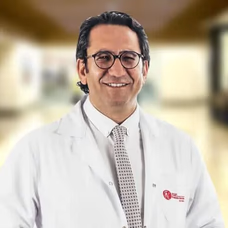
Uro-oncologist specializing in robot-assisted prostate cancer surgery. Performs radical prostatectomies using the Da Vinci system with a strong focus on nerve preservation and functional outcomes. Has extensive clinical experience in minimally invasive uro-oncology treatment.

5. Memorial Şişli Hospital
Memorial Şişli Hospital is one of the leading hospitals within the Memorial network in Istanbul with JCI accreditation. The hospital offers a full range of prostate cancer treatment, including robot-assisted surgery, systemic therapy, and radionuclide treatment (Lutetium-177 PSMA) with a multidisciplinary approach.
Hospital advantages:
- JCI accreditation and high international standards
- Strong multidisciplinary tumor board
- Extensive experience in Da Vinci robot-assisted surgery
- Access to advanced treatments: Lutetium-177 PSMA therapy, ARPI agents, and PARP inhibitors
- Complete treatment cycle — from diagnostics to systemic and radionuclide therapy in one center
- Advanced diagnostics (PSMA PET/CT and 3 Tesla MRI)
Leading specialists:
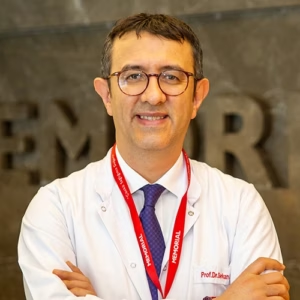
Medical oncologist and Head of the Oncology Center. Expert in systemic prostate cancer treatment, including hormonal therapy (ADT), ARPI agents (enzalutamide, abiraterone, darolutamide), PARP inhibitors, and chemotherapy. Has more than 18 years of clinical experience and is a member of ASCO and ESMO. Specializes in personalized treatment based on the molecular profile of the tumor.
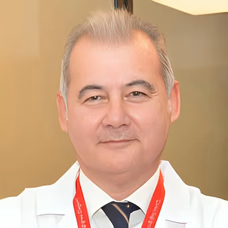
Nuclear medicine specialist and one of Turkey’s leading experts in Lutetium-177 PSMA radionuclide therapy for prostate cancer. Has extensive experience treating patients with metastatic castration-resistant prostate cancer.
Who Is the Best Fit and Why
Prostate cancer is one of the few oncological diseases where the choice of doctor directly depends on the stage and risk category. There is no universal “best specialist” — there is only the specialist who is best suited for a specific clinical situation.
When it comes to surgery for localized prostate cancer, one of the strongest options is Levent Türkeri. His reputation is based not only on practical surgical experience but also on his participation in international prostate cancer consensus guidelines. He is the kind of specialist who not only follows recommendations but also helps create them.
For organ-preserving treatment, including HIFU and IRE, Jean de la Rosette stands out. His approach is often considered for early-stage disease when the goal is not only cancer control but also preserving quality of life.
If a more comprehensive and system-based approach is needed, especially for international patients, many patients choose İlker Tinay. He works within a fully integrated oncology center where treatment is built around a multidisciplinary team rather than a single doctor. This becomes especially important in complex or combined treatment strategies.
The Best Balance of “Experience + System”
In practice, one of the most balanced options remains the team at Anadolu Medical Center. The team includes surgeon İlker Tinay, medical oncologists Sinan Karaaslan and Bülent Karagöz, as well as radiation oncology and nuclear medicine specialists.
This structure means that patients receive not just an isolated procedure, but a fully coordinated treatment system — from surgery to targeted therapy and radionuclide treatment.
What to Look for When Choosing a Hospital
In prostate cancer treatment, the hospital and the medical team often matter even more than the treatment method itself. Here is what truly deserves attention:
Number of Surgeries Performed Each Year
Experience is critical. Look for centers where uro-oncologists regularly perform at least 100–150 robotic prostatectomies per year. Surgeons in these hospitals tend to achieve better results in nerve preservation, urinary continence, and erectile function recovery.
Availability of a Real MDT (Tumor Board)
This means that the patient’s case is reviewed not by a single doctor, but by an entire team: uro-oncologist, radiation oncologist, medical oncologist, radiologist, pathologist, and nuclear medicine specialist. In strong centers, these meetings happen weekly. This significantly reduces the risk of mistakes and helps select the most appropriate treatment strategy for each patient.
Access to Advanced Diagnostics and Treatment Technologies
Always check whether the hospital offers:
- PSMA PET-CT — currently the most accurate method for detecting metastases
- Availability of Lutetium-177 PSMA radionuclide therapy
- Modern linear accelerators for high-precision radiation therapy (MR-LINAC, CyberKnife, or Varian Edge)
A hospital that offers all these technologies under one roof provides a major advantage — patients do not lose time traveling between multiple centers.
A good hospital is not just a modern building with advanced equipment. Above all, it is a team of experienced doctors who work with prostate cancer every single day and function together as a coordinated unit.
How to Choose Treatment for Prostate Cancer
The choice of treatment primarily depends on two things: how far the disease has progressed and how aggressive it is. To determine this, doctors evaluate two key indicators — PSA level and Gleason score.
What Is PSA?
PSA (prostate-specific antigen) is a protein produced by the prostate gland. In prostate cancer, PSA levels in the blood are usually elevated. The higher the PSA level, the greater the likelihood that the tumor has spread beyond the prostate. However, PSA alone does not establish the diagnosis — it is only a signal that requires further evaluation.
What Is the Gleason Score?
This is a grading system used to evaluate how aggressive the cancer appears under the microscope after biopsy. The pathologist assesses how different the cancer cells are from normal prostate tissue and assigns a score from 6 to 10.
- Gleason 6 — low aggressiveness
- Gleason 7 — intermediate aggressiveness
- Gleason 8–10 — highly aggressive cancer
The higher the score, the faster the tumor is likely to grow and spread.
Main Treatment Approaches
- If PSA is low and Gleason ≤6 — active surveillance is often recommended. This means treatment is postponed while PSA tests, MRI scans, and repeat biopsies are monitored regularly. Many men with this “slow-growing” cancer live for years without surgery and without losing quality of life.
- For localized prostate cancer (tumor confined to the prostate), the main options remain robotic surgery (Da Vinci) or radiation therapy (including high-precision SBRT and MR-guided therapy). Both methods provide excellent results in early-stage disease.
- For high-risk disease (high Gleason score, large tumor volume, high PSA), combined treatment is usually recommended: surgery plus radiation therapy, or radiation combined with hormonal therapy.
- If metastases are present, treatment is primarily based on systemic therapy: modern hormonal therapy (ADT + ARPI agents), chemotherapy, PARP inhibitors, or Lutetium-177 PSMA radionuclide therapy.
The right decision at this stage has a major impact on the outcome. The same cancer can be treated in very different ways, and what is ideal for one patient may not be the best option for another.
How Prostate Cancer Treatment Works in Turkey
The process usually begins before the patient even travels. Patients send their medical reports and imaging studies in advance, and doctors perform a preliminary evaluation while suggesting possible treatment strategies. This helps patients understand the direction of treatment before arriving.
After arrival, the diagnosis is уточняется through additional examinations and pathology review. Sometimes the diagnosis or stage is adjusted at this stage.
Next, the case is reviewed by a multidisciplinary team. The uro-oncologist, medical oncologist, and radiologist jointly determine the treatment strategy. This may involve surgery, radiation therapy, or a combination of approaches. The treatment plan is explained carefully and without pressure.
The treatment itself follows international protocols. Major hospitals actively use robotic surgery and modern radiation therapy technologies. The entire process is organized efficiently so patients do not lose time between treatment stages.
Comparison of Prostate Cancer Treatment Methods
Below is a clear and honest comparison of the main treatment approaches to help patients quickly understand the differences.
| Treatment Method | When It Is Used | Main Advantages | Disadvantages | Recovery Time | Impact on Potency and Urinary Control |
|---|---|---|---|---|---|
| Active Surveillance | Low-risk disease, Gleason 6, small lesion | No side effects, quality of life preserved | Requires regular monitoring | — | No impact |
| Robotic Surgery (Da Vinci) | Localized cancer, age under 65–70 | Complete tumor removal, precise pathology results | Risk of urinary incontinence and erectile dysfunction | 4–8 weeks | Good chances if nerves are preserved |
| Radiation Therapy (SBRT / MRgRT) | Localized and locally advanced cancer | Non-invasive, outpatient treatment | Longer treatment course, possible late complications | 1–2 weeks | Usually better than after surgery |
| Focal Therapy (HIFU, IRE) | Early-stage disease with one clearly defined lesion | Minimal impact on function | Not suitable for everyone, higher recurrence risk | Several days | Maximum preservation |
| Hormonal + Systemic Therapy | Metastatic prostate cancer | Controls disease for years | Side effects (fatigue, hot flashes, etc.) | Continuous treatment | Significant impact on potency |
| Lutetium-177 PSMA Therapy | Metastatic castration-resistant prostate cancer | Targets metastases precisely | High cost, limited availability | Several days after administration | Minimal impact |
Short Conclusion:
In early-stage prostate cancer, the main choice is usually between surgery and radiation therapy. In aggressive or advanced disease, systemic therapy and radionuclide treatment become the priority.
The most important factor is not the treatment method itself, but how correctly it is selected for the specific patient. That is why, in leading hospitals, treatment decisions are always made by a multidisciplinary team.
Advantages of Treatment in Turkey
- Fast access to treatment without long waiting times
- Modern technologies, including robotic surgery
- Lower costs than Europe and the USA with comparable quality
- Well-organized medical travel and treatment process
- Patient support at every stage
- Opportunity to discuss several treatment options
- Ability to receive a treatment plan, cost estimate, and online consultation before traveling
Recovery After Treatment
Recovery depends on the treatment method, but in general, the risk of serious complications is relatively low.
After surgery, patients usually stay in the hospital for several days and then continue recovery in a calmer setting. It is important to avoid heavy physical activity and follow the doctor’s recommendations carefully.
After radiation therapy, recovery is usually gentler but may take longer. Fatigue is common, so patients are advised not to overexert themselves.
Special attention is paid to restoring urinary control and erectile function. Patients are often prescribed pelvic floor exercises, supportive therapy, and ongoing monitoring.
Treatment Success Rates for Prostate Cancer
Prostate cancer is one of the most thoroughly studied types of cancer, which is why there is clear and reliable statistical data available. Turkey follows the same international treatment protocols used worldwide, so global survival and treatment outcome data are the most relevant reference point.
Surgical Treatment Outcomes
Radical prostatectomy remains one of the main treatment methods. According to data published in European Urology, recurrence-free survival after surgery reaches 80–90% (European Urology, 2020).
Research also shows that the introduction of robotic surgery improves functional outcomes and reduces complications.
What This Means in Practice
In simple terms, prostate cancer is successfully treated in the majority of cases today, especially when diagnosed early.
Even in more advanced stages, modern treatment methods often allow the disease to be controlled for many years. That is why, when choosing a clinic, the most important factors are not famous hospital names, but the experience of the medical team and access to the right technologies.

How We Help Patients at Experts Medical
At Experts Medical, we work with patients seeking treatment abroad and aim to make the entire process as clear and manageable as possible. Most patients contact us after receiving a diagnosis but without a clear understanding of where to go or how to organize treatment.
We do much more than simply recommend a hospital. Our goal is to guide patients through the entire journey — from the first request to returning home and continuing follow-up care.
What Exactly We Do
- Review the medical situation, analyze documents, and assist with preparation if needed
- Select doctors and hospitals based on diagnosis, specialist expertise, and patient priorities
- Organize the trip: appointments, flights, accommodation, and transfers
- Provide support on-site and remain available throughout treatment
- Help resolve organizational and day-to-day issues during the stay
- Continue supporting patients after treatment when they return home
Our work is built not around “one standard option,” but around each patient’s specific situation. Sometimes there is one obvious solution; in other cases, several approaches need to be carefully compared. We explain the differences clearly and help patients make informed decisions without pressure.
Choosing a doctor is not about the hospital’s popularity — it is about finding the right specialist for a particular case. We evaluate specialization, experience, treatment philosophy, and real clinical results, not just reputation.
It is also important to note that our services are completely free for patients. Treatment payments are made directly to the hospital, without extra commissions or hidden fees.
Since 2016, we have helped more than 12,000 patients organize treatment abroad. This experience provides a clear understanding of which solutions truly work in practice and which only look good on paper.
In short, we handle the entire organizational process so patients can focus on treatment rather than logistics.
Conclusion
If you look at prostate cancer treatment in Turkey objectively and without marketing hype, the reality is quite straightforward. Turkey has strong hospitals, access to advanced technologies, and doctors who work according to the same protocols used in Europe and the United States.
However, the difference between a “good hospital” and the right option for a specific patient can be significant. Some centers are stronger in surgery, others in systemic therapy, and others in focal treatments. In the end, this is what truly affects outcomes — not just the hospital’s name.
That is why the key is not to search for the “best hospital overall,” but to choose the right combination of doctor, treatment method, and medical center for the specific clinical situation. It sounds obvious, but in practice, this is exactly where mistakes are most often made.
FAQ
Can prostate cancer be completely cured?
Yes. In localized and locally advanced prostate cancer, cure is possible in the majority of cases. In early-stage disease, 5-year survival approaches 100%. In metastatic prostate cancer, complete cure is unlikely, but modern therapies often allow long-term disease control while maintaining a good quality of life.
What is better — surgery or radiation therapy?
The choice depends on the stage of the disease, the patient’s age, comorbidities, and personal preferences. Robot-assisted surgery is more commonly recommended for younger patients with localized prostate cancer because it allows complete tumor removal and precise pathological assessment. Radiation therapy (including SBRT and MR-guided therapy) is often preferred in intermediate- and high-risk disease, older patients, or when surgery is contraindicated. Both approaches provide comparable oncological control.
How can erectile function and urinary continence be preserved after treatment?
Preserving functional outcomes is one of the main priorities in modern Turkish hospitals. During robotic surgery, experienced surgeons use nerve-sparing techniques whenever possible. In radiation therapy, high-precision MR-guided radiotherapy minimizes damage to healthy tissues. The chances of preserving potency and continence depend on baseline function, patient age, tumor stage, and the surgeon’s experience.
Does focal therapy (HIFU, IRE) make sense?
Yes, but only in carefully selected cases. Focal therapy is suitable for early-stage low- and intermediate-risk prostate cancer with a clearly localized lesion identified on MRI and biopsy. It is not a universal treatment method, but rather a minimally invasive alternative for patients who prioritize quality of life preservation. It requires highly accurate diagnostics and significant physician experience.
When is PSMA PET-CT recommended?
PSMA PET-CT is recommended during initial staging, in cases of biochemical recurrence after surgery or radiation therapy, and before starting systemic treatment to accurately assess disease spread. It is currently one of the most accurate methods for detecting prostate cancer metastases.
When is Lutetium-177 PSMA therapy used?
Lutetium-177 PSMA therapy is primarily used in metastatic castration-resistant prostate cancer when standard hormonal therapy and chemotherapy lines have already been used or are no longer sufficiently effective.
How important is genetic testing (BRCA, NGS)?
Today, genetic testing is no longer considered an optional extra — it is part of modern oncology. The genetic profile can directly influence treatment decisions, especially in advanced prostate cancer.
How do we at Experts Medical select a hospital for a patient?
We do not begin with a list of “the best hospitals.” First, we analyze the medical situation, including the stage of disease, previous treatment history, and patient goals. After that, we select 2–3 options with different approaches and explain the differences between them. Our goal is not simply to offer a hospital, but to help patients choose the option that truly fits their specific case.