



- At the clinic's price without markups
- with full doctor support
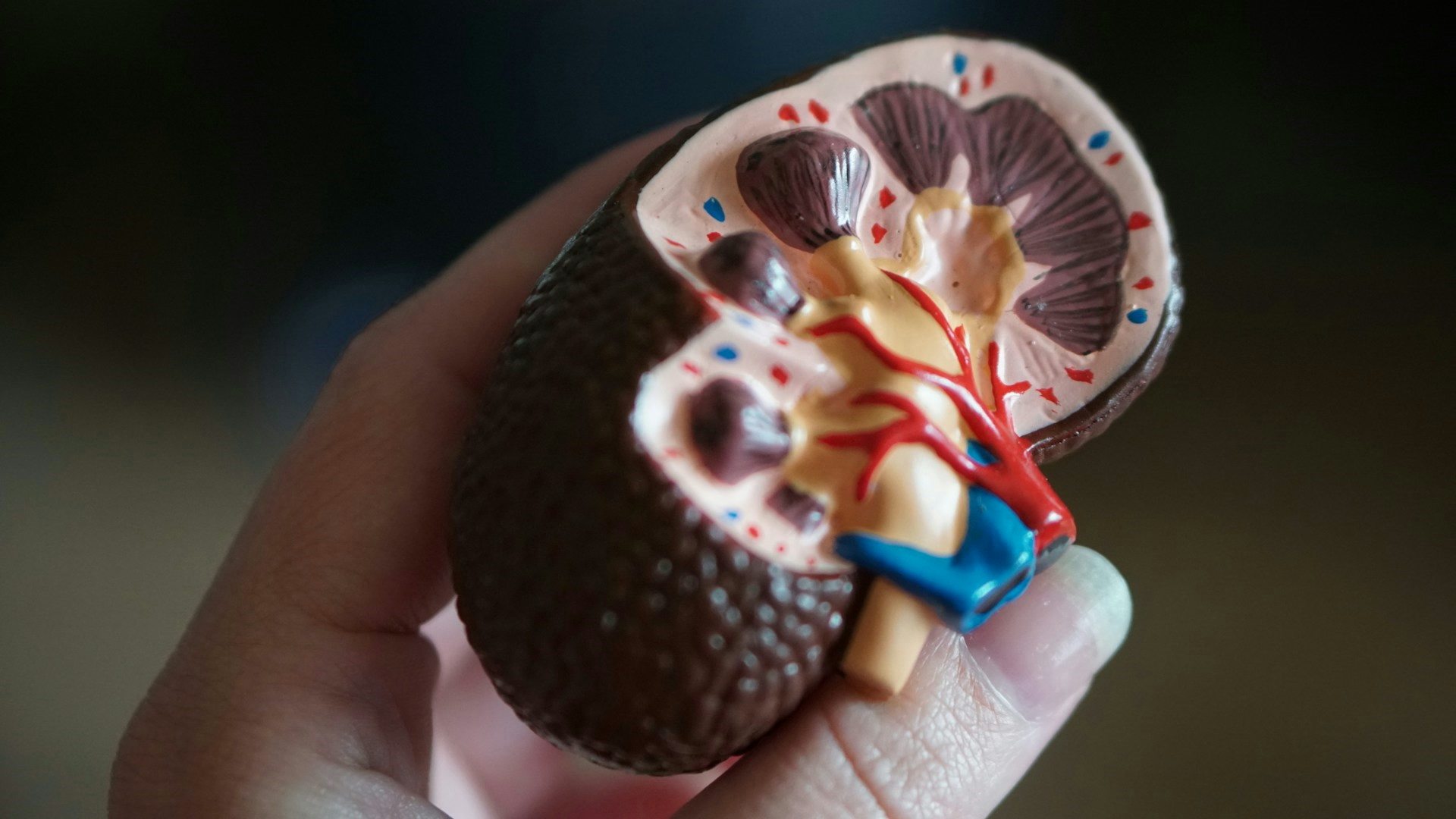
Kidney cancer is one of those diagnoses that is often discovered accidentally during a routine ultrasound or CT scan. And although it sounds frightening, today it is one of the most successfully treatable oncological diseases, especially if the opportunity for timely treatment is not missed.
According to the large American SEER registry, the overall five-year relative survival rate for kidney cancer is 79.2%. When detected early (localized stage), this figure is significantly higher, and many patients live for many years without recurrence after timely surgery.
Turkey has accumulated significant experience in this field. Robotic surgery aimed at preserving kidney function and modern immunotherapy are actively developing here. Some centers demonstrate results comparable to leading clinics in Europe and Israel, but at considerably more affordable prices.
We carefully studied all the main options and evaluated specialists based on their real clinical experience, publications, and participation in international registries. Below is an honest overview of strong centers and doctors you can trust.
You no longer need to spend your energy searching and comparing — we have already done this for you at Experts Medical.
1. Acibadem Altunizade Hospital
Acibadem Altunizade is one of the strongest centers in Turkey for the surgical treatment of kidney cancer. The hospital is home to a true expert in robotic-assisted partial nephrectomy (RAPN) — a procedure that is currently considered the gold standard for most kidney tumors up to 7 cm in size.
Advantages for kidney cancer treatment:
- One of Turkey’s leading specialists in robotic-assisted partial nephrectomy (RAPN) with internationally recognized outcomes data
- Participation in the global VCQI (Vattikuti Collective Quality Initiative) database — an international registry of robot-assisted kidney surgeries alongside leading global centers (Guy’s & St Thomas’, San Raffaele, Peter MacCallum, etc.)
- More than 4 PubMed publications from 2022–2024 specifically on RAPN and complex kidney cancer cases
- Modern Da Vinci Xi robotic system, JCI accreditation, and a strong multidisciplinary Tumor Board (uro-oncologist + medical oncologist + radiologist)
- Ability to perform both partial and radical nephrectomy, including cytoreductive surgery (removal of the primary kidney tumor even in the presence of metastases to improve the effectiveness of systemic therapy) for metastatic kidney cancer
- Comprehensive treatment pathway: from precise diagnostics and surgery to adjuvant immunotherapy (pembrolizumab according to the KEYNOTE-564 protocol)
Leading specialists:

Professor of uro-oncology at Acibadem University and one of the most experienced uro-oncologists in Turkey. More than 25 years of specialization specifically in kidney, prostate, and bladder cancer. The only Turkish urologist represented in the international VCQI database for robotic-assisted partial nephrectomy. Author and co-author of several key publications on RAPN for complex kidney tumors. Board member of the Turkish Urooncology Association and Director of the School of Urology.
His approach focuses on maximal preservation of kidney function while maintaining oncological radicality, which is especially important for patients with a solitary kidney or impaired renal function.

2. Medipol Mega University Hospital (Istanbul)
Medipol Mega University Hospital is a large university center distinguished by its high level of minimally invasive urological surgery and modern kidney cancer treatment technologies. The hospital actively uses robotic surgery as well as nephron-sparing approaches, including tumor ablation techniques.
Advantages for kidney cancer treatment:
- World-class expert in minimally invasive and nephron-sparing treatment methods for kidney tumors
- Ability to perform robotic-assisted partial nephrectomy (RAPN), laparoscopic surgery, and ablation procedures (RFA and cryoablation) for small tumors
- Modern Da Vinci robotic system and a well-equipped urology department
- Multidisciplinary Tumor Board involving uro-oncologists, medical oncologists, and radiologists
- Convenient infrastructure for international patients: JCI accreditation and extensive experience with international cases
Leading specialists:

World-renowned urology expert and President of the Société Internationale d’Urologie (SIU) since 2024. Author of more than 700 scientific publications with over 55,000 citations. Specializes in minimally invasive surgery and local treatment of kidney tumors, including ablation technologies. Has extensive experience in complex anatomical cases where standard surgery is challenging. One of the most respected urologists in the international medical community.

Uro-oncologist with more than 20 years of experience. Specializes in robotic surgery for kidney, prostate, and bladder cancer. Regularly performs robot-assisted partial and radical nephrectomies. Highly skilled in modern minimally invasive techniques and actively works at the Medipol university clinic.
3. Anadolu Medical Center (Istanbul / Gebze)
Anadolu Medical Center is one of the few centers in Turkey with ESMO Designated Cancer Centre status and a partnership with Johns Hopkins. The hospital has a well-developed multidisciplinary team for kidney cancer treatment, where surgery, radiation therapy, and systemic treatment work hand in hand.
Advantages for kidney cancer treatment:
- Comprehensive multidisciplinary approach in an accredited ESMO center
- Combination of robotic and laparoscopic kidney surgery with the possibility of SBRT for oligometastases (when there are only a few metastases — usually up to 3–5 — that can be precisely irradiated)
- High level of coordination between the uro-oncologist, radiation oncologist, and medical oncologist
- Advanced equipment: Da Vinci robotic system, CyberKnife M6, and TrueBeam for precise radiation therapy
- Partnership with Johns Hopkins and OECI — strict international treatment standards
- Convenient infrastructure for international patients and experience in comprehensive treatment (from surgery to immunotherapy)
Leading specialists:

Uro-oncologist and Head of the Urology Department at Anadolu Medical Center. Certified FEBU and FACS specialist. Has more than 121 scientific publications. Specializes in surgical treatment of kidney cancer, including robotic and laparoscopic procedures. Board member of the Turkish Urooncology Association. Has experience working at leading European centers (Cleveland Clinic, Heidelberg).

Radiation oncologist and Chair of the ESTRO National Societies Committee (2024–2027). Specializes in stereotactic body radiation therapy (SBRT) for oligometastatic kidney cancer. One of Turkey’s leading specialists in highly precise irradiation of metastases, especially when radiation therapy needs to be combined with immunotherapy.
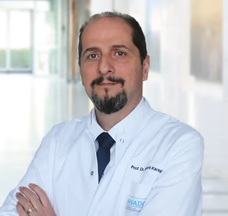
Medical oncologist with experience in systemic therapy for kidney cancer. Participates in the center’s multidisciplinary tumor boards and selects targeted therapy and immunotherapy regimens (nivolumab, pembrolizumab, cabozantinib, etc.).

4. Memorial Şişli Hospital (Istanbul)
Memorial Şişli is a well-known JCI-accredited center with a strong oncology focus. The clinic is especially convenient for patients who require systemic therapy and molecular testing for kidney cancer.
Advantages for kidney cancer treatment:
- Strong molecular diagnostic capabilities (NGS 600+ genes) for identifying VHL, PBRM1, BAP1 mutations, and other important markers in clear cell renal cell carcinoma (ccRCC)
- Full range of modern immunotherapy and targeted therapy drugs (nivolumab + ipilimumab, pembrolizumab + axitinib, cabozantinib, etc.)
- Experience using adjuvant pembrolizumab therapy after nephrectomy
- Strong Tumor Board involving urologists, medical oncologists, and radiologists
- Convenient logistics for international patients and a high level of service
Leading specialists:
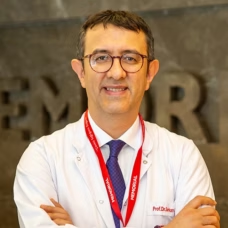
Medical oncologist with extensive experience in kidney cancer treatment. Specializes in systemic therapy for metastatic renal cell carcinoma (mRCC) and treatment selection based on NGS results. Regularly works with first- and second-line immunotherapy combinations. Participates in Memorial’s multidisciplinary tumor boards for urologic oncology.
5. Istanbul University-Cerrahpasa + Private Practice
Cerrahpasa is one of the leading public university oncology centers in Istanbul. The hospital has extensive scientific and clinical experience in the treatment of metastatic kidney cancer.
Advantages for kidney cancer treatment:
- One of the most experienced medical oncologists in Turkey for kidney cancer
- Active participation in the Turkish Oncology Group Kidney Cancer Consortium (TKCC) — the main source of real-world data on immunotherapy for metastatic renal cell carcinoma (mRCC) in the country
- Access to all modern treatment regimens (nivolumab + ipilimumab, pembrolizumab + axitinib, cabozantinib, etc.)
- Extensive experience in clinical research and real-world practice using the international prognostic scale for metastatic kidney cancer — including intermediate- and poor-risk patient groups
- Ability to provide a comprehensive approach: cytoreductive nephrectomy + systemic therapy
Leading specialists:

Professor of medical oncology and one of Turkey’s leading specialists in GU oncology. Active participant in the TKCC since 2021 and co-author of key publications on immunotherapy for metastatic kidney cancer (including nivolumab, IMDC validation, and real-world data). Has extensive experience selecting first- and second-line therapy for mRCC.

6. Memorial Ankara Hospital (Ankara)
Memorial Ankara is one of the major private oncology centers within the Memorial network, with strong infrastructure and experience in urologic oncology treatment. The clinic is suitable for patients who require systemic therapy for kidney cancer combined with a surgical stage.
Advantages for kidney cancer treatment:
- Participation in the Turkish Oncology Group Kidney Cancer Consortium (TKCC) — an important collaboration collecting real-world data on immunotherapy for metastatic renal cell carcinoma
- Access to modern immunotherapy regimens and targeted therapies
- Multidisciplinary approach and JCI accreditation
Leading specialists:

Medical oncologist and co-author of TKCC publications on the treatment of metastatic kidney cancer (including nivolumab studies). Has practical experience using first- and second-line immunotherapy for mRCC. Participates in multicenter real-world clinical practice data collection in Turkey.

7. Acibadem Atakent Hospital (Istanbul)
Acibadem Atakent is part of the large Acibadem network, known for its high level of equipment and well-organized care for international patients. The center may be useful for patients requiring systemic therapy combined with surgery.
Advantages for kidney cancer treatment:
- Modern infrastructure and JCI accreditation
- Ability to provide comprehensive treatment: surgery + systemic therapy
- Strong diagnostic capabilities, including molecular testing
- Convenient location and experience working with international patients
Leading specialists:

Medical oncologist with experience in systemic therapy for solid tumors. Participates in selecting immunotherapy and targeted treatment for kidney cancer within Acibadem’s multidisciplinary tumor boards.
Final Analysis and Recommendations
In kidney cancer, treatment success largely depends on the stage of the disease and how accurately the specialist is selected. The combination of surgical expertise and experience in systemic therapy is especially important here.
Who is the best fit:
- Prof. Levent Türkeri (39/40) — the best choice for operable kidney cancer (T1–T2). The only urologist in Turkey’s private sector participating in the international VCQI database for robotic-assisted partial nephrectomy (RAPN). Has publications together with leading global centers.
- Prof. Mustafa Özgüroğlu (37/40) — a leading specialist for metastatic kidney cancer. Active participant in TKCC and author of several important publications on immunotherapy for mRCC from 2021–2025.
- Prof. Jean de la Rosette (37/40) — an excellent option for small tumors (T1a) and complex kidney anatomy when ablation or максимально organ-preserving intervention is being considered.
Best balance of experience and technology
Acibadem Altunizade (Levent Türkeri) — for operable kidney cancer: high-level RAPN + modern Da Vinci robotic system.
Anadolu Medical Center — when surgery and radiation therapy need to be combined (Tinay + Atalar) within an ESMO Designated center.
Top 3 for initial consideration
- Levent Türkeri — for localized kidney cancer (partial nephrectomy).
- Mustafa Özgüroğlu — for metastatic RCC and immunotherapy.
- İlker Tinay — for comprehensive treatment in an ESMO center.
Key conclusion
Kidney cancer requires careful selection of the right specialist for the specific clinical situation: a surgeon with extensive RAPN experience for early-stage disease and an oncologist experienced in immunotherapy for advanced disease. Today, the strongest options are concentrated within Acibadem, Anadolu, and among TKCC experts.
How Kidney Cancer Treatment in Turkey Works: Methods, Stages, and Costs
Treatment of renal cell carcinoma (RCC) in Turkey follows international EAU, ESMO, and NCCN standards. The main advantage is the ability to quickly access modern surgery (including robotic procedures) and immediately integrate immunotherapy or targeted therapy within a single multidisciplinary team.
Main treatment methods
- Surgical treatment (the main method in early stages)
- Robotic-assisted partial nephrectomy (RAPN) — the gold standard for tumors up to 7 cm (T1). Allows removal of only the tumor while preserving as much healthy kidney tissue as possible.
- Radical nephrectomy — for larger tumors (T2+).
- Cytoreductive nephrectomy — for metastatic disease (combined with immunotherapy).
- Systemic therapy (for metastatic RCC)
- Immunotherapy: nivolumab + ipilimumab, pembrolizumab + axitinib.
- Targeted therapy: cabozantinib, lenvatinib, sunitinib.
- Adjuvant pembrolizumab therapy after surgery (KEYNOTE-564).
- Additional treatment methods
- SBRT (stereotactic body radiation therapy) for oligometastases.
- Active surveillance or ablation (RFA, cryoablation) for very small tumors in elderly patients.
Approximate treatment plan and timeline
- Diagnostics and staging — 4–8 days (CT/MRI, PET-CT, biopsy, molecular testing).
- Robotic surgery — hospitalization for 3–5 days.
- Systemic therapy — most often outpatient, with periodic visits.
- Total trip duration — 10–18 days for surgery, 7–14 days for initiation of immunotherapy.
Advantages of treatment in Turkey
- High level of robotic surgery (Da Vinci Xi) at reasonable prices.
- Fast access to modern immunotherapy combinations and molecular testing.
- Well-coordinated multidisciplinary teams (uro-oncologist + medical oncologist + radiologist).
- Well-organized services for international patients: transfers, interpreter services, accommodation near the clinic.
- Prices are 40–60% lower than in Germany or Israel, while maintaining comparable quality.
Cost of Kidney Cancer Treatment in Turkey and Comparison with Other Countries (Approximate, 2026)
Turkey offers one of the best balances between cost and quality in kidney cancer treatment. Below are the average approximate prices for the main types of treatment.
| Type of Treatment | Turkey | Israel | Germany | Spain | India |
|---|---|---|---|---|---|
| Comprehensive diagnostics and staging | $3,000 – $6,000 | $5,000 – $9,000 | $7,000 – $12,000 | $5,500 – $9,000 | $2,000 – $4,500 |
| Robotic-assisted partial nephrectomy (RAPN) | $12,000 – $22,000 | $18,000 – $28,000 | $22,000 – $32,000 | $16,000 – $26,000 | $7,000 – $14,000 |
| Radical nephrectomy | $10,000 – $18,000 | $15,000 – $24,000 | $20,000 – $30,000 | $14,000 – $23,000 | $6,000 – $12,000 |
| One course of immunotherapy (drug + administration) | $4,000 – $8,000 | $7,000 – $12,000 | $9,000 – $15,000 | $6,500 – $11,000 | $3,000 – $6,000 |
| Full surgery + rehabilitation package | $15,000 – $25,000 | $22,000 – $35,000 | $28,000 – $45,000 | $20,000 – $32,000 | $9,000 – $18,000 |
Note: Exact prices depend on the stage of the disease, the selected physician, and the need for additional examinations. Prices in Turkey are 40–60% lower than in Germany and Israel while offering comparable equipment quality (Da Vinci Xi), physician qualifications, and service standards. Flights and accommodation are not included in the price.
Recovery After Kidney Cancer Treatment
Recovery after kidney cancer treatment in Turkey is usually faster and easier than many patients expect, especially when robot-assisted surgery is used.
After robotic-assisted partial nephrectomy (RAPN):
- Hospitalization averages 3–5 days.
- Most patients return to light daily activities within 2–3 weeks.
- Full recovery (return to work and sports) takes 4–8 weeks.
- Postoperative pain is minimal, and scars are very small (4–5 puncture sites).
- Kidney function is preserved in most cases at 85–95%. Doctors always monitor creatinine levels and glomerular filtration rate (GFR) before discharge and during follow-up.
After radical nephrectomy:
- Hospitalization lasts 4–6 days.
- Recovery is slightly longer — 5–10 weeks.
- With one healthy kidney, quality of life usually remains high, but closer monitoring of blood pressure and remaining kidney function is required.
During systemic therapy (immunotherapy / targeted therapy):
- Treatment is outpatient in most cases.
- Patients stay in a hotel and come to the clinic only for drug administration.
- The main side effects (fatigue, skin reactions, thyroid changes) are usually well controlled and do not require hospitalization.
Recommendations during recovery:
- Fluid intake of 2–2.5 liters per day
- Avoidance of heavy physical activity and lifting for the first 4–6 weeks
- Regular blood test monitoring (every 3 months during the first year)
- Diet with moderate protein and salt intake
- Smoking cessation and limiting alcohol consumption
Most international patients report that within 3–4 weeks after surgery they feel significantly better than before treatment and return home with a clear follow-up plan.
Kidney Cancer Treatment Outcomes in Turkey: Real-World Statistics
Modern approaches to renal cell carcinoma treatment in leading Turkish centers demonstrate good outcomes, especially when surgery is combined with immunotherapy.
Adjuvant pembrolizumab immunotherapy after nephrectomy (KEYNOTE-564)
In a large international study, adjuvant pembrolizumab after surgery significantly improved overall survival in patients at high risk of recurrence. At 48 months of follow-up, overall survival was 91.2% in the pembrolizumab group versus 86.0% in the placebo group. The hazard ratio for death was 0.62 (a significant benefit) (PubMed).
Robotic-assisted partial nephrectomy (RAPN)
For localized kidney cancer (T1), robotic-assisted partial nephrectomy provides excellent oncological control while preserving kidney function. Long-term data from international registries (including VCQI) confirm low recurrence rates and good preservation of renal function.
Real-world practice in Turkey (TKCC data)
The Turkish TKCC consortium, объединяющий 13 centers, has collected data on more than 1,000 patients with metastatic RCC. Real-world clinical outcomes of immunotherapy (nivolumab and other agents) are consistent with international studies and demonstrate significant improvement in survival compared to previous years (PubMed).
These figures show that with the right specialist selection and timely treatment, patients with kidney cancer in Turkey have real chances for long-term disease control — both in early and more advanced stages.

Why Patients Choose Experts Medical
At Experts Medical, we help people from different countries receive high-quality kidney cancer treatment abroad. Over the years, we have guided thousands of patients through diagnostics, surgery, and systemic therapy, and we know exactly how important it is to quickly and correctly choose the right specialist.
All our services are completely free for you. You pay only for medical treatment directly to the clinic — no markups or hidden fees.
What we do for every patient:
- Carefully review medical records and select the most suitable specialist specifically for your stage and situation
- Arrange a remote consultation with a doctor within a short time
- Prepare a clear treatment plan and provide full support at every stage
- Handle all logistics: transfers, accommodation, interpreter services, and 24/7 support
- Remain in contact even after you return home
Our goal is to remove all organizational burden from you so you can focus entirely on recovery. We have already evaluated the best kidney cancer specialists, studied their experience and results, and are ready to quickly offer the optimal option specifically for you.
Conclusion
Kidney cancer is a disease in which modern treatment methods provide very good chances for long-term control and even complete recovery, especially in early stages. Today, Turkey offers an excellent balance: world-class uro-oncologists, robotic surgery, modern immunotherapy, and reasonable prices.
The most important thing is to choose the right specialist for your specific situation. For localized cancer, this means a surgeon with extensive experience performing robotic-assisted partial nephrectomy; for metastatic disease, a medical oncologist experienced in immunotherapy. The best outcomes are achieved in centers with a well-coordinated multidisciplinary team.
Frequently Asked Questions
At what stage of kidney cancer is it still possible to preserve the kidney?
For tumors up to 7 cm (T1), robotic-assisted partial nephrectomy (RAPN) with preservation of kidney function is possible in most cases. This is the gold standard in leading Turkish centers.
How long do I need to stay in Turkey for treatment?
Diagnostics and robotic surgery usually require 10–18 days. When starting immunotherapy without surgery, 7–12 days are usually sufficient. Further treatment is often continued on an outpatient basis in the patient’s home country.
Is it possible to avoid major open surgery?
Yes. Most patients with localized kidney cancer today undergo robot-assisted or laparoscopic surgery. This significantly shortens the recovery period and reduces risks.
How does Experts Medical help with treatment organization?
We fully handle the entire process: reviewing your medical records, selecting the best specialist, organizing consultations, travel, transfers, accommodation, and coordination support. All our services are free for patients. You only pay the clinic directly for treatment.