






 Liver cancer treatment in Turkey
 Best clinics
 Approximate treatment plan
 Cost of treatment
- At the clinic's price without markups
- with full doctor support
Leading hospitals in Turkey provide patients with access to the latest technologies for the treatment of liver cancer. Among the most advanced methods already used by Turkish oncologists is Selective Internal Radiation Therapy (SIRT). This is truly an intelligent treatment: microspheres containing a radioactive isotope are delivered directly into the arteries supplying the malignant tumor. In this way, they administer a high dose of radiation directly to the cancer cells without damaging the healthy liver tissue. The method has become a lifeline for many inoperable patients. And this is just one example of how advanced Turkish medicine is. Read on to learn about all effective liver cancer treatment methods and prices in the best clinics.
Top 3 clinics for liver cancer treatment in Turkey
Top 3 clinics for liver cancer treatment in Turkey
 Memorial Hospital Network
The Memorial medical group is one of the most advanced healthcare systems in Turkey, where all specialists in oncology work together.
Doctors at Memorial use an interdisciplinary approach: a team of oncologists, surgeons, radiologists, and other specialists jointly develop an individual treatment plan for each patient. In the treatment of liver cancer, they employ both traditional and innovative methods:
- Robotic surgery using the da Vinci Xi system. This technology makes it possible to perform the most complex operations with minimal incisions, reducing trauma, shortening recovery time, and ensuring maximum precision.
- TrueBeam stereotactic radiosurgery – a form of radiation therapy that delivers highly precise beams of radiation to the tumor, destroying cancer cells with minimal impact on healthy tissues.
In addition, the clinic performs radiofrequency ablation (RFA), microwave ablation, and radioembolization (SIRT therapy). With these technologies, doctors can destroy liver tumors locally without resorting to extensive surgery.
Examples of prices for some liver cancer treatments in the Memorial hospital network:
- resection from $10,000 to $12,000;
- 1 course of chemotherapy from $1,800;
- radiofrequency ablation from $6,000.
Medical Park Multispecialty Hospitals
 The Medical Park network of clinics in Turkey is one of the largest and most reputable in the country. Specialists in liver cancer treatment apply a multidisciplinary approach to create individualized treatment protocols for each patient.
Doctors at Medical Park offer all treatment options for liver cancer, including organ resection or transplantation. Patients also have access to modern interventional therapies – minimally invasive procedures that directly target the tumor. These include:
- microwave and radiofrequency ablation (RFA) – localized tumor destruction without incisions;
- radioembolization (SIRT therapy) – delivery of microspheres containing a radioactive isotope (such as Yttrium-90) directly into the artery supplying the tumor;
- chemoembolization (TACE) – administration of chemotherapy drugs directly to the tumor while blocking its blood supply.
The cost of treatment at one of the Medical Park hospitals may vary depending on the chosen treatment methods and the stage of liver cancer. Examples of prices for certain procedures include:
- organ resection from $8,000 to $20,000;
- one cycle of chemotherapy from $1,100;
- SIRT therapy from $24,000.
The Liv Hospital network is one of the leading in Turkey, providing international patients with access to advanced liver cancer treatment.
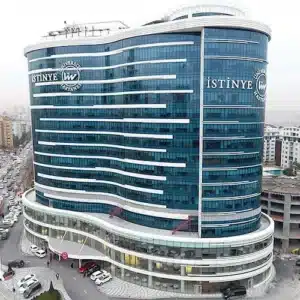 Liv Hospital Network
In Liv hospitals, treatment plans are tailored individually based on international medical protocols. Oncologists, surgeons, radiologists, and other specialists work as a team to design a strategy that considers the genetic profile of the tumor and the complexity of the case. This approach enhances treatment effectiveness while minimizing side effects for the patient.
The clinics host a Transplantation Center where liver transplants are performed. This is a vital option for certain cancer patients.
In most cases, the university hospital of Liv employs cutting-edge equipment and advanced treatment techniques for oncology patients without the need for organ transplantation:
- the latest-generation Da Vinci robotic system for performing highly complex liver resections;
- selective internal radiotherapy – targeted irradiation of the tumor via blood vessels;
- high-precision radiation therapy using TrueBeam STx and Varian Edge systems, which allow radiation beams to target the tumor with millimeter accuracy;
- transarterial chemoembolization to block cancer cell proliferation.
The total cost of treatment depends on the scope of diagnostics, surgical methods, and therapy applied for liver cancer. Approximate prices for certain procedures at Liv hospitals are:
- laparoscopic or robotic resection from $18,000;
- liver transplantation from $30,000;
- chemoembolization from $5,000.
Innovative Liver Tumor Treatment Methods by Stage
According to the American Cancer Society, advanced treatment methods for hepatocellular carcinoma vary depending on the specific case of liver cancer. Below is a brief overview of modern treatment options based on the stage of the disease.
Modern approaches to treatment depending on the stage of liver cancer
- Very early or stage 0 (BCLC-0)
A solitary tumor up to 2 cm in size. Liver function is preserved. The patient does not experience pain. Most often, it is discovered incidentally on ultrasound during screenings for other medical reasons.
According to international protocols (EASL, ASCO, ESMO), the preferred therapy for this stage is local ablation (radiofrequency or microwave). If ablation is not possible, hepatic resection (removal of the tumor along with part of the liver) is recommended.
- Early stage (BCLC-A)
A solitary tumor of any size, or up to 3 nodules smaller than 3 cm, without vascular invasion or metastases.
Primary treatments include liver resection, ablation, or liver transplantation according to the Milan criteria (a conditional “checklist” that indicates a high probability of long-term recovery after transplantation). Transplantation provides recovery while simultaneously treating liver cirrhosis.
Current research supports a personalized selection of methods: transplantation is not always preferable to resection for multiple small nodules.
- Intermediate stage (BCLC-B)
Multinodular cancer without vascular invasion or metastases, with preserved liver function.
The main method is transarterial chemoembolization (TACE), which blocks the tumor’s blood supply and delivers chemotherapy drugs directly to the affected area.
The choice between different types of TACE (conventional TACE with lipiodol or DEB-TACE with microspheres) depends on clinical characteristics, efficacy, and availability.
- Late stage (BCLC-C)
Presence of vascular invasion or distant metastases.
Systemic therapy is prescribed: targeted drugs and immunotherapy are modern standards of treatment that improve survival in advanced cases.
Immunotherapy significantly improves prognosis for patients at stage 3 liver cancer.
- Terminal stage (BCLC-D)
Severe liver failure and low functional activity. In this case, palliative treatment is often used, aimed at relieving symptoms and maintaining quality of life.
In selected cases, 3D navigation systems may be applied to improve surgical planning if surgery is considered appropriate. Dendritic therapy and combined immunotherapy regimens are actively studied to enhance the effectiveness of treatment for advanced liver cancer.
High-precision radiotherapy (SABR, stereotactic ablative body radiotherapy) is used for limited tumor localizations and as part of multidisciplinary therapy. Targeted therapy and immunotherapy are often combined according to the patient’s tumor molecular profile for maximum effect.
These treatment options are based on the latest international guidelines, which have significantly improved outcomes for patients with liver cancer at all stages. Get a free consultation from certified Experts Medical doctors to help you choose the best oncologist and hepatobiliary surgeon.

The cost of comprehensive liver cancer treatment varies significantly across different countries, even when the level of equipment and availability of modern medications are comparable. In Turkey, the cost of treating malignant tumors in high-tech clinics is usually 40–60% lower than in well-known hospitals in Europe and the United States.
In the United Kingdom and Austria, prices are closer to the average European level, but still about 70% lower than in the United States. The American market remains one of the most expensive for medical services, with costs that can be 2.5 times higher than in Turkey.
How do prices for follow-up examinations of liver cancer patients differ in Turkey and other countries?
International patients often require additional diagnostic procedures to confirm the diagnosis. Therefore, such examinations are frequently included in the service package and influence the total cost of liver cancer treatment. The table below shows average (not maximum) prices in euros for the most common tumor diagnostics.
|
Country |
Tumor Profiling (€) |
Biopsy Review (€) |
PET-CT (€) |
|
Turkey |
1200 - 2500 |
500 - 700 |
900 - 1000 |
|
USA |
5000 - 10000 |
2000 - 3000 |
3000 - 6000 |
|
Austria |
4000 - 8000 |
1200 - 1400 |
2000 - 4000 |
|
United Kingdom |
4500 - 9000 |
1500 - 2000 |
2500 - 5000 |
How Does Liver Cancer Treatment in Turkey Work?
The treatment process begins only after all visit details are fully agreed upon with the international patient. For this, certified Experts Medical doctors send the patient’s available medical records to a Turkish clinic and confirm prices for all planned procedures.
Approximate treatment plan for liver cancer in Turkey may look as follows:
1. Arrival and in-person consultation with an oncologist
Upon your arrival in Turkey, a personal transfer will meet you. You will be accommodated either in a hotel or directly in the clinic ward. During the initial meeting, the oncologist will explain in detail the specifics of diagnostic procedures and treatment options.
2. Comprehensive diagnostics and development of the final plan
This stage is critically important for selecting the most effective treatment and usually takes between two to seven days. Turkish clinics employ the full range of advanced techniques, allowing doctors to detect even the smallest tumor sites. By obtaining the unique characteristics of the cancer, the medical team tailors the most effective surgical and therapeutic approaches.
3. Beginning of treatment
The overall duration of treatment will depend on the chosen methods and the severity of the disease. Since Turkish clinics are equipped with the latest technologies, doctors can apply advanced techniques that provide the best chances of success. All necessary logistics, including scheduling procedures and personal assistance, will be fully managed by your support team, allowing you to focus entirely on recovery.
How to Travel to Turkey for Liver Cancer Treatment?
 Submit a request on this page. A medical coordinator will contact you shortly and provide a detailed consultation about treatment options abroad for liver cancer. You will be assisted in choosing a Turkish clinic and guided on up-to-date medical service prices. With our 10 years of experience, you are guaranteed to receive the level of service and quality of care you expect. Experts Medical works only with certified clinics and top-tier physicians.
We take full responsibility for compliance with all agreements, and our team is always available to promptly answer any of your questions. We work directly with international hospitals as their official representatives. Therefore, we often provide patients with cost-effective package offers. In turn, we absolutely free of charge assist our clients at every stage of examinations and treatment. Patients make payments directly at the hospital based on the pre-approved price list, with no hidden fees.