



- At the clinic's price without markups
- with full doctor support
Rectal cancer is a diagnosis that requires a fast and precise approach. Fortunately, today this disease can often be treated successfully — especially when the right clinic and medical team are chosen from the beginning.
According to a major national study by the Turkish Oncology Group, rectal cancer accounts for 31.6% of all colorectal cancer cases in Turkey. The average patient age is 58.9 years, and importantly, 85.6% of patients undergo surgical treatment. In rectal cancer, low anterior resection — a surgery aimed at preserving bowel function — is performed in 64.2% of cases (ResearchGate).
Turkish clinics активно use neoadjuvant therapy (89.8% of rectal cancer patients receive it before surgery), robot-assisted surgery, and personalized treatment protocols. All of this allows doctors to achieve strong outcomes even in complex cases.
At Experts Medical, we help patients with rectal cancer every day. We have studied numerous clinics, spoken with doctors and patients, and selected the centers where experienced multidisciplinary teams consistently achieve strong results. You no longer need to spend time and energy searching — we have already done the verification for you.
1. Acibadem Healthcare Group (Maslak / Ataşehir / Atakent)
Acibadem Healthcare Group is one of the strongest centers in Turkey for rectal cancer treatment. The hospital has a specialized Gastrointestinal Oncology Unit with a dedicated tumor board where surgeons, oncologists, and radiologists jointly plan treatment strategies. The clinic is especially strong in locally advanced rectal cancer and metastatic disease.
Advantages for Rectal Cancer Treatment:
- Dedicated GI oncology department with a multidisciplinary approach
- da Vinci robotic-assisted surgery with Total Mesorectal Excision (TME)
- Neoadjuvant and Total Neoadjuvant Therapy (TNT)
- Advanced liver metastasis treatment (resections, two-stage hepatectomies)
- HIPEC (Hyperthermic Intraperitoneal Chemotherapy) for peritoneal carcinomatosis
- Extended molecular profiling for personalized therapy
Leading Specialists:
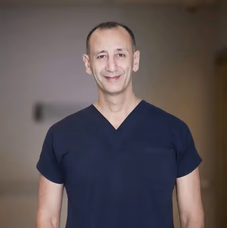
A world-class HPB surgeon and one of Turkey’s leading experts in surgical treatment of rectal cancer liver metastases. Performs complex liver resections, two-stage hepatectomies, and combined oncologic surgeries. Included in the “World’s Most Influential Scientists” list (Stanford/Elsevier 2024).
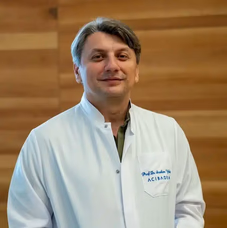
Medical oncologist specializing in systemic therapy for rectal cancer. Extensive experience with modern chemotherapy regimens, targeted therapy, and immunotherapy for MSI-H tumors. Actively involved in research on Total Neoadjuvant Therapy (TNT) for locally advanced rectal cancer.
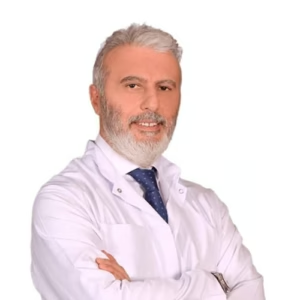
Radiologist specializing in diagnostic and interventional radiology within the GI Oncology Department (Acibadem Atakent). Provides high-precision imaging for rectal cancer staging and performs image-guided interventional procedures as part of comprehensive treatment.
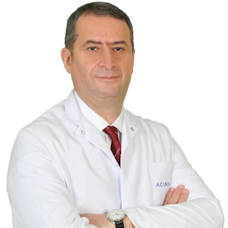
Medical oncologist with more than 32 years of experience. Specializes in targeted therapy for rectal cancer and has extensive experience using modern biological agents. Strong advocate of personalized treatment strategies to improve outcomes in colorectal cancer.
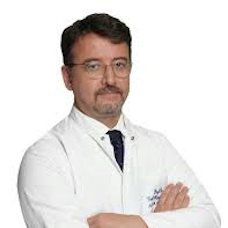
Professor of gastroenterology and endoscopy specializing in early diagnosis and endoscopic surveillance of rectal cancer. Performs diagnostic and therapeutic endoscopy and colonoscopy. Has a strong scientific background in inflammatory bowel disease and early tumor detection.
2. Anadolu Medical Center
Anadolu Medical Center is one of Turkey’s leading centers for rectal cancer treatment, particularly for locally advanced disease. The clinic is known for its expertise in neoadjuvant therapy and precision radiotherapy and follows Johns Hopkins treatment protocols.
Advantages for Rectal Cancer Treatment:
- Strategic partnership with Johns Hopkins Medicine (USA)
- OECI and ESMO accreditation
- Dedicated tumor board for rectal cancer
- High-precision radiotherapy and SBRT
- Complete treatment pathway: neoadjuvant therapy → surgery → systemic treatment
- Advanced equipment for accurate staging and monitoring
Leading Specialists:
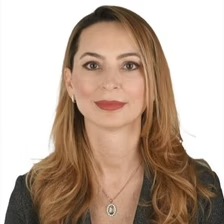
Radiation oncologist and director of the radiation oncology department. One of Turkey’s leading experts in neoadjuvant chemoradiotherapy and Total Neoadjuvant Therapy (TNT) for rectal cancer. Specializes in SBRT for local recurrences and oligometastatic disease. Completed fellowship training in radiosurgery at Stanford University.
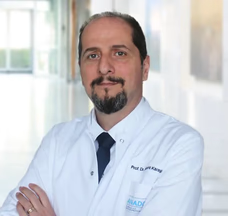
Medical oncologist with more than 25 years of experience. Specializes in systemic treatment of rectal cancer, including adjuvant and palliative chemotherapy, targeted therapy, and immunotherapy. Former dean of Okan University Medical Faculty.
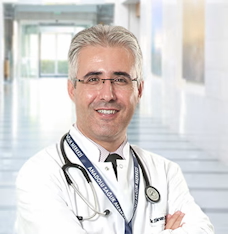
Medical oncologist with more than 20 years of experience. Specializes in individualized systemic treatment for rectal cancer based on molecular profiling (RAS, BRAF, MSI). Has worked at Anadolu Medical Center since 2014.

3. Memorial Şişli Hospital
Memorial Şişli Hospital is a clinic with a strong focus on systemic treatment of rectal cancer, particularly metastatic and recurrent disease. The center actively uses advanced molecular testing to precisely tailor therapy.
Advantages for Rectal Cancer Treatment:
- JCI accreditation (first in Turkey)
- Extended molecular profiling (NGS 600+ genes)
- Strong GI oncology tumor board
- Precision radiotherapy with TrueBeam STx
- da Vinci robotic-assisted surgery
- Individualized targeted therapy and immunotherapy protocols
Leading Specialist:
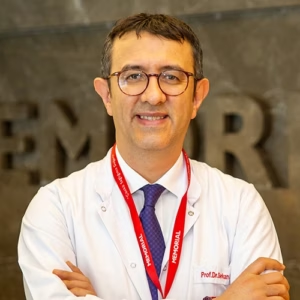
Medical oncologist and head of oncology. Expert in systemic therapy for rectal cancer. Specializes in molecularly guided treatment using NGS 600+ gene profiling, immunotherapy for MSI-H tumors, and targeted therapy for BRAF mutations. Extensive experience in neoadjuvant, adjuvant, and metastatic rectal cancer treatment.

4. Memorial Bahçelievler Hospital
Memorial Bahçelievler Hospital is a modern center actively involved in rectal cancer treatment, especially metastatic disease. The clinic places significant emphasis on systemic therapy and participation in national colorectal cancer registries.
Advantages for Rectal Cancer Treatment:
-
- JCI accreditation
- Active participation in the ONCO-colon Turkey national registry
- Strong GI oncology tumor board
- da Vinci robotic-assisted surgery
- Modern TrueBeam radiotherapy
Who Is the Best Fit and Why
In rectal cancer treatment, the choice of doctor and clinic depends heavily on the stage of the disease, tumor location, and the presence of metastases. There is no single universal specialist — the key is finding the team best suited to your exact situation.
Best Options Depending on the Case:
For Locally Advanced Rectal Cancer (Neoadjuvant Therapy + Surgery)
Prof. Banu Atalar (Anadolu) — one of Turkey’s strongest radiation oncologists for TNT (Total Neoadjuvant Therapy) and neoadjuvant chemoradiotherapy.
For Liver Metastases
Prof. Mert Erkan (Acibadem) — Turkey’s leading HPB surgeon. Performs highly complex liver resections, including two-stage procedures. One of the most cited specialists in this field.
For Metastatic Rectal Cancer (Systemic Therapy)
Prof. Serkan Keskin (Memorial Şişli) — the top choice for molecularly guided treatment. Extensive NGS profiling (600+ genes), immunotherapy for MSI-H tumors, and targeted therapy for BRAF mutations.
Best Overall Team
Acibadem GI Oncology Unit (Erkan + Yıldız + Çalışkan + Engin). This is the most organized specialized rectal cancer unit in Turkey, offering a complete treatment pathway in one place.
How Treatment and Recovery Work
How the Treatment Process Is Structured
Treatment usually does not begin with surgery. First, the diagnosis is carefully reviewed and confirmed. Even if examinations have already been performed, clinics often reassess imaging and pathology. This is standard practice because treatment strategy depends heavily on accurate staging.
After that, the multidisciplinary team develops a treatment plan. In rectal cancer, this is most often a combined approach. Treatment may begin with radiation therapy or chemotherapy to shrink the tumor. Surgery is then performed, followed by additional therapy if necessary.
Importantly, the process is not fragmented. Everything is coordinated within one clinic or team, without long delays between stages.
Advantages of Treatment in Turkey
-
-
- Fast treatment initiation. There are usually no long waiting periods between diagnostics and therapy. In oncology, time directly affects outcomes, and speed matters.
- Clear and practical treatment planning. The treatment strategy is usually developed quickly — without unnecessary procedures, but also without oversimplification.
- Well-coordinated teamwork. Surgeons, oncologists, and radiologists work together rather than separately, allowing faster and more precise decision-making.
-
Recovery After Treatment
Recovery depends on the extent of surgery and the patient’s overall condition. After minimally invasive procedures, recovery is generally faster, and some patients return to normal activities within a few weeks.
More complex surgeries require longer rehabilitation. However, much also depends on how well postoperative monitoring is organized. Clinics usually explain the recovery process in advance, including what activities are recommended and what should be postponed.
Special attention is paid to follow-up care after treatment. Patients are not left on their own after discharge — regular monitoring is scheduled to detect any changes early and adjust treatment if needed.
How the Treatment Method for Rectal Cancer Is Chosen
Rectal cancer treatment is always selected individually during a multidisciplinary tumor board discussion. Specialists from different fields — colorectal surgeons, medical oncologists, radiation oncologists, radiologists, and pathologists — jointly review all patient data before making decisions.
Main Factors Considered:
-
-
- TNM stage
- Exact tumor location within the rectum (lower, middle, or upper third)
- Molecular profile (RAS, BRAF, MSI-H/dMMR, HER2)
- Age, overall health condition, and comorbidities
- The patient’s wish to preserve sphincter function and quality of life
-
Standard Approach for Locally Advanced Rectal Cancer:
-
-
- Neoadjuvant chemoradiotherapy or Total Neoadjuvant Therapy (TNT)
- Surgical treatment (usually 6–12 weeks later)
- Adjuvant therapy if necessary
-
When liver or other metastases are present, doctors first assess whether they can be surgically removed before starting systemic therapy. This approach allows for the most precise treatment planning and the best possible outcomes.
Important Disclaimer
This information is provided for educational purposes only and should not be considered medical advice or treatment guidance. Rectal cancer treatment standards depend on the stage of the disease, molecular-genetic tumor characteristics, the patient’s overall condition, and decisions made by a multidisciplinary tumor board.
Statistics and Treatment Outcomes for Rectal Cancer in Turkey
Today, rectal cancer is no longer automatically considered a hopeless diagnosis. With modern treatment protocols — the same ones used in leading Turkish clinics — average five-year survival rates reach approximately 65–70%. This is confirmed by clinical reviews and colorectal cancer outcome studies (StatPearls / NIH, 2023).
Modern rectal cancer treatment almost never relies on surgery alone. In most cases, a combined approach is used, including preoperative therapy, surgery, and postoperative treatment.
Research shows that this strategy can achieve five-year survival rates of around 70% or higher, especially in patients with stage II–III disease (Journal of Clinical Gastroenterology, 2021).
This is largely because the tumor is reduced before surgery, lowering the risk of recurrence afterward.
Rectal cancer represents a significant portion of oncologic disease in Turkey. According to a multicenter Turkish Oncology Group study, rectal cancer accounts for 31.6% of all colorectal cancer cases (PubMed).
According to GLOBOCAN 2022, approximately 21,700 new colorectal cancer cases are diagnosed annually in Turkey, with rectal cancer representing a substantial proportion of this burden (GLOBOCAN 2022).
Leading Turkish clinics demonstrate strong outcomes:
-
-
- More than 85% of colorectal cancer patients undergo surgical treatment.
- For localized disease, Total Mesorectal Excision (TME) and neoadjuvant therapy are widely used, helping preserve organ function in many patients.
- For metastatic disease, modern systemic therapy combined with liver metastasis resection significantly improves prognosis.
-
How We Help with Treatment at Experts Medical
When patients contact us, they have often already completed part of the journey — they have a diagnosis and many questions, but no clear understanding of what to do next. That is where we step in and organize the entire process from start to finish.
At Experts Medical, we first analyze the medical situation. We review documents, clarify details, and help organize medical records if necessary. After that, our medical team selects the most appropriate doctor and clinic for the specific case — not simply based on popularity or rankings.
Then the practical process begins. We coordinate the treatment plan, organize the trip, assist with visas, flights, and accommodation, and remain in contact throughout the treatment process so patients do not have to manage everything alone.
Our Approach and What It Gives Patients
-
-
- Doctor selection tailored to the exact diagnosis. We do not recommend one universal option. We analyze the stage, treatment goals, and disease specifics before suggesting specialists.
- Full treatment organization. From medical document analysis to returning home — including travel, clinic coordination, translators, and logistical details.
- Treatment without hidden markups. Patients pay the clinic directly. Our services do not increase the cost of treatment.
- 24/7 support. We stay connected during and after treatment if questions or difficulties arise.
- Fast organization. In urgent cases, treatment can sometimes be arranged within hours, without long waiting times.
-
Ultimately, our goal is simple: to allow patients to focus on treatment rather than organizational stress — and to ensure decisions are made based on understanding, not guesswork.
Conclusion
In short, modern rectal cancer treatment is not really about choosing “the best country.” It is about finding the right team and building the correct treatment strategy from the beginning. Turkey offers a strong foundation: experienced surgeons, access to advanced technologies, and the ability to complete treatment without long delays between stages.
But the most important factor is not the equipment or the clinic name — it is how precisely the doctor and team fit your specific situation. In some cases, surgery is the key factor; in others, systemic therapy or radiation therapy plays the main role. That is why the best option is never a generic ranking, but an individualized approach based on stage, tumor biology, and treatment goals.
Frequently Asked Questions
At which stages of rectal cancer is treatment in Turkey most beneficial?
Turkey is especially strong in treating stage II–III locally advanced rectal cancer and stage IV disease with liver metastases. In early-stage disease, organ-preserving surgery with Total Mesorectal Excision (TME) is widely performed. For liver metastases, combined approaches (neoadjuvant therapy + metastasis surgery) often provide strong results.
How much does rectal cancer treatment cost in Turkey?
The approximate cost of a full treatment course (diagnostics + neoadjuvant therapy + da Vinci surgery + rehabilitation) ranges from 25,000 to 45,000 USD. Treatment for metastatic disease with targeted therapy may cost 40,000 USD or more depending on treatment duration. Prices are significantly lower than in Europe or Israel while maintaining comparable quality.
How long does treatment and recovery usually take?
Neoadjuvant therapy usually lasts around 1.5–2 months. After surgery, patients typically stay in the hospital for 5–10 days. Full recovery after robotic-assisted surgery usually takes 4–8 weeks. Many patients return to normal daily activities within 2–3 months.