



- At the clinic's price without markups
- with full doctor support
When a person is diagnosed with lung cancer, there is usually no time for long searches. There is only one goal — to reach specialists who truly understand this disease and can offer modern treatment with strong chances of success.
Modern approaches used in these centers deliver meaningful results. For example, with first-line cemiplimab immunotherapy in patients with high PD-L1 expression (≥ 50%), the 5-year survival rate reached 29.0% compared to 15.0% with standard chemotherapy. Median overall survival was 26.1 months versus 13.3 months. In patients with very high PD-L1 expression (≥ 90%), this figure increased to 39.8%. (Journal of Thoracic Oncology, July 2025, PubMed)
These numbers demonstrate how important it is to be treated by specialists who regularly work with modern protocols and have deep expertise specifically in lung cancer.
Over the past several years, Turkey has become one of the leading destinations for thoracic oncology. The country has teams working at the level of major international cancer centers, especially in molecular-targeted therapy, immunotherapy, and precision radiation treatment. At Experts Medical, we carefully analyzed the available options and selected the strongest centers and specialists you can truly trust with treatment.

1. VKV American Hospital + Koç University
VKV American Hospital + Koç University (Istanbul) are two leading medical institutions operating within the unified Koç Healthcare system (Vehbi Koç Foundation). They are closely connected and function as a single high-tech medical center. American Hospital (founded in 1920) focuses mainly on clinical practice and patient comfort, while Koç University Hospital (opened in 2014) emphasizes scientific research, innovation, and implementation of the latest treatment protocols. Many leading specialists work simultaneously at both institutions.
This system houses one of Turkey’s strongest integrated multidisciplinary lung cancer teams, with an official partnership with MD Anderson Cancer Center.
Advantages for lung cancer treatment:
- One of the strongest integrated thoracic oncology teams in Turkey (thoracic surgeon + medical oncologist + radiation oncologist)
- Partnership with MD Anderson Radiation Treatment Center — highest level of radiation therapy and SBRT/SABR expertise
- ESMO Designated Cancer Centre (Koç University) and JCI accreditation
- Full-cycle molecular profiling (NGS) and access to all modern targeted and immunotherapy drugs
- High-tech thoracic surgery (VATS lobectomy) and advanced radiation therapy (TrueBeam, IMRT/VMAT, SBRT/SABR)
- Regular multidisciplinary Tumor Board meetings involving all major NSCLC specialists
Leading specialists:
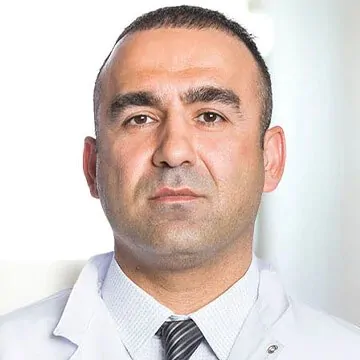
Radiation oncologist, Chair of the Department of Radiation Oncology at Koç University and Head of Radiation Oncology at VKV American Hospital. Adjunct Professor at MD Anderson Cancer Center (2009–2022). One of Turkey’s leading experts in SBRT/SABR for lung cancer. Author of major clinical series and international publications on stereotactic radiotherapy for NSCLC.
Medical oncologist specializing in NSCLC and targeted therapy. Key author of the review “Lung Cancer in Turkey” (Journal of Thoracic Oncology, 2022). Active member of the Turkish Oncology Group (TOG) Lung Cancer Subgroup. Extensive experience with osimertinib, alectinib, sotorasib, and immunotherapy.
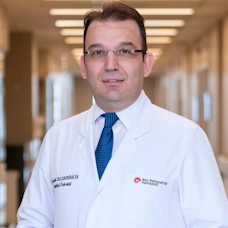
Medical oncologist at Koç University / VKV American Hospital. Specializes in molecular profiling of NSCLC and modern targeted and immunotherapy regimens. Participant in multicenter TOG studies.
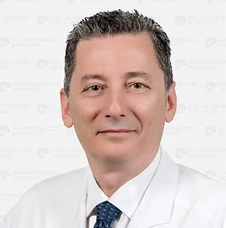
Thoracic surgeon, Head of Thoracic Surgery at VKV American Hospital and Dean of the Medical Faculty at Koç University. More than 37 years of experience. One of Turkey’s most experienced specialists in VATS lobectomies and surgical treatment of lung cancer.

2. LIV Hospital Ankara
LIV Hospital Ankara is a modern multidisciplinary hospital closely affiliated with İstinye University and functioning as a university hospital. This combination provides a high clinical standard and active participation in international clinical trials. One of Turkey’s leading lung cancer immunotherapy specialists works here.
Advantages for lung cancer treatment:
- One of Turkey’s strongest NSCLC immunotherapy experts with experience in international phase III trials
- Participation in advanced clinical research (Principal Investigator of phase III EMPOWER-Lung 1)
- Full access to modern immunotherapy and targeted drugs (pembrolizumab, nivolumab, cemiplimab, osimertinib, etc.)
- Advanced molecular testing (NGS) and personalized treatment approach
- Multidisciplinary Tumor Board involving thoracic oncology specialists
- JCI accreditation and high comfort level for international patients
Leading specialists:
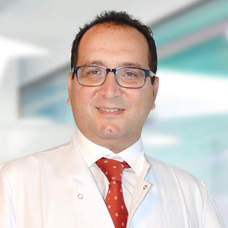
Medical oncologist specializing in lung cancer and immunotherapy. First author and Principal Investigator of the international phase III EMPOWER-Lung 1 study (cemiplimab for NSCLC with high PD-L1 expression). Head of the Lung Cancer Division of the Turkish Oncology Group (TOG). Co-author of the key review “Lung Cancer in Turkey” (Journal of Thoracic Oncology, 2022). Has extensive experience with immunotherapy, neoadjuvant regimens, and treatment of patients with different molecular profiles of NSCLC.
3. Memorial Hospitals
Memorial Healthcare Group is a large network of modern JCI-accredited hospitals in Turkey actively involved in lung cancer treatment. Across the network, patients receive systemic NSCLC therapy, including immunotherapy and targeted drugs, within multicenter studies and real-world clinical registries of the Turkish Oncology Group (TOG).
Advantages for lung cancer treatment:
- Large hospital network with unified treatment protocols and location flexibility (Istanbul or Antalya)
- Access to the full spectrum of modern therapies: immunotherapy, targeted therapy (including BRAF V600E), and chemotherapy
- Active participation in real-world clinical registries and multicenter TOG studies
- Advanced molecular testing (NGS) and personalized treatment strategies
- Multidisciplinary Tumor Board in every major hospital
- JCI accreditation and high service standards for international patients
Leading specialists:
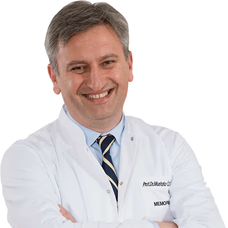
Medical oncologist and Head of Medical Oncology at Memorial Göztepe (Istanbul) and Medstar Antalya. Specializes in treatment of solid tumors, including lung cancer. Key author of a major real-world study of dabrafenib + trametinib for BRAF-mutated NSCLC (Clinical Lung Cancer, 2025). Co-author of the national nivolumab registry for lung cancer. Has more than 112 publications and extensive clinical experience in targeted and immunotherapy treatment of NSCLC.
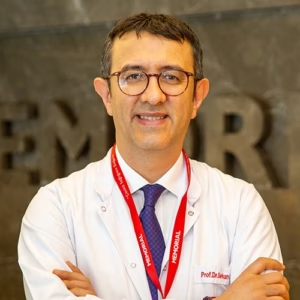
Medical oncologist at Memorial Şişli Hospital (Istanbul). Specializes in systemic oncology treatment. Has extensive experience with broad molecular profiling (NGS 600+). Uses all modern lung cancer treatment options: targeted therapies for EGFR, ALK, KRAS G12C, and BRAF mutations, as well as immunotherapy (pembrolizumab, nivolumab).
4. Anadolu Medical Center (Istanbul/Gebze)
Anadolu Medical Center is one of Turkey’s leading oncology centers with ESMO Designated Cancer Centre status, as well as partnerships with Johns Hopkins Medicine and OECI. The hospital is highly active in lung cancer treatment, especially using advanced radiation therapy techniques.
Advantages for lung cancer treatment:
- One of Turkey’s strongest SBRT/SABR centers for lung cancer
- ESMO Designated Cancer Centre and international partnerships (Johns Hopkins, OECI)
- Advanced high-precision radiotherapy equipment (CyberKnife M6, TrueBeam, Radixact)
- Capability to perform SBRT for early-stage NSCLC and oligometastatic disease
- Comprehensive multidisciplinary Tumor Board involving radiation and medical oncologists
- JCI accreditation and high comfort standards for international patients
Leading specialists:
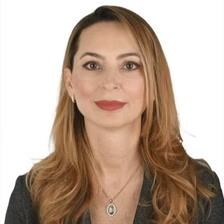
Radiation oncologist specializing in SBRT/SRS. Chair of the ESTRO National Societies Committee (2024–2027), President of the Turkish Society for Radiation Oncology (TROD) for 2025–2027. Has extensive experience with stereotactic radiotherapy for lung cancer, including early-stage disease and recurrences. Author of more than 70 scientific publications.
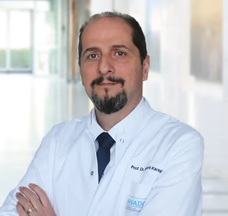
Medical oncologist at Anadolu Medical Center. Specializes in systemic treatment of solid tumors, including lung cancer. Uses modern immunotherapy and targeted therapy protocols for NSCLC within the center’s multidisciplinary treatment approach.
5. Acıbadem Atakent Hospital (Istanbul)
Acıbadem Atakent Hospital is a modern university hospital within the leading Acıbadem Healthcare Group network. The clinic offers comprehensive lung cancer treatment using a multidisciplinary approach, molecular profiling, and advanced systemic therapy methods.
Advantages for lung cancer treatment:
- Specialized focus on thoracic oncology (lung cancer and mediastinal tumors)
- Comprehensive multidisciplinary Tumor Board (medical oncologist + thoracic surgeon + radiation oncologist)
- Advanced molecular testing (NGS) with targeted therapy selection for EGFR, ALK, KRAS, BRAF, and other mutations
- Access to immunotherapy, chemotherapy, and combined treatment regimens according to international protocols
- High-tech infrastructure within the large Acıbadem network (JCI accreditation)
- Convenient Istanbul location and strong support for international patients
Leading specialist:
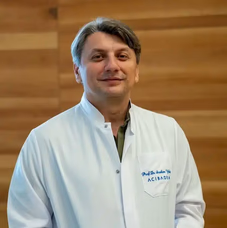
Medical oncologist specializing in thoracic oncology. His main clinical focus is lung cancer and mediastinal tumors. Member of the Board of Directors of the Turkish Lung Cancer Association. Professor at Acıbadem Mehmet Ali Aydınlar University. Author of more than 100 scientific publications with over 1100 citations. Member of ESMO and ASCO. Uses all modern NSCLC treatment approaches, including targeted therapy, immunotherapy, and chemotherapy according to international protocols.
Final Analysis and Recommendations
1. Who is the best fit
Prof. Uğur Selek (39/40) and Prof. Perran Fulden Yumuk (39/40) received the highest scores. Both work within the same center (VKV American Hospital + Koç University) and together form the strongest thoracic MDT in Turkey’s private sector. Alongside thoracic surgeon Şükrü Dilege and medical oncologist Fatih Selçukbiricik, they represent the most complete and coordinated specialist team. All four are co-authors of the landmark review “Lung Cancer in Turkey” (J Thorac Oncol 2022).
Prof. Saadettin Kılıçkap (38/40) is the best choice when immunotherapy is the main priority (high PD-L1, no driver mutations). He is the only physician in Turkey who served as Principal Investigator of a completed phase III NSCLC trial (EMPOWER-Lung 1).
2. Best balance of “experience + technology”
VKV American Hospital + Koç University (MD Anderson Partnership) is the optimal center for most lung cancer patients. The center provides all modern capabilities: VATS surgery, SBRT/SABR, full-spectrum targeted therapy, immunotherapy, and a strong academic foundation as an ESMO Designated Cancer Centre.
3. Top 3 specialists for initial consideration
- Perran Fulden Yumuk — for NSCLC with driver mutations (EGFR, ALK, KRAS G12C, BRAF, etc.).
- Saadettin Kılıçkap — for NSCLC without mutations and high PD-L1 expression (first-line immunotherapy).
- Uğur Selek — for early-stage disease (SBRT), stage III disease (chemoradiotherapy), and oligometastatic cancer.
4. Decision matrix (key situations)
| Situation | Recommended Specialist / Center |
|---|---|
| Stage I–II (operable) | Şükrü Dilege (American Hospital) |
| Stage I–II (inoperable) — SBRT | Uğur Selek or Banu Atalar |
| Stage III (chemoradiotherapy + consolidation) | Uğur Selek (American Hospital) |
| EGFR / ALK / KRAS / BRAF mutations | Perran Yumuk |
| High PD-L1 without mutations | Saadettin Kılıçkap |
| Full MDT + highest overall level | American Hospital VKV + Koç University |
This analysis is based on objective data: scientific activity, publications, participation in clinical studies, institutional level, and real-world profile experience.
How Lung Cancer Treatment and Recovery Work in Turkey
Lung cancer treatment at leading Turkish centers (VKV American Hospital + Koç University, LIV Hospital Ankara, Anadolu Medical Center) follows international protocols (ESMO, NCCN, IASLC) and is always managed by a multidisciplinary team (MDT). Thoracic surgeons, medical oncologists, radiation oncologists, pathologists, and radiologists jointly determine an individualized treatment plan.
Main stages of treatment
- Diagnosis and staging (3–7 days)
- CT / PET-CT of the chest and whole body
- Bronchoscopy + biopsy (EBUS)
- Full molecular profiling (NGS panel) to identify EGFR, ALK, KRAS G12C, BRAF, RET, MET mutations and PD-L1 level
- Pulmonary and cardiac function tests
- Main treatment (depending on stage and molecular profile)
- Early stages I–II
- Surgery (VATS lobectomy) — 4–7 days hospitalization
- Or SBRT/SABR (stereotactic radiotherapy) — 3–5 outpatient sessions for inoperable patients
- Stage III
- Chemoradiotherapy + consolidation immunotherapy (PACIFIC protocol)
- Possible neoadjuvant or adjuvant therapy
- Metastatic stage IV
- Targeted therapy (osimertinib, alectinib, sotorasib, etc.) — oral treatment, outpatient basis
- Immunotherapy (pembrolizumab, nivolumab, cemiplimab) — intravenous infusion every 3–6 weeks
- Combination chemo-immunotherapy or SBRT for oligometastases
- Recovery and rehabilitation
- After VATS lobectomy:
- Hospitalization for 4–7 days
- Discharge with chest drain (usually removed outpatient)
- Return to light activity within 2–3 weeks
- Full recovery within 4–8 weeks
- After SBRT: almost no rehabilitation period; patients usually return home the same day or the next day after the final session.
- During immunotherapy and targeted therapy: treatment is outpatient-based; patients may stay in a hotel or rented apartment. Follow-up visits occur every 3–6 weeks.
- Rehabilitation includes:
- Respiratory exercises and physiotherapy supervised by specialists
- Nutritional and psychological support
- Follow-up CT scans every 3–6 months
Average stay in Turkey:
- Full diagnostics + treatment planning — 7–10 days
- Surgery + recovery — 10–21 days
- Start of targeted therapy / immunotherapy — 5–14 days
Advantages of lung cancer treatment in Turkey
- Access to the latest protocols (ESMO, NCCN, IASLC) and medications that are still unavailable or significantly more expensive in many countries.
- High level of molecular testing (NGS panels) and personalized therapy.
- One of the world’s strongest levels of stereotactic radiotherapy (SBRT/SABR) and robot-assisted thoracic surgery.
- Significantly lower costs (2–3 times cheaper than Germany, Israel, or the USA) with comparable quality.
- Fast treatment initiation — usually 7–14 days from first contact to therapy start.
- Complete treatment cycle within one center + Russian-speaking support.
Estimated Cost of Lung Cancer Treatment in Turkey (2026)
| Type of Treatment | Approximate Cost |
|---|---|
| Full diagnostics + NGS + PET-CT | $3,500 – $6,500 |
| VATS lobectomy | $18,000 – $32,000 |
| SBRT/SABR (3–5 fractions) | $8,000 – $14,000 |
| Immunotherapy (1 year) | $25,000 – $45,000 |
| Targeted therapy (osimertinib, etc., 1 year) | $18,000 – $35,000 |
| Complete stage III treatment course | $35,000 – $65,000 |
Prices are approximate and depend on the disease stage, chosen clinic, and duration of therapy.
Lung Cancer Treatment Outcomes: Real Statistics
Treatment in leading Turkish centers follows international protocols (ESMO, NCCN, IASLC). Below are key verified results from major clinical studies.
EMPOWER-Lung 1 — international phase III study
Prof. Saadettin Kılıçkap served as the Principal Investigator of the study.
5-year outcomes for patients with advanced NSCLC and PD-L1 expression ≥ 50% (without EGFR/ALK/ROS1 mutations):
- Median overall survival: 26.1 months with cemiplimab versus 13.3 months with chemotherapy.
- 5-year survival: 29.0% with cemiplimab versus 15.0% with chemotherapy.
- 41% reduction in risk of death (HR = 0.59; 95% CI: 0.48–0.72).
- Objective response rate: 46.5% versus 20.6%.
- For PD-L1 ≥ 90%, 5-year survival reached 39.8%. (Journal of Thoracic Oncology, July 2025, PubMed)
Additional findings:
- The rate of severe side effects (grade ≥3) was significantly lower with immunotherapy (18.3%) compared to chemotherapy (39.9%).
These are among the strongest current results for first-line immunotherapy in patients with high PD-L1 expression and confirm the high level of expertise of Prof. Kılıçkap and the centers where he practices.
How Experts Medical Helps Organize Lung Cancer Treatment Abroad
When a patient is diagnosed with lung cancer, the main question becomes: where to go and whom to trust. Choosing the right doctor and clinic is critically important because it directly affects both survival and quality of life. At Experts Medical, we handle the entire process so that patients and their families can focus only on recovery.
What exactly we do for lung cancer patients:
- We analyze medical records (histology, molecular profile, PET-CT, PD-L1, etc.) and determine the optimal treatment strategy
- We match patients with the most suitable doctor and center for their specific case: EGFR/ALK/KRAS mutations → Prof. Perran Yumuk, immunotherapy (high PD-L1) → Prof. Saadettin Kılıçkap, SBRT → Prof. Uğur Selek, etc.
- We organize remote consultations with leading specialists (often within 2–4 days)
- We create a clear step-by-step treatment plan: from diagnostics and molecular testing to surgery, SBRT, targeted therapy, or immunotherapy
- We fully organize the trip: doctor appointments, flights, transfers, accommodation near the clinic, and Russian-speaking interpreters during all visits
- We support patients throughout the entire journey — from the first visit to follow-up examinations
- We monitor invoices and help optimize expenses
- If necessary, we help involve charitable foundations for partial treatment funding
We work directly with clinics (VKV American Hospital + Koç University, LIV Hospital Ankara, Anadolu Medical Center, and others), so patients pay only the official clinic rates for medical services — without additional organizational markups.
The result: a clear treatment plan, access to the best available lung cancer specialists in Turkey, complete support, and confidence that everything is being handled correctly and on time.
Conclusion
Lung cancer treatment in Turkey today reaches the level of leading international centers, especially within specialized teams at VKV American Hospital + Koç University, LIV Hospital Ankara, and Anadolu Medical Center.
Thanks to close collaboration between experienced specialists (thoracic surgeons, medical oncologists, and radiation oncologists), advanced technologies (SBRT, TrueBeam, CyberKnife), comprehensive molecular profiling, and access to all modern targeted and immunotherapy drugs, patients receive personalized treatment with the best possible outcomes.
Timely referral, the right choice of doctor and clinic, and proper organization of the trip significantly increase the chances of successful treatment and long-term disease control.
Frequently Asked Questions (FAQ)
How long do I need to stay in Turkey for lung cancer treatment?
It depends on the stage and treatment plan. Full diagnostics and treatment planning usually require 7–10 days. VATS surgery and recovery take approximately 10–21 days. Starting targeted therapy or immunotherapy usually requires 5–14 days. SBRT is performed on an outpatient basis within 3–5 days.
Can I come only for immunotherapy or targeted therapy without surgery?
Yes. Many patients with metastatic lung cancer or after molecular testing receive only oral targeted therapy (osimertinib, alectinib, etc.) or immunotherapy. Treatment is usually outpatient-based with periodic follow-up either in Turkey or in the patient’s home country.
How important is molecular testing (NGS) before starting treatment?
It is critically important. NGS results (EGFR, ALK, KRAS G12C, BRAF mutations and PD-L1 level) completely determine treatment selection. In top Turkish centers this is a standard procedure that allows doctors to choose the most effective targeted therapy and significantly improve prognosis.
How does Experts Medical help organize treatment?
We manage the entire process: reviewing medical records, selecting the best doctor based on the diagnosis and molecular profile, organizing remote consultations, arranging travel, accommodation, interpreters, and ongoing support. Patients pay only for treatment at the clinic — without extra coordination fees. We provide 24/7 support throughout treatment and rehabilitation.