




- At the clinic's price without markups
- with full doctor support
Liver cancer is a diagnosis that always comes unexpectedly and immediately changes your entire life. Countless questions arise: which treatment method to choose, where to receive modern care, and how not to lose precious time.
The good news is that today, even in complex cases, it is possible to achieve meaningful results. For example, in one recent study, the combination of stereotactic body radiation therapy (SBRT) with systemic treatment in patients with hepatocellular carcinoma resulted in a median overall survival of 21.4 months. Two-year local tumor control reached 89.6%, and in patients without portal vein thrombosis, the median survival was even higher — 25.3 months (PubMed).
In recent years, Turkey has made major advances in the treatment of this disease. Y-90, TACE, modern radiation therapy, and transplantation are actively used here. We carefully reviewed all the leading centers and selected the strongest specialists you can trust. No fluff — only real information and practical recommendations.

1. Memorial Şişli Hospital (Istanbul)
Memorial Şişli Hospital is one of the leading centers for interventional liver oncology in Turkey. The hospital has extensive experience in locoregional treatment of hepatocellular carcinoma (HCC), especially in cases where surgical resection or transplantation is not possible.
Advantages for liver cancer treatment:
- Extensive experience with Y-90 radioembolization and TACE for advanced-stage disease, including tumors with portal vein thrombosis
- Availability of percutaneous ablation (RFA and MWA) as a standalone treatment or in combination with embolization
- Regular use of combined approaches: locoregional treatment + systemic therapy (immunotherapy and targeted therapies)
- Comprehensive MDT tumor board for rapid decision-making based on BCLC staging
- JCI accreditation and a state-of-the-art angiography suite
Leading specialists:
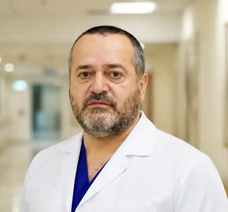
Interventional radiologist and one of the pioneers of liver tumor ablation and embolization in Turkey. Specializes in TACE, Y-90 radioembolization, and percutaneous ablation (RFA/MWA). Author of a publication on the combination of Y-90 + capecitabine in HCC with portal vein thrombosis (Medicine, 2023). Has extensive experience treating complex and advanced-stage cases.
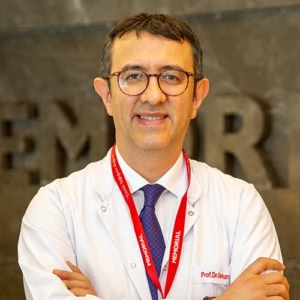
Medical oncologist. Responsible for systemic therapy for HCC: atezolizumab + bevacizumab, lenvatinib, sorafenib, regorafenib, and cabozantinib. Has extensive experience in molecular profiling (testing for 600+ genes).
2. Koç University Hospital + VKV American Hospital (Istanbul)
Koç University Hospital and VKV American Hospital operate as a unified system under the Koç Healthcare brand and are among the strongest centers for transplantation and comprehensive liver oncology in Turkey. They are particularly successful in treating patients with hepatocellular carcinoma (HCC) who require transplantation or a complex multidisciplinary approach.
Advantages for liver cancer treatment:
- One of the highest liver transplantation volumes in Turkey for HCC (279 transplants performed between 2018–2024, including 54 patients with HCC)
- Use of both Milan criteria and expanded selection criteria for transplantation
- Comprehensive MDT involving transplant surgeons, hepatologists, interventional radiologists, and medical oncologists
- Possibility of tumor downstaging (TACE / Y-90) followed by transplantation
- ESMO Designated Cancer Centre (Koç University) and MD Anderson partnership (VKV American Hospital)
Leading specialists:
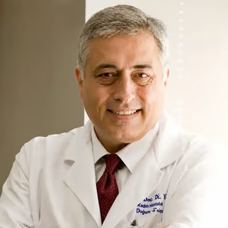
Transplant surgeon and one of Turkey’s leading specialists in liver transplantation for HCC. Has many years of experience at Mount Sinai Hospital (USA) and Yale University. Since 2018, he has led the transplantation program at Koç University Hospital. Author of publications on transplantation for HCC both within and beyond the Milan criteria.
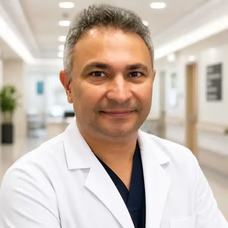
Hepatologist and coordinator of the multidisciplinary tumor board for HCC. Co-author of the key study “Current state and clinical outcome in Turkish patients with HCC.” Responsible for accurate BCLC staging, patient selection for different treatment modalities, and coordination of the entire treatment process.
3. Acıbadem Ataşehir Hospital (Istanbul)
Acıbadem Ataşehir Hospital is a modern university hospital within the largest healthcare network, Acıbadem Healthcare Group. The clinic stands out for its strong HPB surgery program (liver, pancreas, and biliary tract surgery) and is actively involved in the surgical treatment of hepatocellular carcinoma (HCC).
Advantages for liver cancer treatment:
- High level of HPB surgery for operable HCC (BCLC 0–A)
- Ability to perform complex liver resections, including both laparoscopic and open procedures
- Integration with the Pancreatic Cancer Research Center and the academic base of Acıbadem Mehmet Ali Aydınlar University
- Modern equipment for precise surgical planning (intraoperative ultrasound, 3D visualization)
- Comprehensive MDT tumor board involving HPB surgeons, medical oncologists, and interventional radiologists
- JCI accreditation and a high level of comfort for international patients
Leading specialists:
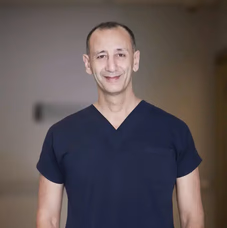
HPB surgeon and professor at Acıbadem Mehmet Ali Aydınlar University. Ranked among the top 2% most influential scientists in the world according to Stanford University / Elsevier (2024). Specializes in complex liver surgery, including resections for HCC. Has more than 25 years of experience at leading European centers (Heidelberg, Technical University of Munich) and more than 165 scientific publications.
4. Anadolu Medical Center (Istanbul / Gebze)
Anadolu Medical Center is one of Turkey’s most respected oncology centers with international partnerships (Johns Hopkins Medicine and OECI). The clinic stands out for its advanced radiation therapy capabilities and actively uses SBRT in the treatment of hepatocellular carcinoma.
Advantages for liver cancer treatment:
- One of Turkey’s leading centers for SBRT in HCC (recommended by BCLC 2022 for solitary tumors up to 8 cm)
- Advanced equipment: CyberKnife M6 and TrueBeam with respiratory motion tracking systems
- Possibility of SBRT as a standalone treatment, in combination with systemic therapy, or as a bridge to transplantation
- Comprehensive MDT tumor board involving radiation oncologists, medical oncologists, and other specialists
- ESMO Designated Cancer Centre and a high level of service for international patients
Leading specialists:

Radiation oncologist and specialist in stereotactic radiotherapy (SBRT/SRS). Chair of the ESTRO National Societies Committee (2024–2027) and President of the Turkish Society for Radiation Oncology (TROD) for 2025–2027. Completed fellowship training at Stanford University. Has more than 72 scientific publications. One of Turkey’s leading specialists in SBRT for HCC and other liver tumors. Has extensive experience treating both primary liver tumors and liver metastases using CyberKnife M6 and TrueBeam.
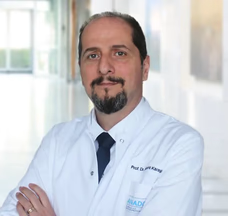
Medical oncologist. Provides systemic therapy for liver cancer within the center’s multidisciplinary approach, including immunotherapy and targeted therapies. Participates in regular MDT tumor board meetings at Anadolu Medical Center.
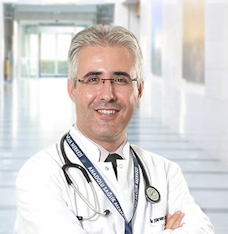
Medical oncologist. Specializes in the systemic treatment of solid tumors, including HCC. Works as part of Anadolu’s oncology team, providing a comprehensive approach for patients with liver cancer.

5. Acıbadem Atakent Hospital (Istanbul)
Acıbadem Atakent Hospital is a modern university hospital within the largest healthcare network, Acıbadem Healthcare Group. The clinic offers comprehensive liver cancer treatment within a multidisciplinary approach, with a focus on systemic therapy and support from HPB surgery.
Advantages for liver cancer treatment:
- Access to modern systemic therapy regimens for HCC (atezolizumab + bevacizumab, lenvatinib, sorafenib, etc.)
- Possibility of molecular tumor profiling for personalized targeted therapy selection
- Comprehensive MDT tumor board involving medical oncologists, HPB surgeons, and interventional radiologists
- Modern infrastructure of the large Acıbadem network (JCI accreditation)
- Convenient location in Istanbul and well-organized services for international patients
Leading specialists:
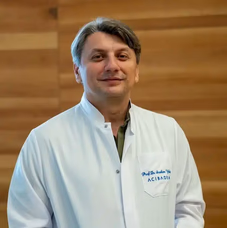
Medical oncologist at Acıbadem Atakent Hospital. Specializes in systemic therapy for solid tumors, including hepatocellular carcinoma. Has more than 111 scientific publications and experience working at major oncology centers. Participates in multidisciplinary tumor boards for liver cancer treatment as part of the Acıbadem team.

6. Memorial Ankara Hospital (Ankara)
Memorial Ankara Hospital is one of the major multidisciplinary hospitals within the Memorial Healthcare Group network in Ankara. The clinic holds JCI accreditation and is actively involved in the treatment of oncological diseases, including hepatocellular carcinoma (HCC), offering systemic therapy and support within a multidisciplinary approach.
Advantages for liver cancer treatment:
- Access to modern systemic therapy protocols for HCC (atezolizumab + bevacizumab, lenvatinib, sorafenib, regorafenib, cabozantinib)
- Possibility of molecular tumor profiling for personalized treatment selection
- Advanced organ transplantation center (including kidney transplantation), which is beneficial when considering liver transplantation in combined cases
- Modern equipment for diagnostics (PET-CT, MRI, CT) and oncology treatment
- Comprehensive MDT tumor board involving medical oncologists, surgeons, and radiologists
- JCI accreditation, comfortable inpatient rooms, and well-organized services for international patients (interpreters, transfers, coordination support)
Leading specialists:
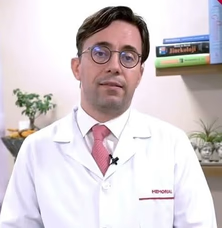
Medical oncologist. Specializes in systemic therapy for solid tumors, including hepatocellular carcinoma. Uses up-to-date immunotherapy and targeted therapy protocols as part of the Memorial Ankara oncology team.
Final Analysis and Recommendations
In liver cancer (hepatocellular carcinoma), the choice of doctor and medical center is especially important because treatment depends heavily on the BCLC stage, liver function, and the possibility of transplantation.
Who is the best fit:
-
- Abdullah Yakupoğlu is the best choice in most cases. At the time of diagnosis, 70–80% of HCC patients are inoperable, and this is where high-level interventional treatment (TACE, Y-90, ablation) becomes critical. His publication on Y-90 for portal vein thrombosis confirms his expertise in the most challenging situations.
- Prof. Şükrü Emre is Turkey’s leading transplant surgeon for HCC. He performed 279 liver transplants over 6 years, including 54 for patients with HCC. An ideal option for patients who meet Milan or expanded criteria.
- Prof. Mert Erkan is the best HPB surgeon for operable HCC (BCLC 0–A), when liver resection is indicated.
Best balance of experience and technology
Koç University Hospital is the most comprehensive center for HCC thanks to its strong transplantation program (Emre), experienced hepatologist (Baran), and ESMO Designated status.
Memorial Şişli is an excellent alternative, especially if the focus is on Y-90 and TACE (Yakupoğlu).
Top 3 for initial consideration
- Abdullah Yakupoğlu — for inoperable HCC (the most common scenario).
- Şükrü Emre — when liver transplantation is possible.
- Mert Erkan — for operable tumors and good liver function.
Key conclusion
Unlike other types of cancer, with HCC you cannot simply “go to a good oncologist.” Accurate BCLC staging and selecting a specialist for the specific clinical situation are critically important. The strongest teams are currently concentrated at Koç University and Memorial Şişli.
Important note: This information is provided for informational purposes only and does not constitute a treatment recommendation, medical advice, or a substitute for a physician consultation. The choice of specialist and treatment strategy should only be determined by a qualified oncologist/hepatologist based on a full evaluation of the individual patient. All decisions must be made together with the treating physician.
How Liver Cancer Treatment in Turkey Works: Methods, Stages, and Costs
Treatment of hepatocellular carcinoma (HCC) in Turkey follows the current BCLC 2022 guidelines and is always carried out by a multidisciplinary team. Doctors select the strategy individually, taking into account the size and number of tumors, liver function, presence of cirrhosis, and the patient’s overall condition.
Main treatment methods
- Locoregional therapies (the most commonly used methods)
- TACE (transarterial chemoembolization) — delivery of chemotherapy directly into the tumor vessels followed by embolization.
- Y-90 radioembolization (SIRT/TARE) — microspheres with radioactive yttrium-90 are delivered to the tumor through the arteries. Particularly effective in cases with portal vein thrombosis.
- Ablation — radiofrequency ablation (RFA) or microwave ablation (MWA) — destruction of the tumor using heat. Used for solitary lesions up to 3–5 cm.
- SBRT (stereotactic body radiation therapy) — precise irradiation of the tumor with minimal impact on healthy liver tissue.
- Surgical treatment
- Liver resection (open or laparoscopic/robotic) — for operable tumors and good liver function.
- Liver transplantation — the gold standard for patients within Milan or expanded criteria. Performed using either living donors or deceased donors.
- Systemic therapy
- First-line therapy: atezolizumab + bevacizumab.
- Targeted therapies: lenvatinib, sorafenib, regorafenib, cabozantinib.
- New immunotherapy combinations.
Approximate treatment timeline and length of stay
- Diagnostics and staging — 5–10 days (MRI/CT, PET-CT, biopsy, laboratory tests, liver function assessment).
- Locoregional treatment (TACE, Y-90, ablation) — 1–3 days of hospitalization.
- SBRT — 3–5 outpatient sessions.
- Liver resection — hospitalization for 7–14 days.
- Transplantation — 3–6 weeks (including rehabilitation).
Most patients with inoperable HCC undergo treatment on an outpatient basis and can stay in a hotel near the clinic.
Approximate prices (2026)
- Comprehensive diagnostics and staging — $3,500–7,000
- TACE — $6,000–12,000 per procedure
- Y-90 radioembolization — $15,000–25,000
- SBRT — $12,000–22,000
- Liver resection — $18,000–35,000
- Liver transplantation (living donor) — $65,000–95,000
Prices are significantly lower than in Europe or the United States, while maintaining comparable quality and equipment standards.
The main advantage of Turkish centers is the ability to quickly combine treatment modalities (for example, Y-90 + systemic therapy or downstaging before transplantation) and the availability of experienced teams that regularly work specifically with liver cancer.
Treatment Outcomes for Liver Cancer in Turkey: Real-World Statistics
Modern approaches to the treatment of hepatocellular carcinoma (HCC) in Turkey provide meaningful results, especially when SBRT is combined with systemic therapy.
In one study involving 46 patients with HCC (including 27 patients with portal vein thrombosis), the following outcomes were achieved after combining stereotactic body radiation therapy (SBRT) with targeted therapies or immunotherapy:
- Median overall survival — 21.4 months.
- 1-year survival — 60.6%.
- 2-year survival — 44.7%.
- 3-year survival — 28.2%.
- In patients without portal vein thrombosis, median survival was significantly higher — 25.3 months (compared to 10.9 months in patients with thrombosis).
- Two-year local tumor control — 89.6%.
- Symptom improvement was reported by 59.4% of patients.
These data show that even in relatively complex cases of liver cancer, combined treatment can achieve good disease control and prolong survival (PubMed).

Why Liver Cancer Patients Choose Experts Medical
At Experts Medical, we help patients from different countries receive high-quality treatment abroad. Over the years, we have organized treatment for thousands of people, including patients with hepatocellular carcinoma, and we know exactly how important it is to quickly and correctly choose the right doctor and clinic.
All our services are completely free for patients. You do not overpay for organization — you only pay the clinic directly for medical services at official rates.
What we do for every liver cancer patient:
- Carefully review all medical records and determine the most suitable specialist specifically for your stage and situation
- Arrange a remote consultation with a doctor within a few days
- Prepare a clear treatment plan
- Fully handle travel arrangements: flights, transfers, accommodation, interpreter services, and coordination support
- Remain available 24/7 throughout treatment and rehabilitation
We work directly with clinics, so you receive transparent conditions and full support without hidden fees. Our goal is to ensure that you do not waste energy on searching and logistics, but focus entirely on recovery.
Conclusion
Liver cancer treatment in Turkey is currently at a very high level. Thanks to experienced specialists, advanced treatment methods (Y-90, TACE, SBRT, transplantation), and the coordinated work of multidisciplinary teams, patients receive real chances for disease control even at advanced stages.
The best outcomes are achieved in centers with a strong team: an interventional radiologist, transplant surgeon, hepatobiliary surgeon, and medical oncologist working together. The most significant successes are associated with accurate BCLC staging and individualized treatment selection.
If you or your loved ones are facing a diagnosis of HCC, the most important thing is not to lose time and to consult specialists who regularly work specifically with this disease. The right choice of doctor and center can significantly influence the outcome.
At Experts Medical, we have already reviewed all available options, verified doctors, and selected the strongest teams in Turkey. You do not need to compare clinics and search for specialists on your own — we will do it for you and organize treatment quickly, transparently, and with full support.
Frequently Asked Questions
At what stage of liver cancer are there still good chances for successful treatment?
Good chances remain even at intermediate and advanced stages (BCLC B and C), especially with the use of Y-90, TACE, SBRT, and modern immunotherapy regimens. At early stages (BCLC 0–A), complete cure is possible through resection or transplantation.
How long does a treatment trip to Turkey usually take?
Diagnostics and treatment planning take 7–12 days. Locoregional treatment (TACE, Y-90, SBRT) takes 5–14 days. Liver resection takes approximately 2–3 weeks. Transplantation takes from 4 to 8 weeks including rehabilitation.
Can I come for treatment only for systemic therapy or Y-90 without surgery?
Yes, this is one of the most common scenarios. Many patients undergo treatment on an outpatient basis: they stay in a hotel, regularly visit the doctor, and receive therapy without prolonged hospitalization.