




 Best clinics
 Treatment methods and cost
 Best doctors
 Experts Medical
 Organization of treatment
- At the clinic’s price without markups
- with full doctor support
Salivary gland cancer is rare but requires a special approach, as tumors can affect important facial and neck structures. It accounts for less than 5% of all malignant head and neck tumors, with an annual incidence of about 1–2 cases per 100,000 people (Ortadogu Medical Journal, 2019). Today, Turkey offers patients modern diagnostic and treatment methods in clinics that follow international protocols. These include function-preserving surgeries, next-generation radiation therapy, and targeted drugs. Many international patients choose Turkey not only for the technology and expertise of its doctors but also for the ability to organize treatment quickly and in comfortable conditions.
Treatment Results and Survival Rates for Salivary Gland Cancer in Turkey
Overall Survival and Statistics
According to a retrospective analysis involving 53 patients who underwent surgery followed by radiation therapy, the 10-year outcomes were as follows: local control - 65%, no distant metastases - 57.7%, disease-free survival - 38.8%, and overall survival - 48.2% (Namık Kemal Medical Journal, 2021).
Influencing Factors
The prognosis largely depends on the tumor’s characteristics and the treatment methods used:
- The histological type and degree of aggressiveness of the tumor are directly linked to survival (Namık Kemal Medical Journal, 2021).
- Extracapsular tumor spread worsens the prognosis.
- Lymph node metastases significantly reduce overall survival rates.
- The radiation therapy dose plays a key role: when exceeding 60 Gy, both local control and overall survival rates are higher.
What This Means for Patients
- In localized forms with early diagnosis, 5-year disease-free survival can reach 70–80%, especially when using combined treatment.
- In aggressive subtypes or metastatic cases, the prognosis is less favorable: in some studies, 10-year overall survival does not exceed 20–30%.
- Modern treatment protocols, a multidisciplinary approach, and high-dose radiation therapy improve patient outcomes, particularly in specialized oncology centers in Turkey.
Treatment methods and cost of salivary gland cancer therapy in Turkey
- Surgical treatment
The main treatment method remains the removal of the tumor along with the affected salivary gland and, if necessary, the neck lymph nodes. Turkish surgeons use advanced techniques, including minimally invasive incisions and intraoperative navigation, which help minimize the risk of facial nerve damage and preserve facial functions.
- Salivary gland tumor removal – from 15,000 USD
- Surgery using neuronavigation (for complex locations) – from 18,000 USD
- Radiation therapy
Radiation therapy is often prescribed after surgery, especially for aggressive tumors or when lymph nodes are affected. Turkish oncology centers offer IMRT, TrueBeam, and CyberKnife technologies.
- CyberKnife – 6,000–7,200 USD
- IMRT – around 7,500 USD
- Chemotherapy and targeted therapy
Chemotherapy is used in advanced stages and in combination with other treatment methods. In recent years, targeted and immunotherapy drugs have been prescribed more frequently.
- Chemotherapy course – from 2,400 USD
- Single session – from 1,300 USD
- Chemotherapy port placement – 2,800 USD
- Immunotherapy – from 680 to 2,600 USD
- Modern medications – from 3,600 USD
- Diagnostics
Before starting therapy, a comprehensive examination is performed, including an MRI of the neck, PET-CT to detect metastases, and a biopsy.
- Oncologist consultation – from 135–200 USD
- Neck MRI – from 400 USD
- PET-CT – from 650–900 USD
On average, the cost of treating salivary gland cancer in Turkey starts at around 20,000 USD for localized forms (surgery + radiation therapy) and exceeds 30,000–40,000 USD when combined treatment with chemotherapy and modern medications is required.
Thanks to a wide range of technologies and access to innovative drugs, patients receive comprehensive care following international protocols, while the overall cost remains significantly lower than in clinics in Europe or Israel.

At Experts Medical, we have been helping patients arrange treatment abroad for over 9 years, accompanying more than 12,000 people through this process. Our experience allows us to quickly determine where a patient can truly get effective help and where there is a risk of wasting time and money.
Our work begins with a free consultation. We carefully review the medical situation, translate documents, and send them to clinics. Then we select a doctor based on proven results, qualifications, and experience with the specific diagnosis. If needed, we also arrange an online consultation with a foreign specialist.
It’s important to note that all our services for patients are completely free. We are official representatives of international clinics, so payments for treatment are made directly to the hospital, without extra charges or intermediaries.
Why patients choose Experts Medical
- Over 9 years of experience in organizing treatment abroad
- Free consultations and support with no hidden fees
- Direct contracts with leading Turkish clinics
- Individual selection of a doctor based on diagnosis and results
- 24/7 support at all stages of treatment
- Assistance with tickets, visas, hotels, and translation services
- Checking accounts, assistance in obtaining discounts
- Charitable foundation for children under 18
We work only with trusted clinics and doctors. Over the years, we’ve gathered detailed statistics on each specialist and know which doctors show the best success rates for specific diagnoses. This allows us to choose the place where the patient’s chances of success are the highest.
Our rule is simple - you are never alone. We stay with you every step of the way, from the first call to your return home.
The best clinics in Turkey for the treatment of salivary gland cancer

1. Memorial Sisli Hospital
Memorial Şişli Hospital is part of one of the largest medical networks in Turkey and is considered one of the top institutions for oncology treatment, including salivary gland cancer. The center is located in Istanbul and welcomes patients from more than 160 countries each year. Over 76,000 surgeries are performed annually here, including advanced procedures on head and neck organs.
The clinic operates a specialized oncology center where treatment is based on a multidisciplinary approach. This means that each case is managed by several narrow specialists at once — an oncologist, surgeon, radiotherapist, pathologist, and others. This approach helps develop the most accurate and personalized treatment strategy.
Salivary Gland Cancer Treatment at Memorial Şişli
- Use of neurosurgical and ENT techniques for parotid and submandibular tumors
- Access to advanced radiation therapy methods (IMRT, TrueBeam, CyberKnife)
- Facial nerve-preserving surgeries for benign and malignant tumors
- Availability of reconstructive procedures after tumor removal

2. Anadolu Medical Center

Anadolu Medical Center is one of the most renowned medical centers in Turkey, particularly in oncology. Established with the support of Johns Hopkins Medicine (USA), it combines the expertise of Turkish doctors with American treatment standards. The clinic welcomes patients from all over the world, including those requiring comprehensive treatment for salivary gland cancer.
Anadolu focuses on precise diagnostics and personalized treatment protocols. Patients undergo examinations using advanced equipment, receive consultations from multiple specialists, and follow treatment plans tailored to the genetic and molecular profile of the tumor. This is especially important for complex cases in the head and neck area.
Salivary Gland Cancer Treatment at Anadolu
- Multidisciplinary approach: oncologists, maxillofacial surgeons, ENT specialists, and radiologists work as a unified team
- Use of CyberKnife, Radixact, and TrueBeam technologies
- Access to advanced molecular diagnostics and liquid biopsy (CTC)

3. Medical Park Clinic
Medical Park Clinic is one of the most well-known private hospital networks in Turkey, actively serving international patients. As part of its cancer treatment programs, including salivary gland tumors, Medical Park hospitals offer a combination of advanced diagnostics, progressive surgical solutions, and gentle radiation therapy. The network includes dozens of hospitals across the country, and the main center in Antalya is considered one of the leading oncology facilities.
The hospital employs an international team of doctors experienced in treating malignant head and neck tumors. Thanks to its technological capabilities and multidisciplinary approach, patients receive personalized treatment based on international NCCN and ESMO standards.
Salivary Gland Cancer Treatment at Medical Park
- Dedicated head and neck tumor teams: oncologists, ENT surgeons, neurosurgeons, and radiologists
- High-precision radiation therapy: linear accelerators, stereotactic radiosurgery, IMRT technology
- PET-CT, MRI, and ultrasound- or CT-guided biopsy for accurate staging and tumor margin assessment
- Availability of organ-preserving surgeries and reconstructive procedures
Leading doctors in Turkey for the treatment of salivary gland cancer
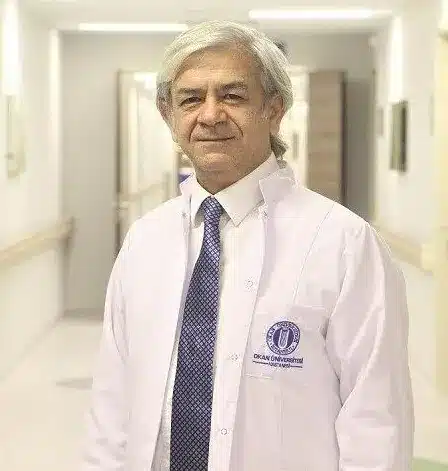
How we select a clinic and doctor for the treatment of salivary gland cancer
Choosing an oncologist and a clinic is not just another task on a list. The right decision determines everything: prognosis, chances of preserving functions, quality of life, and emotional comfort. At Experts Medical, we know this firsthand — for over 9 years, we’ve helped more than 12,000 patients undergo treatment abroad.
This experience has given us one key advantage — a clear understanding of where treatment is truly effective and where impressive words don’t translate into real results. Here’s what we base our work on:
Only verified clinics and doctors
We cooperate only with those whose work we know firsthand through real cases. We look beyond diplomas and equipment — we assess actual treatment outcomes: how the surgery is performed, whether there are complications, and how quickly recovery happens.
Individual approach to every diagnosis
Salivary gland cancer is not a single diagnosis but dozens of types — from adenoid cystic carcinoma to mucoepidermoid tumors. For each case, it’s crucial to select a team with the right specialization. Some patients may need reconstructive surgery, while others require access to molecular testing and targeted therapy. We take everything into account — from the stage of the disease to individual characteristics of the body.
Why this matters
For a patient facing this diagnosis for the first time, it’s difficult to know where real help is available. We have the ability to see the full picture — through patient feedback, follow-up scans, and dozens of similar cases. This allows us to make informed recommendations, not random guesses.
How is treatment organized and how long does it take?
- 1. Initial contact
Everything starts when you contact us and send your medical documents – reports, CT, MRI, and test results. There are no obligations at this stage, only an understanding of your situation.
- 2. Analysis and selection of clinics
We submit documents to several specialized clinics simultaneously. We receive detailed treatment plans and prices from oncologists—without any spreadsheets, and with a precise prognosis. If the patient’s situation does not change, this plan remains current and is not revised.
- 3. Selecting a clinic and consulting with a doctor
The patient chooses a clinic that suits their approach, doctors, and cost. We arrange an online consultation with a doctor—usually free. We also assist with visa processing, if necessary.
- 4. Preparing for the trip
We book your tickets, arrange the transfer, and find accommodation near the clinic. A Russian-speaking coordinator and interpreter are assigned to accompany you through all stages of diagnosis and treatment.
- 5. Accompaniment in the clinic
You are not left alone. The coordinator helps schedule appointments, answers both practical and medical questions, and stays in touch at all times, ready to assist in case of any unexpected situations.
- 6. Support after returning home
Even after the treatment is completed, we stay in touch. We help with follow-up checkups, results, document translations, and consultations if any questions arise later.
When you first hear the diagnosis, everything can feel complicated and unclear. Our task is to remove that chaos and build a clear route. We accompany the patient at every stage - from the first documents to returning home. Below is how it works step by step and how long treatment for salivary gland cancer in Turkey may take.
How long will the treatment take
The duration depends on the diagnosis, disease stage, and treatment method. Below are average time estimates.
- Diagnostics: about 5 days. Includes tests, consultations, and imaging. After all examinations, a medical board meets to determine the treatment strategy.
- Chemotherapy: 1 course – approximately 1 month. After each course, the patient remains under observation. If the condition is stable, therapy can continue at the place of residence with periodic follow-ups in Turkey (about once every 3 months).
- Radiation therapy: about 30 daily sessions without breaks. The full course takes approximately 1 month.
- Genetic testing for selecting targeted therapy: up to 14 days. After receiving the results, doctors choose an individualized treatment plan. While the tests are being processed, supportive therapy may be prescribed.
- Surgical treatment: from 7 to 10 days in Turkey. This period includes preoperative preparation, surgery, and the early recovery stage.
Depending on the scope of therapy, treatment may take from 1 week to several months. From the very beginning, the patient receives a clear schedule – no surprises along the way. We make sure everything is transparent, well-planned in advance, and convenient in terms of logistics and timing.
Conclusion
Salivary gland cancer is a rare and complex disease, but with the right approach, it can be treated successfully. In Turkey, patients have access to modern treatment protocols, precise diagnostics, experienced oncological surgeons and radiologists, as well as comfortable hospital conditions. Here, doctors don’t just prescribe treatment – they carefully study each case to choose the best possible option, whether it’s surgery, radiation therapy, or a combination of methods.
Our team at Experts Medical helps you go through the entire process without stress – from choosing the clinic to returning home. We have organized treatment for over 12,000 patients and know exactly which doctors and clinics deliver real results.
If you’ve received this diagnosis, don’t face it alone. We are here to help you take the right steps at the right time.
Frequently Asked Questions
1. Do Turkish surgeons use organ-preserving techniques in salivary gland surgeries?
Yes. Surgeons aim to preserve nerves (especially the facial nerve), facial expressions, and functionality as much as possible. In complex cases, intraoperative neuromonitoring and 3D navigation are used. If needed, reconstructive surgery is performed, such as tissue grafting from other parts of the body to restore shape and function.
2. Is there access to modern molecular genetic testing for selecting targeted therapy?
Yes. Leading Turkish centers (such as Anadolu, Acibadem, and Memorial) offer studies like NGS panels, HER2 expression analysis, and mutation testing for TP53, PIK3CA, and others. These tests help determine targeted treatment options or eligibility for clinical trials when standard therapies are ineffective.
3. What is the approach to treating recurrences or metastatic disease?
In cases of recurrence, repeat surgery is often combined with radiation therapy or systemic treatment (chemotherapy or targeted therapy). For metastases (most commonly in the lungs), doctors design an individual protocol based on the tumor’s molecular characteristics. Metastasis resection is also possible if their number is limited.
4. Can I get help from Experts Medical if the diagnosis is still uncertain?
Yes. If you only suspect a salivary gland tumor or have insufficient data, we can help organize in-depth diagnostics: PET-CT, fine-needle aspiration, biopsy with histopathology, and genetic testing. You can undergo these procedures either during a short trip (up to 5 days) or remotely if part of the tests can be performed in your home country.