




 Best clinics
 Cost of treatment
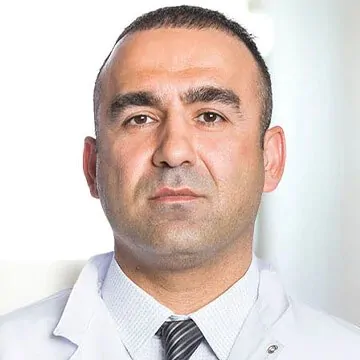
 Experienced oncourologists
 Experts Medical
 Treatment outcomes and survival
- At the clinic's price without markups
- with full doctor support
Bladder cancer requires precise diagnosis and a well-thought-out treatment strategy. In Turkey, there are clinics where these processes are organized according to international standards. Patients have access to modern treatment methods, including surgery, immunotherapy, and targeted drugs. The experience of doctors and the availability of a comprehensive approach — involving oncologists, urologists, and radiologists — play a crucial role. According to research, the 5-year overall survival rate for patients in Turkish centers reaches 37%, and when detected early, the outcomes are significantly higher (PubMed, 2023).
Bladder cancer treatment outcomes and survival rates in Turkey
In short, Turkey demonstrates consistent results in bladder cancer treatment due to a combination of advanced equipment, experienced onco-urologists, and ongoing clinical research. Both national data and studies from individual specialized centers support these outcomes.
National data and overall picture
Bladder cancer is among the most common urological malignancies in the country. According to epidemiological analyses, its incidence in Turkey is increasing, especially among women.
A population-based study covering the years 2004–2015 showed a rise in cases of urinary tract cancers, including bladder cancer. There is a clear gender difference — men are affected more often, but the rate of increase is higher among women.
Clinical studies in Turkey
In one study, the 5-year overall survival rate for bladder cancer patients was 37.2%, and the recurrence-free survival rate was 48.9%. At the 2-year mark, these rates were higher: OS - 54.7%, RFS - 60.6% (Urologic Oncology, 2023).
Special attention is given to non-muscle-invasive bladder cancer (NMIBC). Research has shown that repeat TUR surgery and maintenance BCG therapy help maintain high survival rates among high-risk patients.
Key prognostic factors for patients
- Early-stage detection greatly improves prognosis — timely diagnosis is crucial.
- Lymph node involvement significantly reduces long-term survival chances, making accurate staging essential.
- Leading clinics in Turkey offer advanced methods such as repeat TUR surgeries, BCG therapy, 3D radiotherapy, targeted drugs, and immunotherapy.
- With proper monitoring and treatment, even high-risk patients can achieve long-term disease control.
How much does bladder cancer treatment cost in Turkey?
- Bladder tumor removal surgery: from $8100
- Chemotherapy course: from $1300 per cycle
- Immunotherapy: from $680 to $2600 per cycle
- PET-CT (oncological screening and staging): from $500 to $750, depending on the clinic and type of equipment
- Biopsy: from $1500
- Radiation therapy (25–30 fractions): from $3700 to $7900
What’s included in the cost
- Doctor consultations (oncologist, urologist, radiologist)
- All diagnostic tests: MRI, PET-CT, biopsy
- Hospitalization and room stay
- Medications, anesthesia, and consumable materials
- Surgical procedure or chemotherapy/radiation therapy course
Systemic therapy
For locally advanced cases, chemotherapy is prescribed according to NCCN and ESMO protocols. One course costs $1300–2400, and the installation of a port system is about $2800. For patients with HER2-positive stomach cancer, targeted drugs are used (the cost depends on the specific medication). Immunotherapy costs $700–2600 per infusion. Clinics also offer combined packages, for example, “PET-CT + 1 chemotherapy course + 1 radiotherapy course” for around $6800.
Radiation therapy
Radiation treatment is not prescribed for every patient, but in some cases, it helps control tumor growth or relieve symptoms. In Turkey, modern systems such as IMRT and TrueBeam are used, allowing precise targeting of the tumor. The cost of a course ranges from $3700 to $7900, while IMRT/TrueBeam procedures cost around $7500–7700. Radiation for one area at Liv Istinye costs about $5500.
Estimated costs
- Basic diagnostics and treatment planning – $1500–3000
- Full FLOT course (chemotherapy before and after surgery) – from $10,000
- Surgical treatment – from $15,000
- Palliative program for metastases (diagnostics, port installation, several chemotherapy cycles, targeted or immunotherapy) – $7000–12,000 excluding the cost of original drugs
Thus, the price depends not only on the chosen clinic but also on the stage, scope of surgery, and the need for additional therapy courses. The earlier the tumor is detected, the fewer treatment stages are required, which means lower overall costs.
The cost of treatment in Turkey depends on the stage of the disease, the scope of surgery, the medications used, and the clinic’s level. On average, prices for surgeries and cancer therapy in Turkey are 2–3 times lower than in clinics in Germany, Israel, or the United States, while the quality of medical care remains high.

When you receive a diagnosis, especially an oncological one, the hardest part is figuring out where to go, whom to trust, and how to organize everything. At Experts Medical, we’ve been helping patients seeking treatment abroad for over 10 years — in Turkey, Israel, Germany, Spain, South Korea, and other countries. And we do this not just as coordinators but as a team of doctors who are on your side from the very beginning.
You don’t need to pay us for the organization — our services for patients are free because we are the official representatives of foreign clinics. All payments are made directly to the hospital at a fixed cost. We review your treatment plan to ensure there’s nothing unnecessary and that you fully understand what you’re paying for.
What we do:
- We examine your medical situation and select clinics and doctors who truly work with your diagnosis.
- We receive detailed treatment plans and a breakdown of all procedures
- We will arrange an online consultation with your chosen doctor.
- We help with visas, flights, accommodation, and transfers.
- We support you 24/7 at every stage: from the first contact to your return home
- If necessary, we connect charitable foundations to help children.
We stay in constant contact with the doctor overseeing your treatment. If any questions arise, we respond quickly, clarify details, and make sure you get clear answers. You’re not left alone to navigate a foreign healthcare system — we’re here with you. And if something doesn’t go as planned, we’re always on your side, acting as your medical advocate.
Most importantly, we never disappear after you leave for treatment. You can always reach out, send a report, or ask for updated recommendations. We stay connected because what truly matters to us is your recovery.
The best clinics in Turkey for bladder cancer treatment

1. Liv Hospital Ulus

Liv Hospital Ulus in Istanbul is considered one of the most technologically advanced hospitals in Turkey, especially in the field of onco-urological surgery. Complex procedures are performed here using the Da Vinci robotic system, precise radiotherapy on MR Linac, and chemotherapy is selected based on AI-supported dosing systems and the individual characteristics of each patient.
Oncology patients are supervised by a multidisciplinary team that includes an oncologist, surgeon, urologist, radiologist, and treatment coordinator. This approach allows for the highest level of cancer control with minimal side effects. For bladder cancer, Liv Hospital offers both organ-preserving surgeries (TUR) and full radical cystectomy with the option of bladder reconstruction.
Features of bladder cancer treatment at Liv Hospital
- Robot-assisted bladder surgeries using the Da Vinci Xi system
- Artificial bladder reconstruction after complete organ removal
- Precise MR Linac Unity radiotherapy — suitable even for complex tumor locations
- Immuno- and targeted therapy following international protocols with AI support

2. Medical Park Clinic
The Medical Clinic the largest medical group in Turkey, encompassing 28 clinics across 17 cities, including Istanbul, Antalya, Izmir, and Ankara. These centers are recognized as leaders in transplantology, oncology, and comprehensive urology. For bladder tumors, treatment follows international oncology protocols and makes use of advanced technologies, including precise diagnostics, minimally invasive surgery, and systemic therapy.
Medical Park has dedicated oncology centers where every patient undergoes a multidisciplinary board review involving an onco-urologist, chemotherapist, radiation oncologist, and general oncologist. This ensures an accurate and personalized approach, from TUR resection for early stages to radical cystectomy and systemic therapy for advanced disease.
Features of bladder cancer treatment at Medical Park
- TUR surgeries, reconstructions, and radical cystectomies
- Chemotherapy, targeted, and immunotherapy under the supervision of oncologist Prof. Savaş Tuna
- Treatment protocols aligned with NCCN and ESMO recommendations
- Use of PET-CT, MRI, and biomarkers for precise staging

3. Anadolu Medical Center

Anadolu Medical Center is one of the few medical institutions in the region officially partnered with Johns Hopkins Medicine in the United States. Thanks to this collaboration, the clinic applies advanced oncology protocols and quality standards comparable to leading U.S. cancer centers.
For patients with urothelial carcinoma, both organ-preserving surgeries and radical cystectomies with subsequent bladder reconstruction are available. In complex cases, a multidisciplinary approach is used, involving oncologists, radiotherapists, and chemotherapists with experience in the Johns Hopkins hospital network.
Features of bladder cancer treatment at Anadolu
- Surgery following American protocols using Da Vinci and laparoscopy
- Personalized systemic therapy plans based on NCCN international guidelines
- High-precision radiotherapy on CyberKnife M6, Radixact, and Varian Edge systems
- Advanced diagnostics: PET-CT, biomarkers, liquid biopsy (CTC)

4. Memorial Şişli Hospital
Memorial Şişli Hospital is one of Istanbul’s leading hospitals, featuring a full-scale oncology center with a multidisciplinary treatment format. This means that every case is reviewed by several specialists at once — a urologist, oncologist, radiologist, and, if necessary, an oncosurgeon. This approach is especially important for bladder cancer, where the choice between organ-preserving surgery, radical cystectomy, or combined therapy depends on the stage and spread of the tumor.
The clinic is part of the international Memorial network, known for its high accreditation standards, including JCI and ISO, and welcomes patients from more than 160 countries each year. For international patients, full logistical support is provided — from telemedicine consultations to accommodation for accompanying persons within the clinic.
Features of bladder cancer treatment at Memorial Şişli
- Ultrasound, CT, MRI, PET-CT, and cystoscopy with biopsy for accurate diagnosis
- Onco-urologist services with experience in urothelial carcinoma surgeries
- Possibility of both radical and partial bladder resection
- Minimally invasive surgeries using laparoscopy and the Da Vinci robot
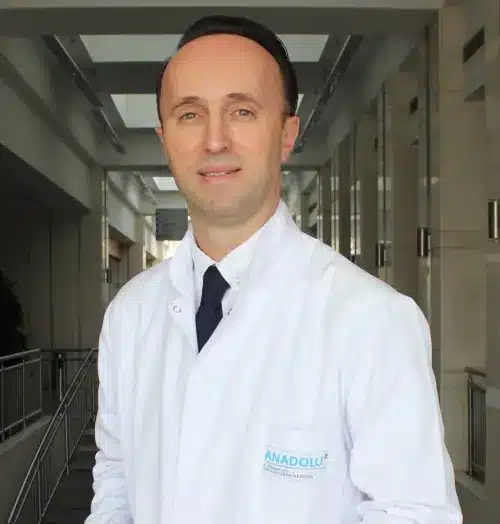
Experienced onco-urologists and oncologists in Turkey: doctors patients trust

How to choose a clinic and doctor: what is important to consider
The most common question patients start with is, “Whom should I go to?” And it really matters. Choosing the wrong clinic or specialist for an oncological diagnosis can mean losing not just time and money but also the chance for a successful outcome. At Experts Medical, we have been helping patients organize treatment in Turkey for more than 10 years and have supported over 12,000 people during this time. Thanks to this experience, we understand where real help is provided and where, unfortunately, only standard protocols are offered without considering individual circumstances.
We work only with clinics and doctors we know personally and whose results we have seen firsthand. These are not just online reviews but real stories — before and after — including PET-CT scans, surgery and chemotherapy protocols, and follow-up results. We know which doctors maintain consistent outcomes and which specialize in complex cases, such as recurrences or patients who did not succeed with treatment in another country.
What matters when choosing:
- Doctor’s experience and specialization. Not all urologists deal specifically with onco-urology, and not every oncologist treats bladder cancer on a regular basis.
- Clinic’s technical capabilities. Access to modern imaging, laparoscopy, robotic surgery, and molecular diagnostics greatly affects accuracy and results.
- Multidisciplinary approach. Complex cases require teamwork between a urologist, oncologist, radiologist, anesthesiologist, and pathologist.
- Transparent data and outcomes. We focus not on promotional claims but on how a specific doctor’s patients respond — what diagnoses they had and what results they achieved after 6 months and 1 year.
- Personalized approach. Age, comorbidities, and previous treatments all influence the strategy, and the clinic must be able to adapt the protocol accordingly.
The selection is always individual. One patient may need a skilled surgeon, another — an experienced chemotherapist, and a third — a center offering conservative therapy with regular follow-up. Precision is key here — not every large clinic is necessarily the best fit for your specific case.
How long does the treatment take?
- 1. Diagnostics
Takes about 5 days.
Includes laboratory tests, imaging (CT, MRI, PET-CT), and consultations with specialists.
After the examination, a multidisciplinary board meets to develop a treatment strategy.
- 2. Chemotherapy
One treatment cycle lasts about 1 month.
The patient is monitored by a doctor, and if their condition is stable, they may continue the prescribed treatment at home.
Follow-up examinations are usually done every 3 months.
- 3. Radiation therapy
The course consists of about 30 daily sessions.
Duration – 5–6 weeks without days off.
- 4. Genetic tests and targeted therapy
Performed within up to 14 days.
Based on the results, the doctor selects a personalized treatment plan.
While the patient waits for the test results, supportive therapy is often prescribed.
- 5. Surgery
For cystectomy (bladder removal) or organ-preserving surgeries, the stay in Turkey lasts about 7–10 days.
This period includes preparation, the surgery itself, and the early postoperative stage.
Thus, the minimum stay in Turkey for surgery is about 1–2 weeks, while for combined treatments involving chemotherapy or radiation therapy, the process may extend over several months, with periodic returns for follow-up examinations.
Conclusion
Bladder cancer treatment in Turkey offers the opportunity to receive modern therapy under the supervision of experienced onco-urologists and oncologists, following up-to-date international protocols. All key treatment methods are available here, including surgery, immunotherapy, chemotherapy, radiation therapy, and personalized approaches for advanced stages.
Thanks to a well-established medical tourism system and cooperation with trusted clinics, patients receive not only high-quality treatment but also clear organization of the entire process — from consultation to follow-up after returning home. At Experts Medical, we help patients go through this journey without unnecessary stress, relying on expertise, real data, and direct communication with doctors.
Frequently Asked Questions
1. Is immunotherapy available in Turkey, and which drugs are used?
Yes, Turkish clinics use approved medications such as Atezolizumab, Nivolumab, Avelumab, and other PD-1/PD-L1 inhibitors. Prescription depends on clinical indications — usually confirmed by PD-L1 expression testing or in cases of disease progression after chemotherapy.
2. Is there experience in performing cystectomy with an orthotopic bladder reservoir?
Yes, such surgeries are performed in major clinics. Specialists have experience in creating orthotopic neobladders as well as other urinary diversion procedures (Bricker, Hautmann, etc.). The choice of method depends on age, kidney function, comorbidities, and tumor extent.
3. Is molecular profiling of the tumor available?
Yes, some centers offer panel testing and NGS (next generation sequencing), which help identify mutations such as FGFR, TP53, RB1, and other molecular markers. These results can influence the choice of targeted therapy or eligibility for clinical trials.
4. Do clinics accept patients after unsuccessful treatment abroad?
Yes, such patients are accepted regularly. It’s important to provide complete medical documentation — histology reports, previous treatment protocols, PET-CT or MRI results, etc. Based on this information, a new treatment plan is created, which may include a change of therapy line, palliative intervention, or observation.
5. Is there any benefit in repeat surgery or local therapy in case of recurrence?
Yes, it largely depends on the location of the recurrence, its aggressiveness, and the time since the first treatment. In some cases, repeat TURBT, radiotherapy, or even organ-preserving approaches may be possible under suitable conditions.