





- At the clinic's price without markups
- with full doctor support
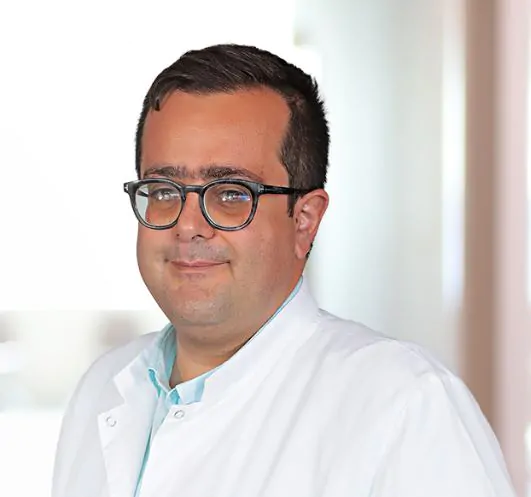
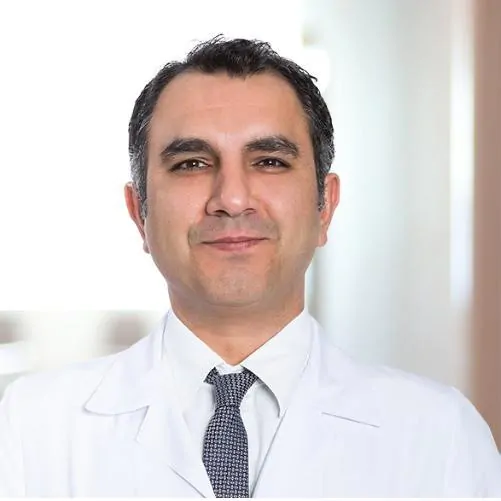
Baran Yilmaz is a highly qualified neurosurgeon from Turkey with more than 20 years of experience in brain and spine surgery. He specializes in the treatment of complex neurological conditions, including brain and spinal tumors, vascular disorders, herniated discs, pediatric neurosurgery, and also performs deep brain stimulation (DBS) procedures for Parkinson’s disease and other movement disorders. In his practice, he uses advanced technologies and modern surgical techniques. Over the years, Baran Yilmaz has earned a reputation as a внимательный and competent specialist, gaining recognition among patients and colleagues worldwide.
The interview with the doctor was conducted by Maria Chabdaeva, Head of the international organization Experts Medical, which specializes in supporting patients during medical treatment abroad.
- It is a great pleasure to meet you, Dr. Baran. Thank you very much for your patience and for the tremendous work you have done in the field of DBS (Deep Brain Stimulation).
I would like to ask you to tell us about your experience. What types of surgeries do you specialize in? How long have you been practicing surgery?
For about 19 years, I have been working in neurosurgery. I have performed more than, perhaps, 10,000 operations, and of course not only DBS procedures. These include brain tumor surgeries, spinal surgery, treatment of pediatric neurosurgical conditions, velocardiofacial syndrome, and many other procedures.
- Do you also perform brain surgeries for children, for example, for tumors?
Yes, we perform brain tumor removal surgeries, spinal operations, treatment of congenital conditions such as spina bifida or scoliosis, as well as spinal cord tumor removal. We carry out all of these procedures.
- Regarding DBS, could you please explain how this procedure is performed?
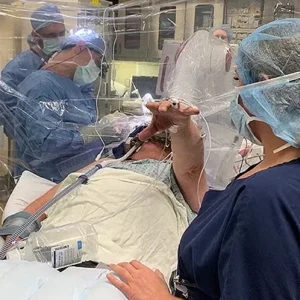 We perform DBS surgery primarily for patients with Parkinson’s disease. We also use it for other conditions, such as dystonia, but most commonly for Parkinson’s. Which patients are candidates for this procedure? If a patient experiences medication side effects or has severe tremor that is not adequately controlled with medication, we recommend DBS surgery.
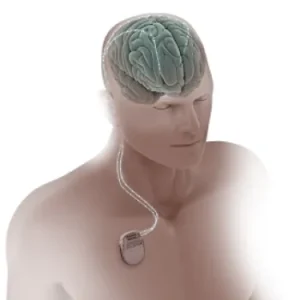
During the procedure, we place electrodes on both the right and left sides of the motor area of the brain. These are then connected to a battery implanted under the skin. Electrical stimulation helps reduce tremor, improve motor function, and decrease patients’ dependence on medication. In some cases, patients may even be able to stop taking medication entirely. The surgery takes approximately 2–3 hours. After the procedure, patients typically stay in the hospital for one day. Preparation takes about three weeks. The first follow-up visit is scheduled after six months, and thereafter we see patients for annual check-ups.
- Can DBS be considered a minimally invasive procedure? How do you access the brain?
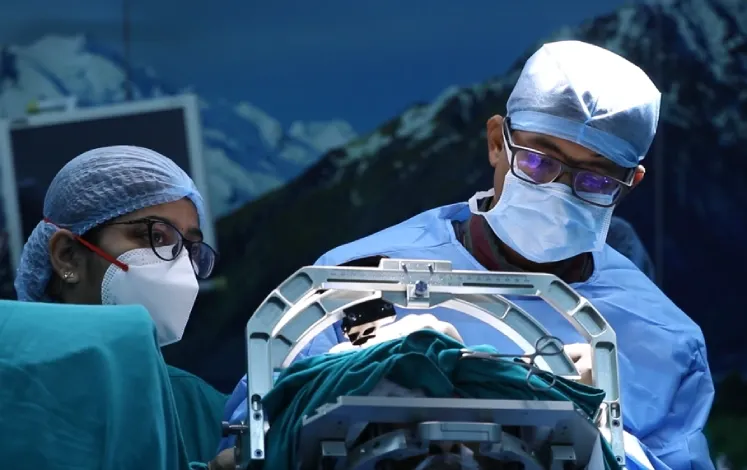
We make two small scalp incisions, about two centimeters each, and create 14-millimeter openings in the skull, known as burr holes. We then insert a one-millimeter-wide electrode into the brain. The procedure is carefully planned in advance. Using CT and MRI imaging, along with specialized software, we determine the precise brain area where the electrodes need to be placed. The electrodes must be positioned in the motor center. In patients with Parkinson’s disease, the typical target for stimulation is the subthalamic nucleus.
- We know that neurosurgical procedures carry certain risks. How do you prevent complications? How is the patient monitored during surgery? Is the patient awake?
Yes, patients need to remain awake, especially when we are treating tremor. In such cases, the procedure is performed under sedation and local anesthesia so that patients do not feel pain but can still communicate with us during surgery.
- So the patient does not feel pain during the operation?
No, they do not.
- However, patients may experience stress or fear. Can this affect the outcome of the surgery?
To reduce anxiety, we use sedation. The patient does not feel pain but remains conscious and able to talk to us. Our team includes a highly experienced anesthesiologist who ensures that patients feel comfortable and that the procedure proceeds safely and effectively.
- What diagnostic tests are performed to determine whether a patient is truly a candidate for surgery?
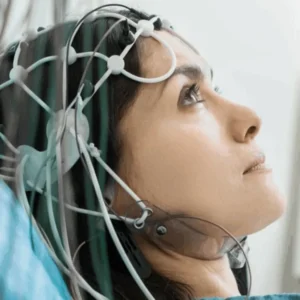 For patients with tremor, we first perform an MRI scan. Before surgery, we place a stereotactic frame on the patient’s head and conduct a CT scan. We then merge the results of both studies to obtain precise coordinates using specialized planning software.
For patients with bradykinesia, characterized by slowed movement, we perform an apomorphine test. Apomorphine is a dopamine derivative. In bradykinesia, dopamine levels in the brain are reduced, so we administer apomorphine subcutaneously. If the patient’s symptoms improve after the injection, this indicates that the surgery is likely to be beneficial. This serves as a preoperative simulation.
- How do patients live after surgery with an electrode in the brain? Does it cause any discomfort? What does it look like? Are there any inconveniences after the procedure?
Patients continue to live their normal lives. Once the hair grows back, the scars become completely invisible. People can do everything they did before surgery, without any restrictions.
- Where do you place the battery?
The battery? Under the collarbone, subcutaneously, usually on the right side.
- What are the possible complications of this surgery?
Theoretically, there is a risk of infection, since this procedure involves an implanted device. In rare cases, intracerebral bleeding may occur. Some patients may also experience seizures after surgery. However, these are only potential risks. In our practice, we have not encountered them.
- Can the electrodes shift and send signals to the wrong area of the brain?
This is theoretically possible, but to prevent such issues, as I mentioned earlier, we perform MRI and CT scans and then merge them using specialized planning software to obtain precise coordinates.
- You place the electrode in the correct position and the tremor stops. The patient goes home, exercises, or has an accident, and the electrodes shift slightly. What happens then?
No, that cannot happen.
- It cannot?
No.
- Does it affect cognitive brain function?
No. It may occasionally influence emotional activity, but patients do not experience cognitive changes.
- Does it help with tremor? Parkinson’s disease also involves muscle rigidity. Does the surgery help with that, or is it performed only to treat tremor?
No. As I mentioned, Parkinson’s disease includes slowed movements, which we call bradykinesia. Some patients also develop involuntary movements after taking medication, which is a side effect of drug therapy. These patients can also be candidates for DBS surgery.
- So the surgery also helps improve muscle tone?
 Yes. As I said, we perform an apomorphine test for such patients. If they respond positively to the injection, they are more likely to benefit from DBS surgery.
- If there are several medication options for treating Parkinson’s disease, but the patient insists on deep brain stimulation, can you perform the procedure?
Yes. We believe that the earlier the surgery is performed, the better the expected outcome.
- So you do not wait until drug therapy stops being effective?
No. Over the years, patients may develop contractures and muscle weakness. After surgery, they may require physiotherapy, additional treatments, or even Botox injections to manage contractures. All of this makes treatment more complex. Therefore, the earlier the surgery is performed, the better.
- If a patient with Parkinson’s disease has mild muscle rigidity and medication is still relatively effective, when would you recommend surgery?
As I mentioned earlier, as early as possible.
- Even if there are no noticeable symptoms yet?
Of course.
- Because this treatment will prevent symptoms from developing in the future?
Yes, the surgery can help slow the progression of the disease.
- What results do you see in your patients?
Approximately 80% of patients achieve the desired outcome. They reduce their medication intake or stop taking it altogether, and their tremor disappears. About 20% of patients still require medication or continue to experience some motor symptoms.
- But does the disease continue to progress? For example, if you perform the surgery and the patient’s tremor stops and they no longer need medication, will they eventually require medication again over time?
That is why we ask patients to come for follow-up visits every six months or once a year to assess their condition and adjust the treatment plan if necessary.
- So, does that mean the symptoms can be controlled with the stimulator, but if the tremor does not fully resolve, additional medication may be required?
Yes, that can sometimes happen.
- How many DBS surgeries do you perform per year?
I perform approximately 200 procedures each year.
- Are there any restrictions after the surgery?
There are no significant restrictions. The only important requirement is that before undergoing an MRI scan, the patient must switch the stimulator to MRI mode. Patients should also avoid strong magnetic fields that could interfere with the device. Otherwise, there are no major limitations.
To schedule a Deep Brain Stimulation procedure with Baran Yilmaz, simply contact the medical coordinators at Experts Medical using the details provided on the website or submit a request on this page. The specialists will assist you in gathering all necessary medical documents, including imaging and examination results, which will be forwarded to the doctor for evaluation.
Experts Medical recommends only trusted clinics and experienced specialists personally approved by Director Maria Chabdaeva. All partner clinics undergo strict quality control and have numerous positive reviews from patients worldwide.
The medical coordinators at Experts Medical will take care of all travel arrangements, including flight and hotel bookings, and provide support throughout your stay in Turkey. Ongoing assistance from the coordinators, combined with the professionalism of Baran Yilmaz, ensures a safe DBS procedure and the most comfortable treatment experience, which can significantly improve the quality of life for patients with movement disorders and other neurological conditions.